


A Guide to License Plate Recognition Cameras
- Бонус за регистрацию онлайн казино
- Aug 20, 2025
- 13 min read
Imagine you had a security guard with a photographic memory, one who could read and recall every single license plate that drove by, 24/7, without ever missing a single one. That's the best way to think about license plate recognition cameras. They aren't just cameras; they're specialized systems that blend high-tech imaging with smart software to automatically capture license plate numbers and turn them into valuable data.
What Exactly Are License Plate Recognition Cameras?
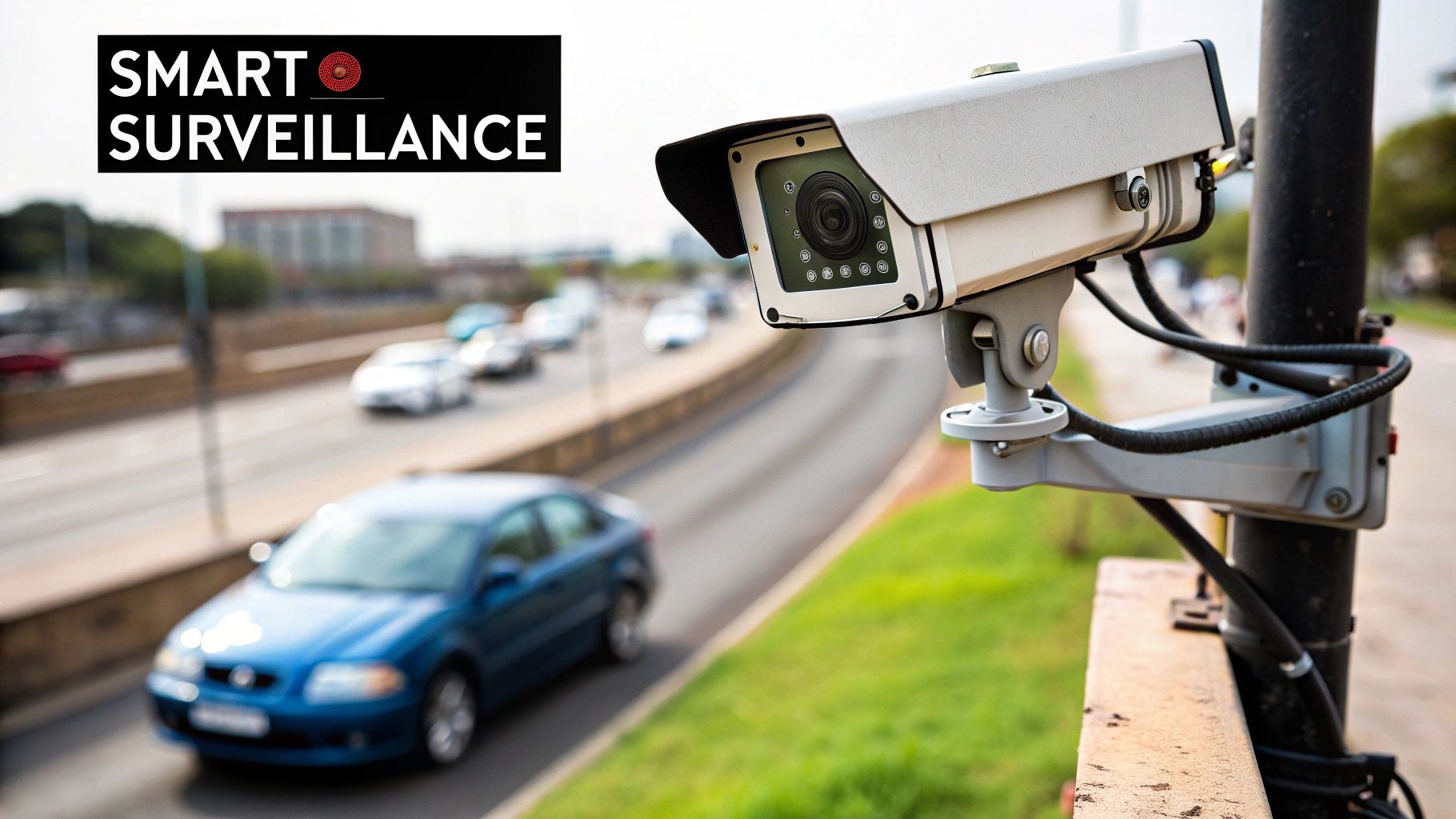
At its heart, license plate recognition (LPR) is a very focused kind of video analytics. It goes way beyond what a typical security camera can do. This is a purpose-built tool designed to do one job exceptionally well: identify vehicles by their plates, instantly and accurately.
The whole system relies on two key parts working together seamlessly. First, you have a high-performance camera, often equipped with things like high resolution and infrared lighting to get a crystal-clear shot of a plate, day or night, rain or shine. Second, there's the brain of the operation: powerful software that uses Optical Character Recognition (OCR) to decipher the letters and numbers on that plate.
It’s a simple but powerful concept. The camera takes the picture, and the software immediately turns that image into searchable text, ready to be logged, analyzed, or acted upon.
How It All Works, Step-by-Step
The entire process happens in the blink of an eye. Once a camera is set up to watch over a lane of traffic, its software is always on, scanning the video feed. The moment a car comes into view, the system kicks into gear:
Vehicle Detection: First, the software recognizes that a vehicle has entered the frame.
Plate Location: It then instantly finds the license plate on the vehicle.
Image Capture: The camera snaps a perfectly focused, optimized photo of just the plate.
Image-to-Text Conversion: This is where the magic happens. The OCR software analyzes the image and converts the characters into a string of digital text.
Data Logging: Finally, that text—along with the exact time, date, and location—is saved into a database for later use.
A Technology on the Rise
This simple, powerful capability has made LPR a game-changer for modern security and business operations. It’s no surprise that the demand for this kind of automation is skyrocketing.
The global LPR market was valued at around $3.2 billion and is on track to hit $7.5 billion by 2033. If you want to dive deeper into the numbers, you can check out the full LPR market forecast for a detailed breakdown.
How LPR Technology Reads a License Plate
Ever wonder how a camera can read a license plate on a moving car in the blink of an eye? It’s not magic, but it is a highly specialized, four-step process. Think of it as a super-fast workflow that turns a quick snapshot of a vehicle into valuable, organized data. The whole thing happens in a fraction of a second.
Let's break down exactly what's happening under the hood.
Stage 1: Image Capture
It all begins with getting a good, clean picture. But this isn't your average security camera. A true license plate recognition camera is built for one job: capturing a perfect image of the plate, no matter the conditions.
To do this, it uses a very high shutter speed to freeze the car in motion, eliminating blur even at high speeds. Many of these cameras also come equipped with infrared (IR) illuminators. This is the secret sauce for nighttime reads, as the IR light cuts right through headlight glare and darkness, making the plate's reflective characters pop for the camera.
Stage 2: Plate Detection
With a clear image in hand, the system’s software gets to work. Its first task is to find the license plate within the bigger picture. It's not just cropping the photo; it's an intelligent search.
The software has been trained on countless images to recognize the specific rectangular shape and character layout of license plates. It expertly isolates that small rectangle from the rest of the car—the grille, the bumper, the headlights—making sure only the plate moves on to the next step.
Key Insight: This detection step is absolutely critical. By zeroing in on just the plate, the system cuts out all the visual noise, which dramatically boosts the accuracy of the final read.
Stage 3: Optical Character Recognition
This is where the real conversion happens—turning a picture into text. Using a process called Optical Character Recognition (OCR), the software analyzes the isolated image of the plate and translates the characters into a digital text string. It’s a lot like how a scanner turns a paper document into an editable Word file.
The OCR algorithm scrutinizes each character, figuring out if it's a 'B' or an '8', a 'D' or a '0'. The more sophisticated systems are smart enough to handle different fonts, unique state plate designs, and even plates that are slightly dirty or obstructed.
Stage 4: Data Processing
The final step is to make that data useful. The text string (the license plate number) is bundled with important metadata, like the exact time, date, and which camera captured it.
From there, the system can be programmed to do almost anything:
Log the entry: The plate number is saved in a database for security audits or access control records.
Verify against a list: It can instantly check the plate against a watchlist for stolen vehicles or VIPs.
Trigger an action: The data can automatically open a parking gate, calculate a toll, or alert security personnel.
The entire process, from capturing an image to triggering a real-world action, is a finely tuned system. To put it all together, here’s a quick summary of the four core stages.
The Four Stages of License Plate Recognition
This table breaks down the core process, showing how a fleeting image becomes actionable data in just a few milliseconds.
Stage | What Happens | Key Technology Involved |
|---|---|---|
1. Image Capture | The camera takes a specialized, high-quality photo of the plate. | High shutter speed, infrared (IR) illumination, high-resolution sensor |
2. Plate Detection | Software scans the image to locate the license plate's exact position. | AI-powered image analysis, pattern recognition algorithms |
3. Character Recognition | The plate image is converted into digital text (letters and numbers). | Optical Character Recognition (OCR) software |
4. Data Processing | The text is combined with metadata and used to trigger a programmed action. | Database management, API integrations, real-time alerts |
This seamless flow is what transforms LPR from just a camera into a powerful tool for improving security and making operations run smoother.
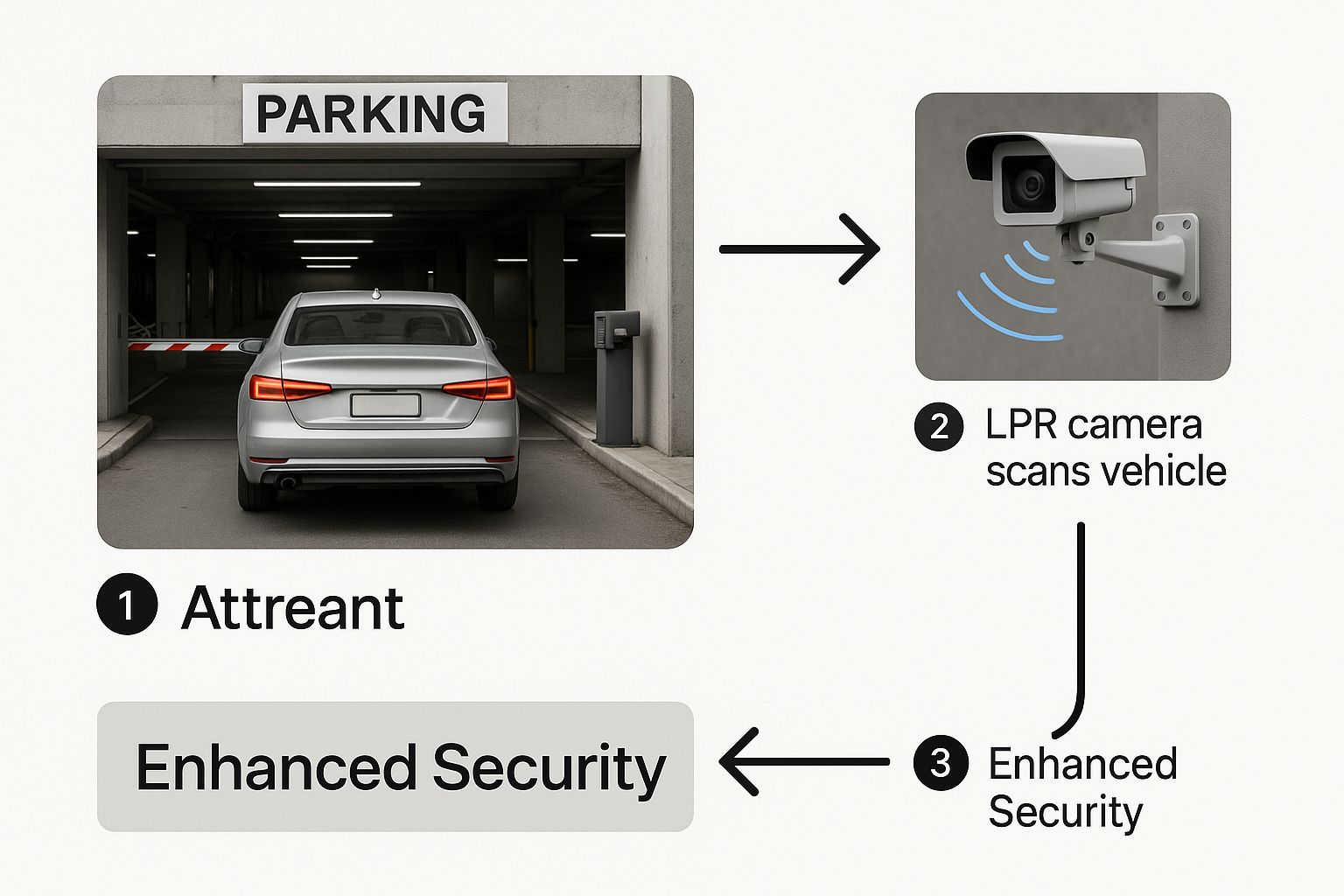
As you can see, from a parking garage entrance to a city-wide surveillance network, this four-step sequence is the engine that drives modern vehicle identification.
Key Features of a High-Performing LPR System
It’s easy to assume all license plate recognition cameras are more or less the same, but that’s a mistake. When you’re evaluating your options, a few critical features separate the systems that get occasional hits from those that capture reliable, actionable data every single time.
Think of it like choosing a camera for professional sports photography versus one for casual family pictures. To capture a fast-moving athlete in perfect focus, you need specialized gear. The same logic applies to LPR technology. The whole point is to get a crystal-clear image of the plate, regardless of speed, weather, or time of day.
Essential Hardware Capabilities
The camera itself is the foundation of any good LPR system. If the hardware can't capture a quality image, the most advanced software in the world won't be able to make sense of it. For serious performance, three hardware components are absolute must-haves.
High Resolution: More pixels mean more detail. A high-resolution sensor is what allows the camera to read a plate from far away or at a sharp angle, ensuring the letters and numbers are crisp enough for the software to process accurately.
Fast Shutter Speed: Cars move. A fast shutter speed is non-negotiable for freezing that motion and eliminating the blur that turns a license plate into an unreadable streak on a standard security camera.
Infrared (IR) Illumination: This is the magic ingredient for nighttime performance. Powerful built-in IR lights make the reflective surface of a license plate pop in total darkness, cutting straight through headlight glare and other visual noise.
A top-tier LPR system isn’t just a camera; it's a purpose-built imaging device designed to excel in challenging, real-world conditions where standard cameras fail.
The Software That Drives Results
While the hardware provides the eyes, the software provides the brain. It’s the engine that analyzes the image and turns it into useful information. Don't overlook it—the software is every bit as important as the camera hardware.
The a doption of AI and machine learning algorithms in LPR systems is what's really pushing the technology forward. It helps them deal with tricky situations, like different state plate designs or poor weather, which is why they’re becoming so common in public safety and traffic management. You can read the full analysis on AI's impact on ANPR systems for a deeper dive.
Here are the key software features you should be looking for:
AI-Powered Analytics: Modern software uses AI to get smarter and drastically reduce false positives. It can actually learn to tell the difference between a license plate and other rectangular shapes on a car, like a bumper sticker or a dealership frame.
Robust Integration: A truly effective system doesn't operate in a vacuum. It needs to play well with others. Look for a system with a solid API that can connect to your existing tools, whether that’s an access control gate, a customer payment portal, or a law enforcement database.
Real-World Applications of LPR Cameras
The tech behind license plate recognition is impressive, but where the rubber really meets the road is in its practical, everyday applications. This isn't just a niche security gadget anymore; it's a mainstream tool that's actively solving complex problems for all kinds of industries.
From automating simple, repetitive tasks to providing the critical piece of evidence in an investigation, LPR systems are making a real difference. The sheer variety of uses shows just how flexible this technology is. Let's dig into some of the most common ways it's being put to work.
Streamlining Access and Payments
One of the most common things you'll see LPR cameras doing is automating how we enter, exit, and pay for things. It’s all about creating a smoother, faster experience for everyone involved.
Automated Parking Garages: Say goodbye to paper tickets. An LPR camera logs your plate when you drive in. When you're ready to leave, the system has already calculated your stay and can process the payment automatically if you have an account. Simple.
Gated Communities and Corporate Campuses: Instead of fumbling for a key card or punching in a code, residents and employees get instant access. The camera recognizes an authorized vehicle and the gate just opens, which keeps traffic moving and enhances security.
Tolling and Congestion Management: LPR is the magic behind modern highway tolling. Cameras capture plate data at full speed, bill a driver's account, and keep traffic flowing without a single tollbooth in sight.
Enhancing Security and Law Enforcement
For police and security teams, LPR cameras are a powerful force multiplier. They provide unbiased, real-time data that helps them do their jobs more effectively.
Law enforcement agencies can use crisp LPR images to search for a specific vehicle, zeroing in on details like a small dent or a unique bumper sticker to connect it to an open investigation.
This technology's role in public safety is growing fast. The Automatic License Plate Recognition (ALPR) market was valued at around USD 6.71 billion and is expected to hit USD 14.48 billion by 2032. A huge chunk of that growth comes from its use in homeland security for tracking vehicles and spotting potential threats. You can find more details in the ALPR market forecast on verifiedmarketresearch.com.
Business Operations and Asset Protection
LPR cameras are also becoming essential for protecting business assets and keeping operations on track, especially in places that teach you how to store your vehicle safely.
Car washes, for example, use them to manage their monthly subscription members automatically. Logistics companies rely on LPR to track their fleet vehicles as they come and go, creating perfect records and stopping unauthorized trucks from entering the depot. It’s a smart way to cut down on manual work and reduce the chance of human error.
How to Choose and Install Your LPR System
Picking out and setting up a license plate recognition system isn't as simple as just buying a camera off the shelf. Think of it more like building a custom tool for a very specific job. The success of the whole operation really comes down to smart planning before you even think about installation. A little bit of forethought here is what separates a system that works from one that just causes headaches.
The very first thing you need to do is nail down exactly what you're trying to accomplish. Is the goal to automatically open a gate for employee vehicles in a secure lot? Or are you trying to log every car that enters a public shopping center to help prevent theft? Your answer changes everything.
Planning Your LPR Camera Deployment
Before you start comparing camera specs, you have to get to know the environment. It's a bit like a location scout for a movie—the setting dictates the kind of gear you'll need to get the perfect shot. Every location has its own quirks, and your system has to be ready for them.
Pay close attention to these critical factors on the ground:
Vehicle Speed: Are you dealing with cars crawling into a parking garage or flying by at highway speeds? The faster the car, the faster the camera's shutter speed needs to be to prevent a blurry, unreadable image.
Lighting Conditions: Will the camera be working in direct, glaring sunlight? Or will it need to perform in the dead of night? For any system that needs to work 24/7, powerful built-in infrared (IR) illumination is non-negotiable.
Camera Angle and Distance: This one is huge. The camera's physical position relative to the license plate can make or break your accuracy. If it's mounted too high, too low, or way off to the side, it's going to have a tough time getting a clean read.
Pro Tip: The sweet spot for camera placement is getting it as close to a direct, head-on view of the plate as possible. Minimizing both the vertical and horizontal angles will do more for your recognition accuracy than almost any other single tweak you can make.
Getting the right system often means matching the features to the job at hand. What’s essential for a toll booth might be overkill for a small business parking lot.
Here’s a quick comparison to help you see how different needs demand different features.
LPR System Feature Comparison
Feature | Parking Management | Law Enforcement | Toll Collection |
|---|---|---|---|
Capture Speed | Low (under 30 mph) | High (up to 120 mph) | Very High (up to 100 mph+) |
Accuracy Rate | High (95%+) | Very High (99%+) | Extremely High (99.5%+) |
IR Illumination | Essential for 24/7 lots | Crucial for night patrols | Essential for all-weather |
Onboard Processing | Often preferred for speed | Helpful, but not always required | Critical for real-time billing |
Integration Needs | Access control systems | Hotlists, police databases | Billing & payment platforms |
As you can see, the "best" system is entirely relative to its purpose. Always start with your goal and work backward to find the hardware that fits.
Best Practices for LPR Camera Installation
Once you’ve got your plan and your gear, the physical installation is the final piece of the puzzle. But don't rush it—proper placement is just as important as the quality of the camera itself. Even the most advanced license plate recognition cameras will give you junk data if they’re pointed in the wrong direction.
Here are a few essential tips to get the most out of your setup:
Always Aim for the Rear Plate: While front plates are common, they aren't universal. Every single one of the 50 U.S. states requires a rear plate. Your best bet is always to position cameras to catch the back of a vehicle.
Watch Out for Steep Angles: It's a classic mistake: mounting a camera high up on a pole and pointing it sharply downward. This squishes the image of the plate (an effect called foreshortening) and makes it nearly impossible for the software to read accurately.
Beat the Headlight Glare: Try to position your cameras so they aren't staring directly into oncoming headlights, which will completely wash out the image at night. If you can't avoid it, make sure your camera has a powerful IR illuminator to punch right through the glare.
By focusing on these fundamentals during planning and installation, you set your system up for success. This foresight helps you sidestep the common pitfalls that tank LPR accuracy and ensures you get a real return on your investment.
Got Questions About LPR Cameras? We've Got Answers.
It's smart to have questions when you're looking at a powerful piece of technology like a license plate camera. You’re not just buying a camera; you're investing in a system, and you need to know the real story. Let's tackle some of the most common questions head-on so you can get a clear picture of how these systems work in the real world.
We'll cover everything from how accurate you can really expect them to be to the big topic of privacy.
How Accurate Are LPR Cameras, Really?
This is always the first question, and it's the right one to ask. In a perfect world—think clear day, clean plate, straight-on view—a high-end LPR system can hit an accuracy rate of over 98%.
But we don't operate in a perfect world, do we? Real-world accuracy depends on the quality of your gear and the environment it’s in. Several things can throw a wrench in the works:
Weather: Heavy rain, snow, and dense fog can make it tough for the camera to get a clear shot.
Speed: Reading a plate on a car zipping by at 60 mph is a whole different ballgame than one crawling through a parking garage at 10 mph.
Plate Condition: Is the plate caked in mud, bent, or faded from the sun? The software has to work a lot harder to decipher it.
Lighting: Harsh sun glare or deep, dark shadows can blind the camera's sensor.
This is where the difference between a cheap camera and a professional-grade system really shows. The best ones are built to handle these challenges, using powerful infrared lighting and smart AI algorithms that can clean up messy images and make sense of them.
What About Privacy Concerns?
Yes, privacy is a huge deal, and it's something that has to be managed with care. LPR systems collect data on where vehicles are and when, so their use is often guided by local and state rules. For any business putting these cameras in, being upfront and keeping the data locked down is non-negotiable.
A rock-solid data retention policy is a must. You need to clearly define how long you keep the plate data and exactly who has permission to see it. It's also critical to post clear signs letting people know that cameras are in use—this isn't just good practice, it's often the law.
The key is to use the information only for its specific, intended purpose, like managing access to a secure lot or monitoring a loading dock. All that data needs to be stored securely to keep it out of the wrong hands.
What’s the Difference Between LPR and ANPR?
You'll definitely see both LPR and ANPR thrown around, and it can be a little confusing. The simple answer? They’re the same thing.
LPR (License Plate Recognition) is what we usually call it here in North America. Over in the UK and Europe, they tend to use ANPR (Automatic Number Plate Recognition). You might even see ALPR (Automatic License Plate Recognition) pop up. At the end of the day, they all describe the exact same process: a camera automatically reads a license plate and turns the image into text.
Can LPR Cameras Read Plates From Different States or Countries?
Absolutely. A good, modern LPR system is trained on massive datasets filled with all sorts of license plate designs. The AI learns to recognize the different fonts, colors, and layouts from various states, provinces, and even other countries.
When you're choosing a system, you'll want to make sure its software can handle all the plate types you expect to see. This is especially important if your business is near a state line, an international airport, or a big tourist hub where you're guaranteed to get a mix of vehicles. A system's ability to adapt is what makes it truly effective.
At PCI Audio-Video Security Solutions, we don't just sell cameras; we design and install high-performance LPR systems built for the real-world challenges your business faces. From the initial site walk to the final system check, our team makes sure you get the accuracy and reliability you paid for.
Find out how our advanced security solutions can help protect your property by visiting our website at https://www.pciavss.com today.
Comments