


Commercial Multi Zone Audio System Guide
- Бонус за регистрацию онлайн казино
- Aug 31, 2025
- 14 min read
Think of a commercial multi-zone audio system as the central command for your business's sound. It gives you the power to play different audio in different areas, at different volumes, all from one place.
It's what allows a restaurant to have high-energy music at the bar, quiet jazz in the main dining room, and something completely different on the patio—all at the same time.
Crafting the Perfect Atmosphere with Zoned Audio
Picture your business as a film, with each space having its own unique soundtrack to set the scene. That’s exactly what a multi-zone audio system helps you achieve. It elevates sound from just being background noise to a powerful tool for shaping the customer journey.
Instead of a single playlist playing everywhere, zoned audio gives you surgical control. You can perfectly match the sound to the purpose and mood of each individual space, from the lobby to the back office.
More Than Just Music
This kind of control is about much more than just playing tunes. It's a core part of your brand identity and can even make your operations run smoother. A thoughtfully designed system helps you:
Enhance the Customer Experience: You can match the audio to the activity. Think of an intense playlist for a gym's weight room versus calming ambient sounds in a spa's relaxation area.
Reinforce Your Brand Identity: Curated playlists help build a consistent, memorable vibe that customers begin to associate directly with your brand.
Streamline Daily Operations: Imagine managing announcements, volume levels, and music for the entire building from a single tablet or control panel. It’s that simple.
A well-planned multi-zone audio system isn't a luxury anymore; it's a fundamental part of creating an immersive and adaptable commercial space. It's a direct investment in atmosphere, customer satisfaction, and brand consistency.
And the market reflects this. The multi-room audio industry was valued at around USD 5 billion in 2025 and is expected to grow at a Compound Annual Growth Rate (CAGR) of 15% through 2033. This surge shows a real shift in how businesses are thinking about sound. You can find more insights about this expanding market and its trends online.
In this guide, we'll break down how this technology works, look at some real-world examples, and walk through what you need to consider when planning a system for your own business.
Deconstructing Your Commercial Sound System
To really get a handle on how a commercial multi-zone audio system sends the right sound to the right place, it helps to break it down into its core components. Think of it like a highly coordinated team—each member has a specific job, but they all work together to create a seamless audio experience across your entire business.
The Key Players: From Source to Speaker
It all starts with the audio source. This is essentially the "DJ" of your system, feeding it the music or audio content you want to play. This could be anything from a dedicated business streaming device to a local media player, or even a microphone for making announcements.
This image shows how these core components typically link up.
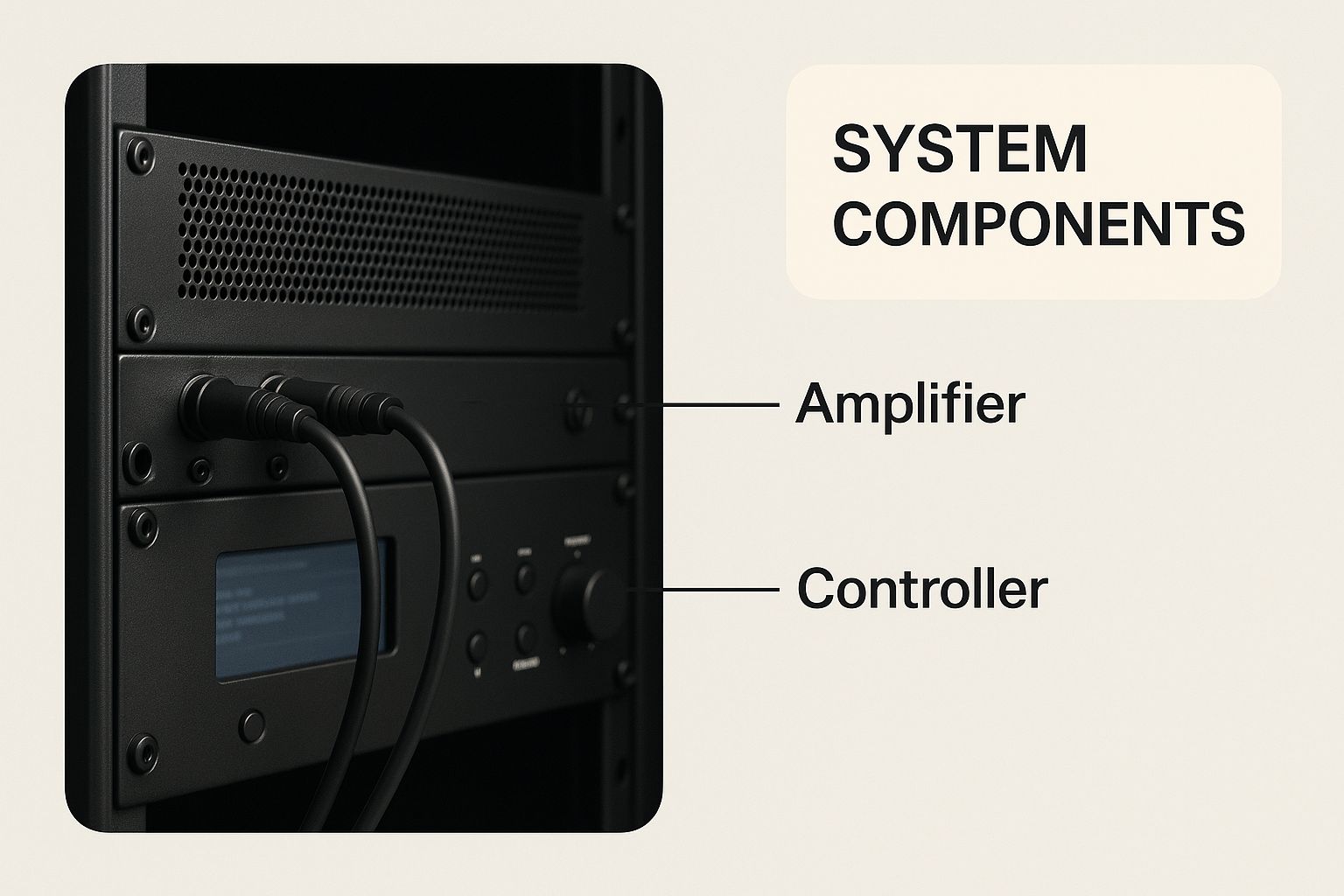
As you can see, the audio signal flows logically from the source, through the controllers and amplifiers, and finally out to the speakers. It's a clear and effective hierarchy.
Let's take a closer look at the essential hardware that makes this all possible. Each piece has a critical role to play in the final audio experience.
Key Components of a Multi Zone Audio System
Component | Function | Key Consideration |
|---|---|---|
Audio Source | Provides the raw music or audio signal for the system. | Is the source licensed for commercial use? Does it offer the right playlists and scheduling features for your business? |
Matrix Switcher | Directs different audio sources to different zones. | The number of inputs and outputs must match your current and future needs. Look for a model that can handle all your sources and zones. |
Amplifier | Boosts the low-level audio signal to power the speakers. | Match the amplifier's power (wattage) to the requirements of your speakers to avoid distortion and ensure clarity. |
Speakers | Convert the electrical signal back into audible sound. | The type of speaker (in-ceiling, wall-mounted, etc.) should be chosen based on the room's acoustics, aesthetics, and desired sound coverage. |
Control Interface | Allows users to manage the system (volume, source, etc.). | Should it be a simple wall panel for staff or a comprehensive app for managers? Ease of use is paramount. |
This table gives you a quick-glance guide, but understanding how these parts interact is where the magic really happens in creating a dynamic and controllable sound environment.
The Brains and the Brawn
Once the source provides the music, the signal travels to a matrix switcher or controller. This is the "traffic controller" of your system. Its whole job is to expertly route different audio signals to different zones, making sure the bar gets its upbeat playlist while the dining room gets its calm background jazz.
From there, the signal goes to the amplifiers. If the switcher is the brains of the operation, the amplifier is definitely the brawn. It takes that weak audio signal and gives it the muscle needed to properly drive the speakers, ensuring the sound is clear and consistent at any volume.
A common and costly mistake is underpowering a system. A quality amplifier that’s correctly matched to your speakers is absolutely essential for preventing distortion and delivering a professional sound that enhances, rather than detracts from, your environment.
This brings us to the final, and most visible, part of the system.
Delivering the Sound Experience
Speakers are where the audio finally meets your customer's ear. The type you choose has a huge impact on the final result.
In-Ceiling Speakers: These are great for a discreet, clean look. They provide broad, even sound coverage, making them perfect for background music in places like retail stores or restaurants.
Wall-Mounted Speakers: These are often more powerful and directional. That makes them ideal for areas that need higher volume and a bit more punch, like a gym or an outdoor patio.
You really can't overstate the importance of quality speakers. The industry has shifted heavily toward wireless technology, which now holds over 60% market share, and speakers themselves account for the largest product share at 45%. This data, which you can explore further in the multi-room audio market report, points to a clear demand for flexible, high-performance speaker setups.
Finally, control interfaces are what tie everything together. These can be as simple as a wall-mounted keypad for staff to make quick volume adjustments, or as sophisticated as an app that gives a manager full control over every zone from a tablet. The goal is to make managing your entire building’s sound simple and intuitive for the people who need to use it.
How Zoned Audio Elevates Different Businesses
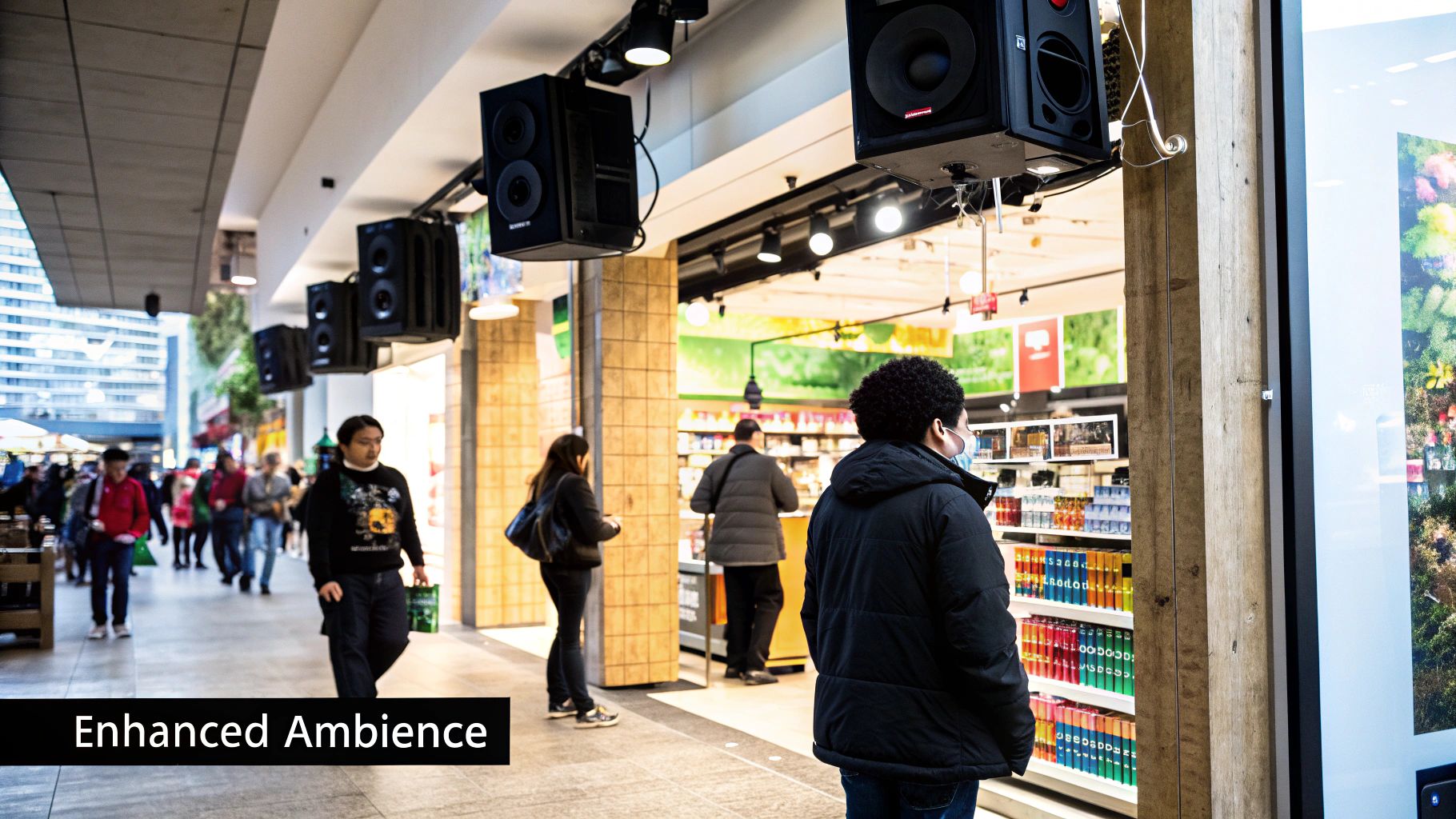
The real magic of a commercial multi-zone audio system isn't in the wires and speakers; it's in how it transforms a space. When you see it in action, you realize this is about more than just playing music—it's about sculpting an environment to hit specific business goals.
Think of it as invisible architecture. The right sound can subtly guide customer behavior, lift employee spirits, and even make your brand more memorable. For most businesses, sound is a powerful tool just waiting to be used. Giving you precise control over it turns a generic visit into a truly curated experience.
Real-World Impact in Hospitality
Hospitality is where this concept really shines. Take any modern hotel—it's essentially a collection of completely different environments all under one roof. Zoned audio is what lets you manage them all without missing a beat.
Lobby and Reception: You want a great first impression, right? Calm, instrumental music instantly communicates sophistication and makes guests feel welcome.
Fitness Center: Nobody wants to work out in silence. High-energy, upbeat playlists are perfect for keeping guests motivated and focused.
Spa and Pool Area: Here, the goal is total relaxation. Serene, ambient soundscapes help guests completely unplug and unwind.
Restaurant and Bar: You can set a vibrant, social vibe in the bar while keeping the main dining area quiet enough for easy conversation.
Each space gets the exact soundtrack it needs to succeed, and it’s all managed from one central point. It’s this attention to detail that elevates the entire guest experience, from the moment they walk in to the moment they leave.
A thoughtfully designed audio landscape transforms a property from a place to stay into a destination. It’s the difference between a generic environment and one that feels curated and intentional.
Boosting Sales and Focus in Retail and Offices
These same ideas work just as well in stores and offices, where the right audio can directly influence sales and productivity.
In retail, you can use a higher-energy playlist near the entrance to draw people in. Then, switch to a softer, slower tempo in the fitting rooms to encourage them to take their time and really consider a purchase.
An office can use a multi-zone system for more than just background tunes. Important announcements can be broadcast in common areas like the kitchen or hallways, while individual offices and quiet zones remain completely undisturbed.
This kind of flexibility is catching on. The market for multi-room audio solutions was valued at USD 7.8 billion in 2024 and is expected to hit USD 15.2 billion by 2033. That incredible growth shows just how seriously businesses are taking audio as a way to create better, more responsive spaces. You can dive into the data yourself with these multi-room audio market findings.
Planning Your Multi-Zone Audio Layout
Before you even think about buying a single piece of gear for a commercial multi-zone audio system, you need a solid plan. This is, without a doubt, the most critical step. Think of it as the blueprint for your business's entire soundscape—get it right, and you’ll avoid costly mistakes and end up with a system that truly works for you.
Your first job is to figure out your zones. A "zone" isn't just a room; it’s any distinct area where you need separate control over the sound. The audio needs of a bustling bar are worlds apart from a quiet, intimate dining room, and your system needs to handle both effortlessly.
Defining Your Audio Zones
Grab a floor plan and walk through your space. Think about how each area is used and what the typical ambient noise level is. You’re essentially creating a sound map.
High-Energy Zones: Think about your bar, gym floor, or the main entrance to a retail store. These spots often need more volume and upbeat, dynamic music to create a specific vibe.
Relaxation Zones: Places like a spa treatment room, a quiet corner in a restaurant, or a hotel lobby call for softer, more ambient sound that enhances the calm.
Transitional Zones: Don't forget the hallways and entryways. These areas connect different atmospheres, and the audio should feel smooth and consistent, not jarring.
Functional Zones: Even patios, restrooms, and back-of-house areas have their own needs. You might need simple background music on the patio but only paging capabilities in the kitchen.
Once you have a clear list of your zones, it's time to think about where the sound will actually come from.
Mapping Speaker Placement for Perfect Coverage
Speaker placement is part science, part art. The goal is simple: create balanced, consistent sound coverage everywhere. You want to eliminate those annoying "dead spots" where the music vanishes and "hot spots" where it’s blasting in someone's ear.
Proper spacing is what turns background music into a pleasant, immersive experience instead of just noise coming from a box. For example, in-ceiling speakers should be laid out in a grid to blanket the area evenly. But for a patio that needs a bit more punch, you might aim a few wall-mounted speakers strategically to keep the energy contained without bothering the neighbors.
A classic rookie mistake is cranking up the volume to compensate for poor coverage. Two extra, well-placed speakers playing at a lower volume will always sound more professional and create a better atmosphere than a couple of speakers blasting from a corner.
Wired vs. Wireless: The Big Decision
Finally, your plan needs to tackle how everything connects. Both wired and wireless systems have their place, and the best choice really boils down to your building’s construction and how much flexibility you need down the road.
System Type | Pros | Cons |
|---|---|---|
Wired System | Rock-solid reliability; you never have to worry about signal dropouts. They can often deliver more power to demanding speakers. | Installation is a bigger job. It means running cables through walls and ceilings, which can be disruptive and more expensive upfront. |
Wireless System | Incredibly flexible and far easier to install, especially in a building that's already finished. Expanding the system later is as simple as adding another speaker. | Everything hinges on a strong Wi-Fi network. Performance can dip if your network is congested or the signal is weak in certain areas. |
If you're building from the ground up, a wired system is almost always the way to go for its sheer dependability. But if you're retrofitting an existing business, the convenience and lower installation cost of a wireless setup can be a huge win. Your zone map will make it much clearer which path makes the most sense for your space.
Choosing Between DIY and Professional Installation
Once you’ve mapped out your audio zones, you’ll hit a major fork in the road: should you install the system yourself or bring in a professional? The best path forward really depends on the size and complexity of your setup.
For a small coffee shop with a simple, two-zone wireless system, a DIY approach might be a great weekend project. It's straightforward and can save you some money upfront.
But as soon as your project gets more involved, the argument for hiring a pro becomes much stronger. We're talking about larger spaces that need wires run through walls, multiple amplifiers daisy-chained together, or integration with critical building systems like fire alarms. This is where expertise isn't just a convenience—it's essential for safety, reliability, and protecting your investment.
The Value of a Professional Installer
Hiring a professional installer brings a level of expertise that a YouTube tutorial just can't match. They’re trained to handle the nitty-gritty technical challenges that can make or break a commercial sound system.
Acoustic Calibration: Pros use specialized tools to "read" the acoustics of your rooms. This allows them to eliminate dead spots and hot spots, ensuring the sound is perfectly balanced everywhere.
Code Compliance: An expert knows the local building and electrical codes inside and out. This ensures your installation is not only safe but also fully compliant, saving you from major headaches during inspections.
System Integration: Need your audio system to work with your paging system or emergency alerts? A pro can integrate these systems seamlessly, a task that’s often a minefield for the inexperienced.
Ongoing Support: Maybe the biggest benefit is having an expert on call. When you need maintenance, troubleshooting, or future upgrades, you have a partner you can trust.
A professional installer does more than just hang speakers; they design and implement a reliable, high-performance audio infrastructure that is custom-fit to your business environment, ensuring a flawless result from day one.
To help you weigh your options, let’s break down the key differences between a DIY project and a professional installation.
DIY vs. Professional Installation Comparison
Factor | DIY Installation | Professional Installation |
|---|---|---|
Best For | Small, simple systems (e.g., 1-2 zones, wireless speakers) | Complex, multi-zone, or integrated systems in larger venues |
Cost | Lower upfront cost for labor | Higher upfront investment, but potential long-term savings |
Expertise | Relies on your own technical skill and research | Access to certified technicians with specialized knowledge |
Time | Can be time-consuming; depends on your learning curve | Faster, more efficient installation from experienced crews |
Safety & Codes | You are responsible for all safety and code compliance | Guaranteed compliance with local electrical and building codes |
Support | You are on your own for troubleshooting and maintenance | Includes ongoing support, maintenance, and warranty service |
Ultimately, while the DIY route can be tempting for simpler projects, the peace of mind and guaranteed quality of a professional job often provide the best return on investment for most businesses.
If you decide to hire a pro, it's crucial to vet them properly. Knowing the essential questions to ask general contractors can guide you in finding the right partner. A skilled installer saves you from technical nightmares and ensures your system delivers the high-quality experience your customers and team deserve.
Selecting the Right System for Your Business
Choosing the right commercial multi-zone audio system isn't just about picking the cheapest box off the shelf. Think of it as a long-term investment. A system that can't grow with you or constantly needs fixing isn't a bargain; it's a headache waiting to happen.
To get it right, you need to dig deeper and ask potential vendors some tough questions that go way beyond the price tag. It's like you're hiring for a critical role—you need to know they're reliable, they'll fit in with your current setup, and they have solid support behind them.
Key Questions for Your Vendor
Before you sign any contracts, have a checklist of questions ready. The answers you get will tell you everything you need to know about the system's real value.
Commercial Music Licensing: How do you handle this? This is a big one. Do you work with services that have the public performance licenses from groups like ASCAP and BMI already baked in? This isn't just a nice-to-have; it's a legal must.
System Compatibility: Will this play nice with our other tech? I'm talking about our point-of-sale system, paging system, or security alarms. Getting everything to communicate seamlessly from day one saves a world of trouble later on.
Scalability: Let's say we expand next year and need to add two more zones. What does that process actually look like? A system that can scale easily protects your initial investment and grows right alongside your business.
The best commercial multi-zone audio system is one you completely forget is there. It should just work, setting the perfect vibe in the background without you ever having to troubleshoot or even think about it.
Automation and Support
Once you've covered the basics, start thinking about how smart the system is. Can it do things on its own? Many businesses get a ton of value from systems that offer custom automation solutions. Imagine automatically changing playlists and volumes at different times of the day without anyone touching a dial.
Finally, nail down the details on support. Don't be shy about this.
Warranty Details: What, exactly, does the warranty cover? Is it just the hardware, or does it include the labor to fix it? For how long?
Support Structure: What happens after the installation is done? Is there a real person or a dedicated team I can call when something goes wrong?
A great audio system isn't just an expense; it's a powerful tool. It pays for itself over and over by creating a better experience for your customers and staff, making your brand's identity felt with every single song.
Frequently Asked Questions
Diving into the world of commercial multi-zone audio systems often brings up a few common questions. Let's walk through the most frequent ones we hear from business owners to help you get the clarity you need.
Do I Need a Special Music License?
Yes, absolutely. Playing music for the public in your business isn't the same as listening at home. You'll need a public performance license to legally play copyrighted music.
These licenses are handled by groups called Performing Rights Organizations (PROs) – think ASCAP, BMI, and SESAC. They're the ones who make sure the artists and songwriters get paid. The good news? Many commercial music streaming services designed for businesses bundle all the necessary licensing right into their subscription fee, taking the guesswork out of it for you.
Can I Just Use Consumer-Grade Speakers?
While it might seem tempting to grab a consumer system like Sonos off the shelf, they just aren't built for the job. Commercial-grade speakers and amps are designed to run all day, every day, without breaking a sweat.
Think of it this way: you wouldn't use a family sedan to haul commercial cargo. Consumer gear used in a business setting often has its warranty voided, and it simply can't provide the reliable, consistent sound coverage you need to create a professional atmosphere.
Plus, commercial systems are built to integrate with other essential business functions, like paging systems and emergency alerts, which consumer products can't do.
What’s the Difference Between 70V and 8-Ohm Systems?
This is probably the biggest technical difference between home and business audio, and it’s all about efficiency.
8-Ohm System: This is what you have in your living room. It's perfect for powering a few speakers with high-quality sound over a short distance.
70-Volt (70V) System: This is the workhorse of the commercial world. It's designed to send audio over very long speaker wires to a large number of speakers, all from a single amplifier. You can "daisy-chain" speakers together, which dramatically simplifies wiring and reduces installation costs, especially in big spaces like warehouses, retail stores, or multi-floor offices.
Getting a handle on the budget is just as important as understanding the technology. When planning any major upgrade, looking at how similar projects are costed can be a huge help. Reviewing a breakdown of commercial system installation costs can give you a solid mental model for what to expect in terms of investment, even for a different type of system. This kind of insight helps you plan effectively and see the long-term value.
At PCI Audio-Video Security Solutions, we specialize in designing and installing audio-video systems that are built to last and perfectly matched to your business. Contact us today to start building the ideal soundscape for your customers and employees.
Comments