


Find Commercial Audio Installation Near Me
- Бонус за регистрацию онлайн казино
- Aug 9, 2025
- 12 min read
Typing "commercial audio installation near me" into a search bar is simple. The real work begins long before you pick up the phone—it starts with figuring out what your business actually needs. A great installation isn't just about making things louder; it's about crafting the right atmosphere and hitting specific goals.
Matching Your Space to the Right Sound System
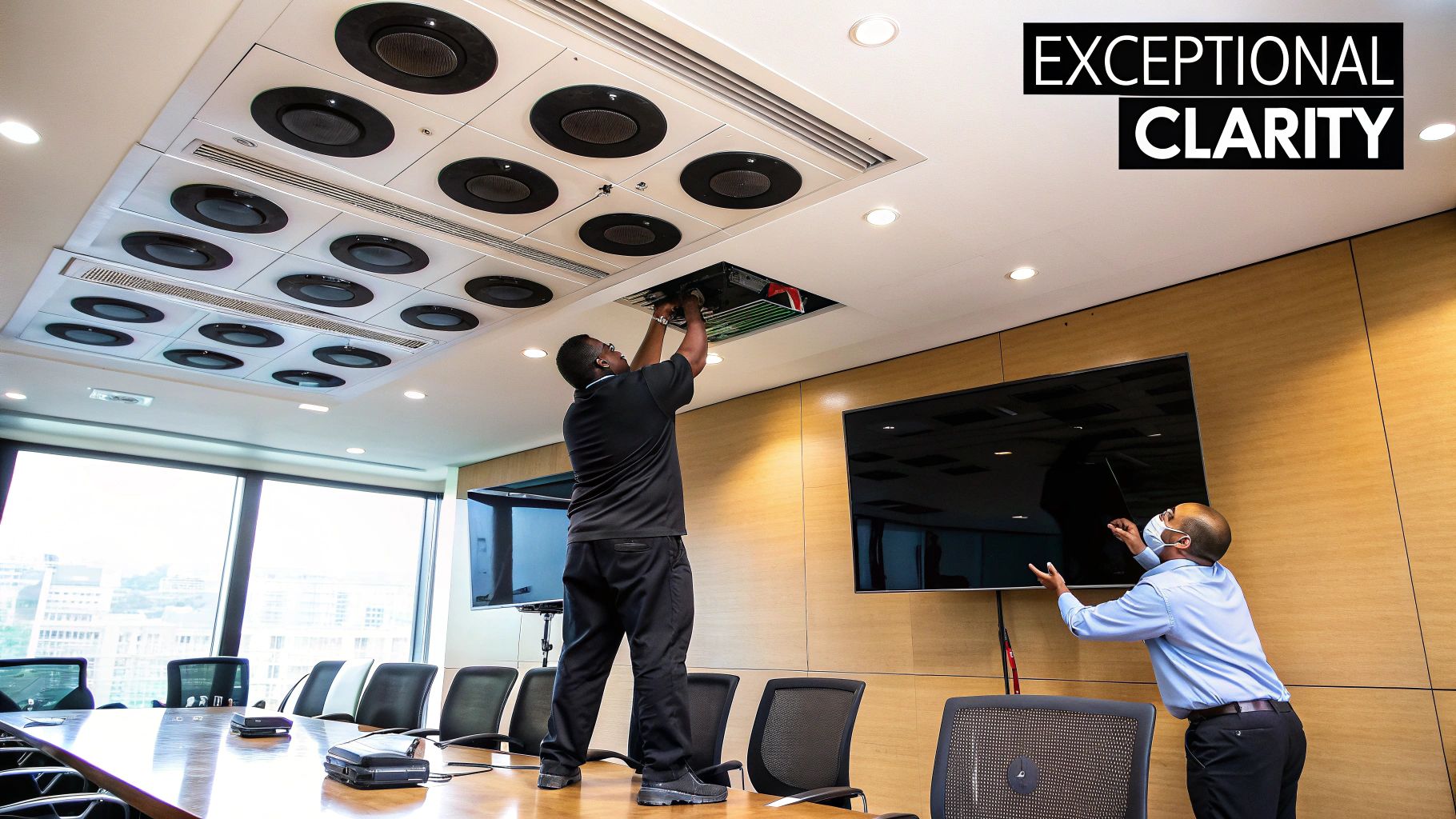
Before you start getting quotes, pause and think about your audio goals. The sound system you choose is a fundamental part of the experience for both your customers and your team. Are you looking for subtle background music to create a chill vibe in your café? Or do you need a powerful public address (PA) system to make announcements that cut through the noise on a busy warehouse floor?
The answer to that question drives every decision that follows, from the type of speakers you'll need to the power of the amplifier behind them. Any good installer's first job is to take your vision and turn it into a reliable system that just works.
Defining Your Audio Objectives
Start by thinking about your space acoustically. A retail shop with tall ceilings and lots of hard, reflective surfaces presents a completely different challenge than a corporate boardroom filled with sound-dampening carpet and acoustic panels.
Think about these common scenarios:
Retail Environment: A clothing store often benefits from zoned audio. This lets you play upbeat, energetic music near the entrance while a more relaxed playlist runs in the fitting room area, creating distinct moods in one location.
Corporate Office: Here, it's all about clarity. You need exceptionally clear audio for video calls and presentations where every single word counts. The system must also play nice with video displays and microphones without any fuss.
Restaurant or Bar: The goal is often immersion. The audio system has to be powerful enough to be heard over a packed house on a Friday night, but it also needs to provide even, pleasant background music during a slow Tuesday lunch.
To help you pinpoint exactly what your business requires, use this checklist to think through your specific needs.
Commercial Audio System Application Checklist
Application Type | Key Considerations | Example Equipment |
|---|---|---|
Background Music | Even coverage, consistent volume, reliability | Ceiling speakers, multi-channel amplifier, media player |
Public Address (PA) | Speech clarity (intelligibility), volume over ambient noise | Horn speakers, microphone, mixer-amplifier |
Video Conferencing | Echo cancellation, microphone sensitivity, seamless integration | Ceiling microphones, soundbar, DSP (Digital Signal Processor) |
Live Performance/DJ | High power handling, wide frequency response, durability | PA speakers, subwoofers, mixing console |
Zoned Audio | Independent volume/source control for different areas | Zone controller/matrix switcher, multiple amplifiers |
This checklist is a starting point to ensure you cover the essentials before you speak with a professional.
A well-defined objective is your most powerful tool. It keeps you from paying for features you'll never use or—even worse—ending up with a system that can't handle the one thing you really needed it to do.
This kind of detailed planning is more important than ever. With the global professional audio market projected to reach USD 12.50 billion in 2025, the demand for high-quality, tailored sound is exploding across all industries. You can explore more on these market trends to see where the industry is heading.
When you can clearly explain your goals, you empower an installer to give you a proposal that is not only accurate but truly effective for your space.
How to Vet and Choose a Local Installer
Now that you have a clear picture of what you need, it’s time to find the right local partner to bring it to life. This is arguably the most critical step. Your goal isn't just to find someone who can run wires; you need a team with proven, relevant experience who can translate your vision into a reliable system.
Start by hitting the internet and doing some serious digging. A quick search for “commercial audio installation near me” is just the beginning. Look past the basic contact pages and find their portfolio or case studies. A quality installer will be proud to show off their work.
Pay close attention to the types of projects they showcase. If your goal is a sophisticated corporate boardroom, a portfolio filled exclusively with sports bars and restaurants might not be the right fit. You're looking for evidence they've handled projects similar to yours.
Look for Signs of Expertise
As you evaluate potential installers, keep an eye out for specific credentials that signal true expertise. Certifications from major manufacturers like QSC, Crestron, or Biamp are a big deal. These aren't just fancy logos; they mean the technicians have undergone rigorous, specialized training and are trusted by the brands to install their gear correctly.
It's also crucial to see if their experience aligns with your industry’s specific demands:
Corporate: Do they have a track record of successful video conferencing setups or zoned audio systems for modern office layouts?
Hospitality: Have they designed systems for hotels or event venues where acoustics and creating the right ambiance are everything?
Education: Do they understand the unique needs of a school auditorium or the importance of crystal-clear sound for classroom instruction?
An installer’s portfolio should give you confidence, not create doubt. If you don't see work that mirrors the complexity or environment of your project, that's a major red flag. The ideal partner is a team that has already solved the exact kinds of problems you're facing.
Questions to Ask Before Committing
When you start making calls, don't just wing it. Prepare a list of targeted questions to ask each company. This is a lot like vetting vendors for any important event; having a consistent set of questions to ask a wedding DJ before booking, for example, helps you compare your options apples-to-apples.
On that initial call, get straight to the point. Ask them to walk you through their entire process, from the first site visit to the final sign-off and post-installation support. You need to know about their warranty policies and what kind of ongoing service agreements they offer.
A true professional will have clear, confident answers. They won't stumble. This demonstrates they have a well-oiled process for delivering great results, time and time again.
The On-Site Survey: Where Your System Takes Shape
This is the moment a true professional earns their stripes. Getting a generic quote is one thing, but designing a system that works flawlessly in your specific space? That requires getting on-site. Any installer worth their salt will insist on this step before talking equipment specifics.
A thorough site survey is the bedrock of a successful project. An experienced technician will walk through your entire building, taking it all in—the layout, the building materials, and even the existing ambient noise levels. They're looking for potential acoustic gremlins, like a lobby with high ceilings that creates an echo chamber or a plush, quiet office that will absorb sound differently.
Mapping Out the Perfect Solution
During this walkthrough, the technician isn't just listening; they're also looking. They’ll be identifying the best, most discreet routes for running cables to guarantee a clean, professional look. It’s about more than just hiding wires, though. Smart cable management is crucial for the system's long-term health and makes any future servicing much simpler.
This is also a highly collaborative process where the system design really comes to life. You'll get to discuss practical, real-world options based on what the technician sees. For instance, you might explore:
Using pendant speakers to get even sound coverage in large, open areas with high ceilings.
Opting for in-ceiling speakers for a nearly invisible background music system in a corporate office or retail store.
Choosing a control system your staff will actually use, whether it's a simple wall-mounted touch panel or a convenient app on a tablet.
Frankly, this hands-on survey is non-negotiable. It’s what separates a professional installation from a botched job full of costly surprises. This step removes all the guesswork and ensures the final system performs exactly the way you need it to.
The diagram below gives you a good visual of this critical workflow, from that first assessment all the way to deployment.
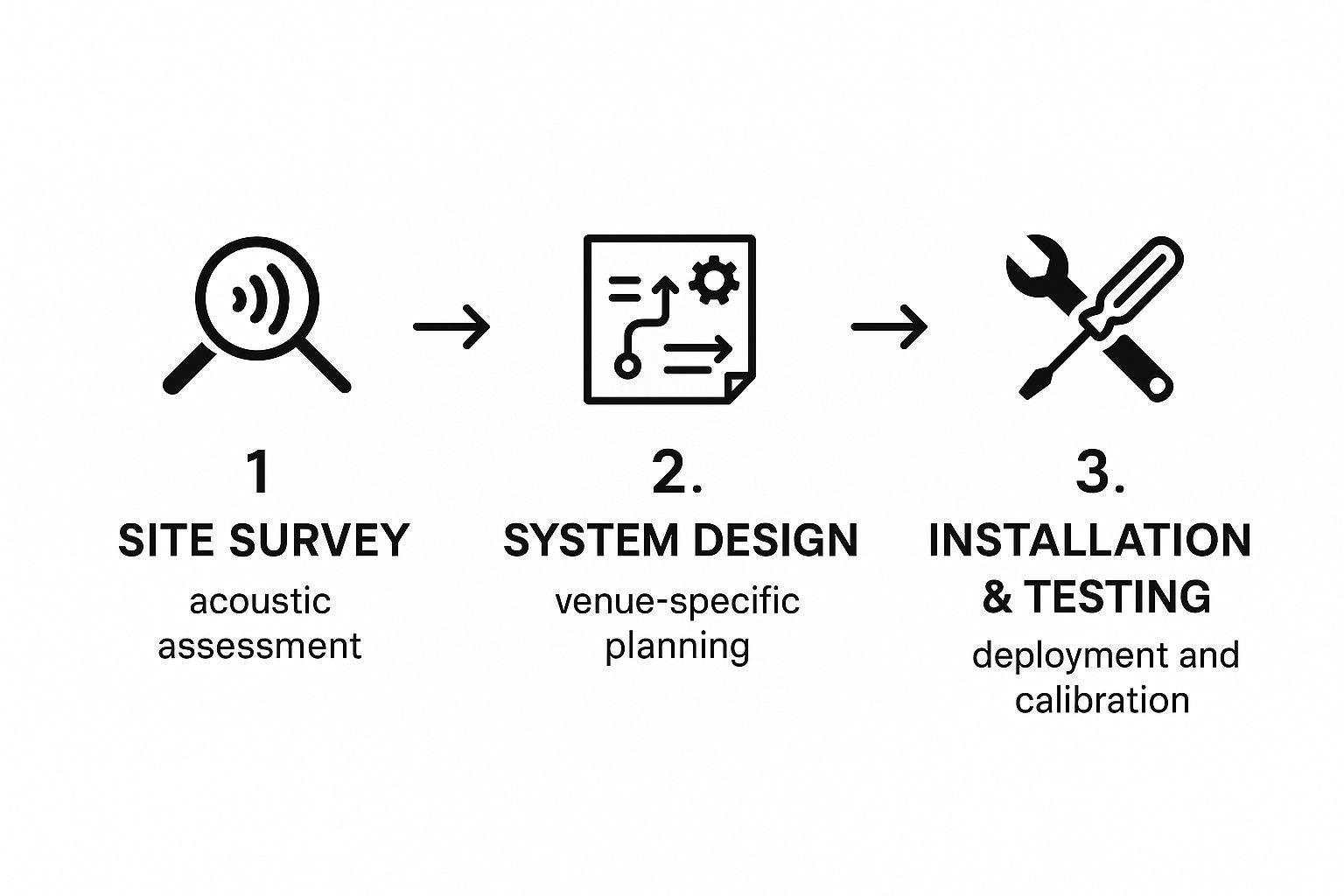
As you can see, the information gathered during the survey directly feeds into the system design. That design, in turn, provides the complete blueprint for the installation and testing phases, creating a clear, logical path to getting the job done right.
Selecting the Right Commercial-Grade Equipment
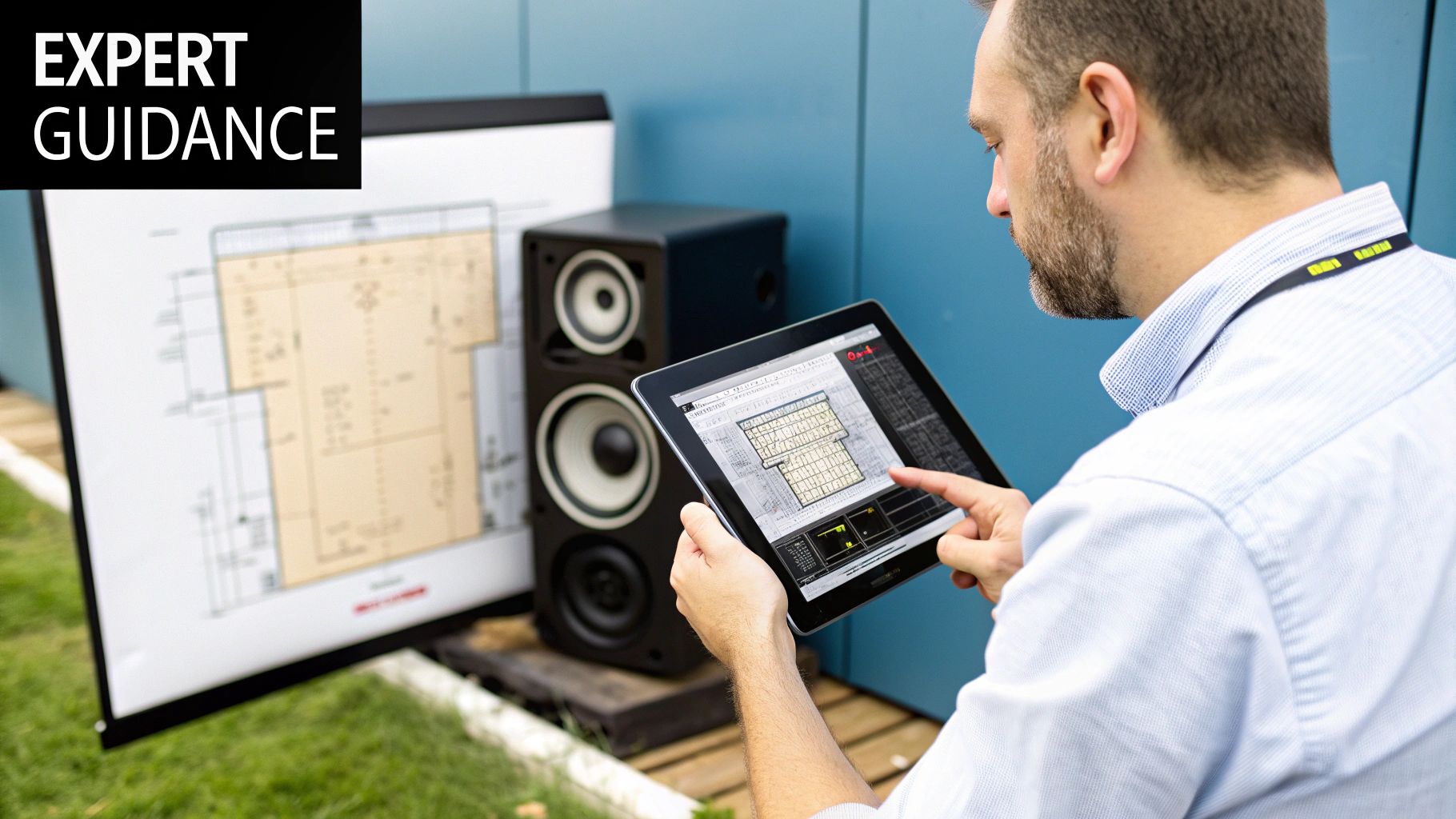
The world of professional audio gear can feel overwhelming, but it really boils down to four core components: amplifiers, mixers, speakers, and microphones. The biggest mistake I see people make is confusing this equipment with the consumer electronics you’d find at a big-box store.
There's a night-and-day difference. Your home stereo simply isn't built to run for 12 hours straight, seven days a week, powering sound across a large commercial space. Commercial-grade hardware, on the other hand, is engineered precisely for that kind of punishment. Think of it as investing in a workhorse, not a show pony. It’s an investment in reliability and long-term performance.
Matching Hardware to Your Environment
Choosing the right gear is all about context. The speakers that work wonders in a quiet office would be completely useless on a noisy warehouse floor. This is where a professional installer’s experience becomes invaluable—they know how to translate your needs into a specific equipment list that makes sense for your space.
Let's look at a few real-world examples:
Office or Retail Store: Here, you'll likely want in-ceiling speakers. They're fantastic for providing even background music and clear paging announcements, all while disappearing into the ceiling for a clean, professional look.
Restaurant Patio or Warehouse: For these more demanding spots, you need something tougher. Surface-mount speakers are the go-to because they're built to handle weather, dust, and moisture while projecting sound effectively in loud environments.
Conference Room: The goal here is crystal-clear communication. A typical setup involves a sensitive ceiling microphone array paired with a high-clarity soundbar. This ensures everyone in the room and on the other end of the call can hear and be heard perfectly, without any distracting echo.
Your installer's job is to translate your goals into a concrete list of equipment. Having this basic understanding allows you to be an active part of that conversation, ensuring the final system truly meets your needs and budget.
This emphasis on quality and dependability is what defines the professional audio market. It's a massive industry, projected to be worth around USD 10 billion by mid-2025, with established names like Bose and Panasonic leading the charge. You can discover more insights about commercial audio trends on datainsightsmarket.com. When you search for a “commercial audio installation near me,” you’re connecting with experts who specialize in these robust, business-focused solutions.
What to Expect During Installation and Tuning
So, the big day is here. This is when all the planning pays off and your commercial audio system starts to become a reality. Expect a team of technicians to arrive ready to get their hands dirty. They'll start by carefully mounting speakers, strategically running all the low-voltage wiring through your walls and ceilings, and setting up the central equipment rack—the true nerve center of your new setup.
While the installers will work to keep disruptions to a minimum, the real magic happens after the physical work is done. Once every wire is connected and every speaker is in place, the most crucial part of the process begins: system tuning.
The Art of System Tuning and Calibration
Don't mistake this for simply turning the knobs up. Tuning is a science, and it’s what separates a decent audio system from an absolutely incredible one. This is where a true professional earns their keep, using specialized tools like audio analyzers to dial everything in perfectly.
They'll meticulously perform a few key adjustments:
Balancing Frequencies: Every room has a unique acoustic signature. The installer will tweak the bass, mids, and treble to work with your space, not against it, ensuring a rich, balanced sound instead of a muddy or tinny one.
Setting Zone Levels: The volume that's perfect for your bustling production floor is way too loud for the quiet reception area. They’ll calibrate each zone individually so the audio level is just right for its purpose.
Eliminating Feedback: Nothing ruins a presentation faster than that awful, high-pitched squeal from a microphone. Installers will test every mic and speaker combination to hunt down and eliminate any potential for feedback.
This process is all about maximizing clarity. In many ways, it's like applying the professional techniques for how to remove background noise for perfect audio to an entire building.
This final, detailed calibration is what truly brings your investment to life. It ensures every announcement is crisp and intelligible, and every note of background music sounds exactly as it should—perfectly suited to your environment.
This level of precision is why investing in professional-grade equipment and installation is so important. It's a massive industry, valued globally at around USD 38.43 billion, and the significant market share of high-quality microphones shows just how vital clear audio is. You can get a deeper dive by checking out the full professional audio market report from Mordor Intelligence.
Ultimately, when you search for "commercial audio installation near me," this expert tuning is the high-value service you're paying for. It’s the difference between just hearing sound and truly experiencing it.
Thinking About Long-Term Support and Maintenance
Once your new audio system is up and running, it's tempting to check it off the list and move on. But your audio setup isn't just a one-and-done purchase; it's a real business asset that needs to be looked after to give you the best return. Protecting that investment is all about thinking past installation day.
A truly professional installer won't just vanish after the final soundcheck. They should be talking to you about a service agreement that keeps everything in peak condition. This is more than a simple warranty. It's about proactive care—catching small hiccups before they snowball into expensive, business-disrupting failures. You wouldn't skip oil changes on a company vehicle, and the same logic applies here.
Building a System That Lasts
An experienced audio pro does more than solve your immediate sound problems; they build with the future in mind. They'll design a system that can grow with you, ensuring the whole setup is scalable. That way, when your business expands or new tech comes along, you can easily add components or integrate new features without ripping everything out and starting over.
The best commercial audio installation is one that solves today's problems while being ready for tomorrow's opportunities. Scalability prevents your investment from becoming obsolete in just a few years.
This kind of forward-thinking is what ensures your system delivers value for years, not just months. For example, a scalable design means you can easily:
Add outdoor speakers when you build that new patio area.
Integrate better microphones for a new video conferencing suite.
Expand your zoned audio into the office space you just leased next door.
This long-term vision is a huge differentiator. It’s something to keep top of mind when you’re looking for a partner for your commercial audio installation near me search.
Your Commercial Audio Questions, Answered
Even the best-laid plans come with questions, especially when you're investing in your business's atmosphere. We get it. Here are some straightforward answers to the questions we hear most often from business owners just like you.
What's the Real Cost of a Commercial Audio System?
This is always the first question, and the honest answer is: it depends. There’s no one-size-fits-all price tag. For a small coffee shop needing simple background music, you might be looking at a few thousand dollars. But for a large restaurant with multiple dining areas, a bar, and a patio—all needing independent control—the cost could easily climb into the tens of thousands.
The final number really comes down to a few key things:
Sheer Size: More square footage means more speakers, more wiring, and more powerful amplifiers to drive it all.
Acoustic Challenges: Got soaring ceilings, lots of glass, or concrete floors? Those spaces can create echoes and dead spots, often requiring specific types of speakers or even acoustic treatments to get the sound just right.
Equipment Grade: Pro-grade gear is built to run 8-12 hours a day, 7 days a week. It costs more upfront, but it's an investment in reliability that consumer electronics just can't match.
Control & Features: Do you want a simple volume knob behind the counter, or do you need a sophisticated touchscreen that lets your manager adjust the audio in six different zones from their phone? The more complex the control, the more it adds to the budget.
How Long Will My Business Be Disrupted for Installation?
The timeline is just as custom as the price. We can often get a simple system up and running in a small office or retail store in a single day.
However, a big project in a busy hotel or an operational warehouse is a different story. These installations require careful planning, extensive wiring (often run through ceilings and walls), and coordination with other work happening on-site. An install like that could take a week or even longer to complete properly. Once we've done a full site survey, your installer will give you a firm, realistic timeline.
The Bottom Line: A detailed on-site survey is the only way to get a truly accurate quote and installation schedule. It allows a professional to see the space firsthand, understand your goals, and build a proposal that reflects your actual needs.
For more general questions about our services and processes, you might find the answers you're looking for in the Intouch.com general company FAQs.
Can I Just Use My Own Speakers or an Amplifier I Already Have?
You could, but we almost always advise against it. Think of it like this: you wouldn't use a regular car engine in a commercial delivery truck. It might work for a little while, but it wasn't designed for that kind of constant, heavy-duty use.
Consumer audio gear is the same—it’s not built to withstand the rigors of all-day, every-day commercial operation. Beyond that, mixing and matching consumer and pro components is a recipe for headaches. You can run into impedance mismatches, compatibility issues, and just plain bad sound. Sticking with a fully professional system recommended by your installer ensures everything is designed to work together perfectly for great sound and long-term reliability.
Ready to get a clear, no-nonsense quote for your business? The team at PCI Audio-Video Security Solutions specializes in designing and installing reliable, high-performance audio systems. https://www.pciavss.com
Comments