


Finding the Best Solar Powered Security Cameras
- Бонус за регистрацию онлайн казино
- Sep 6, 2025
- 14 min read
When you start looking for the best solar powered security cameras, names like the Ring Stick Up Cam Solar and eufy Security eufyCam Pro pop up for a reason—they're reliable, packed with features, and show just how far wire-free security has come. These aren't just gadgets anymore; they're genuinely practical solutions that prove robust security is well within reach for modern properties, finally moving us past the old-school limitations of wired surveillance.
Why Solar Is the Future of Outdoor Security
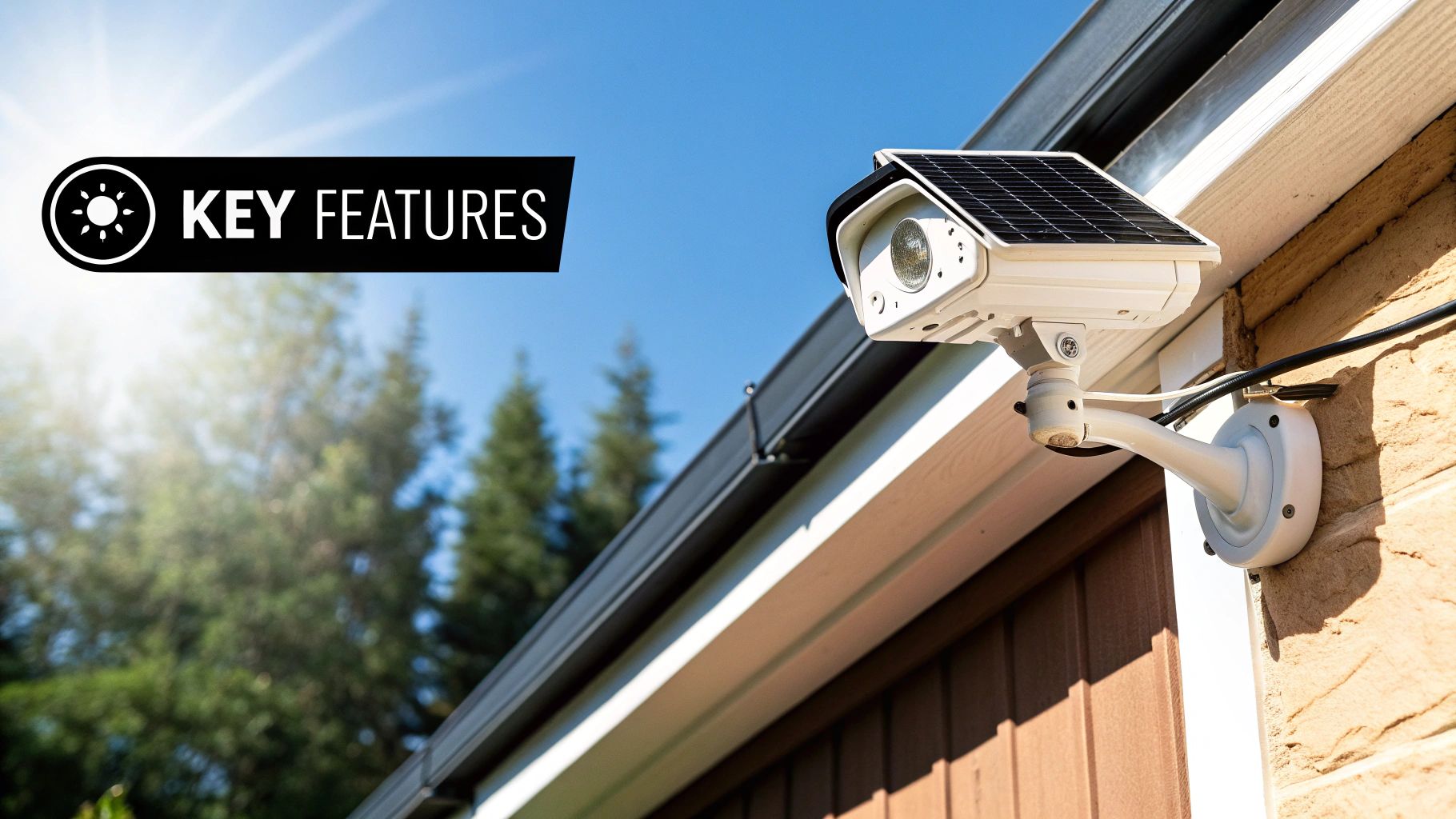
Let’s be honest, installing traditional security cameras can be a real pain. You’re often faced with drilling through walls, wrangling a mess of cables, and always have that nagging worry in the back of your mind: what happens if the power goes out? This is exactly where solar-powered cameras completely change the game.
These cameras are entirely self-sufficient. They give you the freedom to set up surveillance anywhere the sun shines—whether that’s on a backyard fence, the far end of a parking lot, or a remote construction site. Because they operate independently of the electrical grid, they turn a simple security device into a resilient, off-grid monitoring solution.
The Real-World Advantages of Going Solar
The benefits go way beyond just cutting the cord. For small business owners and site managers, the practical advantages are immediate and genuinely impactful. A solar setup means:
Lower Energy Bills: The camera runs on its own power, which translates to real, tangible cost savings over time.
Simple Installation: No need to hire an electrician or deal with wiring. Setup is fast, and you can place the camera almost anywhere.
Uninterrupted Security: They keep running during power outages, giving you reliable protection when you need it most.
Environmental Responsibility: Using renewable energy is a straightforward way to reduce your operation's carbon footprint.
This shift toward sustainable and efficient surveillance isn't just a niche trend; it's a massive movement. In 2023, the global solar-powered security camera market was valued at USD 2.1 billion and is expected to skyrocket to an impressive USD 8.9 billion by 2033. That kind of growth, as detailed in reports on solar camera market growth from DataHorizzon Research, shows a clear preference for energy-conscious security.
A solar-powered security camera isn’t just an alternative; it's an upgrade. It offers a level of flexibility and reliability that wired systems simply can't match, especially for properties without easy access to power.
Quick Guide to Solar Security Camera Features
Before we get into the weeds, it helps to know what separates the best solar-powered security cameras from the rest. This quick guide breaks down the essential features to look for when you're comparing models.
Feature | Why It Matters | Look For |
|---|---|---|
Panel Efficiency | A more efficient panel charges the battery faster, ensuring the camera stays powered even on cloudy days. | Monocrystalline panels, higher wattage ratings. |
Battery Capacity | A larger battery (measured in mAh) stores more power, keeping the camera running longer without sun. | 10,000 mAh or higher for demanding areas. |
Connectivity | Determines how the camera sends video. Wi-Fi is great for homes, while 4G LTE is a must for remote sites. | Dual-band Wi-Fi or 4G LTE options with a SIM card slot. |
Weather Resistance | Your camera has to survive rain, snow, and heat. An IP rating tells you how tough it is. | IP65 rating or higher for robust outdoor protection. |
Having a handle on these core components is the first step toward choosing a system that’s perfectly suited for your security needs, whether you're watching over a small business or a sprawling job site.
How Solar-Powered Security Cameras Actually Work
At first glance, solar security cameras might seem like complicated tech. But when you break it down, the principle is surprisingly simple. Think of it as a miniature, self-sustaining power station built specifically to keep watch over your property. Each part has a straightforward, yet crucial, job to do.
The whole system boils down to three key components working in harmony: the solar panel, a rechargeable battery, and the camera itself. They form a constant loop of generating, storing, and using power, allowing the camera to operate completely off-grid, no wiring needed.
The Power Generation Engine
The solar panel is the heart of the operation—it’s the power plant. Its only job is to soak up sunlight and convert it into electricity using something called the photovoltaic effect. When the sun’s rays hit the panel, they energize the solar cells, creating a flow of DC power.
This electricity then splits off to do two things at once. First, it powers the camera directly while the sun is out. Second, and just as important, it funnels all the extra juice over to the battery, topping it up for when the sun goes down. This is why you'll often hear people talk about panel quality; a high-efficiency monocrystalline panel, for instance, can squeeze more electricity out of the same amount of sunlight, which means a faster charge and a more reliable system overnight.
The Energy Reservoir
If the solar panel is the power plant, think of the rechargeable battery as the system's water tower. Its purpose is simple: store all that excess energy the panel collected during the day. This stored power is what keeps your camera online through the night, on cloudy days, or during a storm.
This is where you’ll see specs like milliampere-hours (mAh). That number just tells you how much energy the battery can hold. For example, a camera with a 15,000 mAh battery has a much bigger "tank" than one with a 5,000 mAh battery, so it can run for a lot longer without seeing any sun. For anyone in a place with unpredictable weather, a bigger battery is non-negotiable.
The relationship between the panel and the battery is everything. A powerful panel with a tiny battery is like trying to fill a thimble with a firehose—you're just wasting potential. On the flip side, a massive battery paired with a weak panel is like trying to fill a swimming pool with a dripping tap. It'll never be ready when you need it.
The image below gives you a clear picture of how these pieces fit together to keep your camera running around the clock.
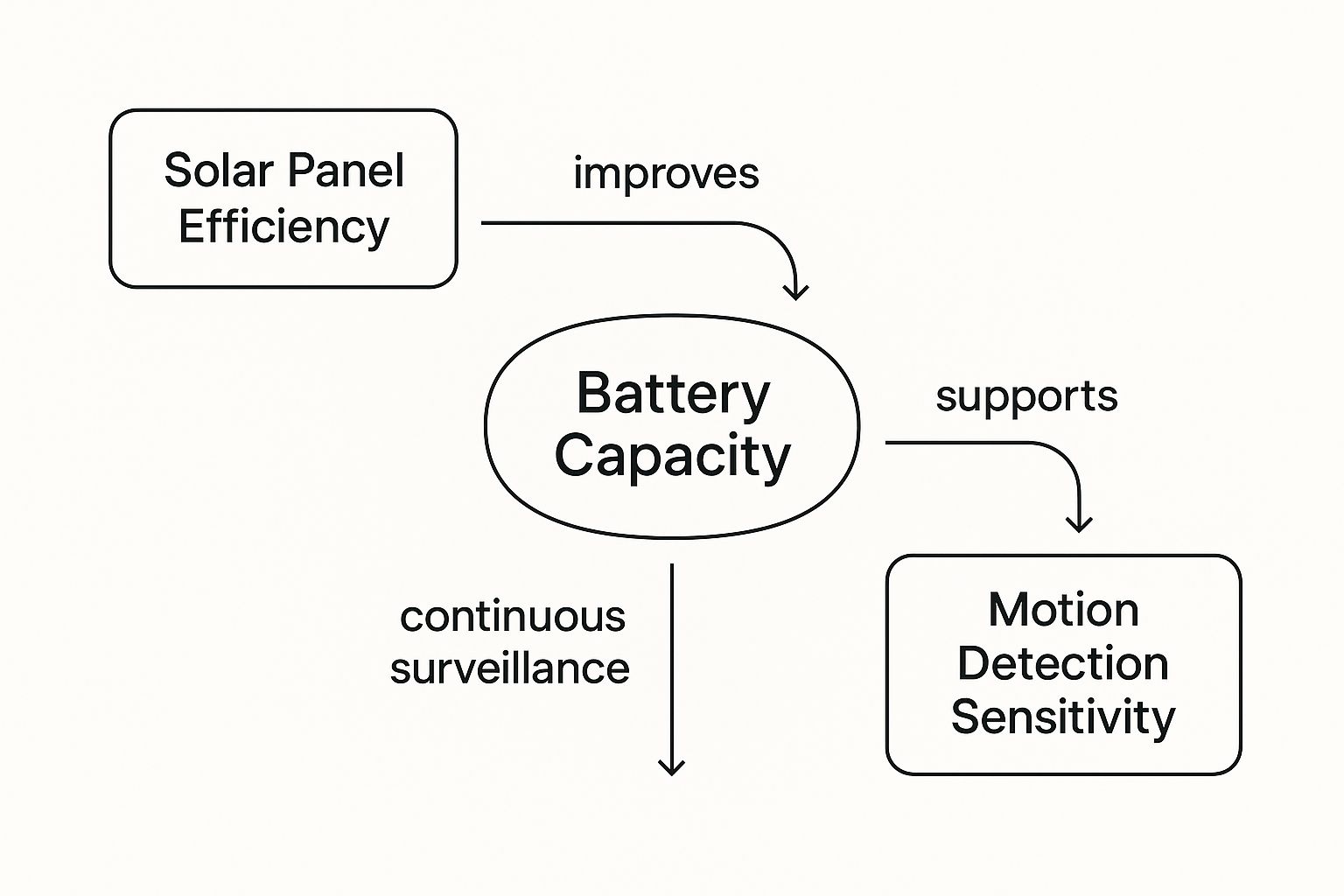
As you can see, a better solar panel fills up the battery faster. A full battery means the camera has plenty of power to keep its motion sensors active and ready to record, especially when it's dark.
The Vigilant Watchtower
Finally, we get to the camera. To make every drop of stored energy count, these cameras don't just record 24/7. Instead, they spend most of their time in a low-power standby mode—basically sleeping with one eye open.
The moment its sensors pick up movement, the camera snaps awake, starts recording, and pings your phone with an alert. This "record-on-motion" approach is the secret to their incredible battery life. Rather than burning through power constantly, they only fire up when something actually happens. This smart power management means a fully charged battery can often last for days, or even weeks, on its own.
It's this elegant dance between making power, saving it, and using it wisely that makes solar surveillance so effective and dependable.
What to Look for in a Great Solar-Powered Camera
It's easy to get lost in a sea of tech specs and marketing claims when shopping for a solar camera. Let’s cut through the noise. This is your field guide to the features that actually make a difference in day-to-day security, helping you pick the right tool for the job.
Think of it like this: you wouldn't use a hammer to turn a screw. In the same way, the features you need for a remote construction site are very different from what you'd want for your back porch. We’ll break down the essentials so you can make a smart, confident choice.
Video Resolution: Does It Really Matter?
The first thing you’ll see advertised is resolution—1080p, 2K, or even 4K. This is just a measure of how clear the picture is. While 1080p has long been the standard for "good enough," higher resolutions capture exponentially more detail.
So, is 4K worth the extra cost? If you’re a site manager trying to read a license plate across a yard or a business owner needing to clearly identify a face in a parking lot, the answer is a definite yes. That extra detail can be the deciding factor between a useful piece of evidence and a blurry, inconclusive video. For just keeping an eye on your garden, 1080p will probably do the trick just fine and will be a little easier on your battery and data plan.
Night Vision Capabilities: Seeing in the Dark
Your security needs don't clock out when the sun goes down. A camera's ability to perform in the dark is critical, and you’ll generally find two types of night vision technology.
Infrared (IR) Night Vision: This is the classic black-and-white view. The camera uses infrared LEDs to light up the scene, which are invisible to our eyes but perfectly clear to the camera's sensor. It's a reliable, power-sipping workhorse.
Color Night Vision: A more recent development, this technology uses ambient light or a small, built-in spotlight to record in full color at night. This gives you far more useful details—like the color of an intruder's jacket or a getaway car—which can be invaluable.
For most scenarios, color night vision is the way to go. The level of detail it provides can make all the difference if you ever need to use the footage.
Smart Motion Detection: AI as Your Watchdog
We've all been there—getting endless phone notifications because a tree branch is swaying in the wind or the neighbor's cat wandered by. This is where modern AI-powered detection really shines.
Instead of just sensing any old motion, smart cameras can actually tell the difference between people, vehicles, and animals. This lets you filter your alerts so you’re only notified about what truly matters. It’s a huge leap forward that saves your sanity, your camera's battery, and prevents you from ignoring a real alert.
Choosing a camera with AI-powered person and vehicle detection is one of the most significant upgrades you can make for a smarter, more effective security system. It turns your camera from a simple motion sensor into an intelligent guard.
Connectivity Options: Wi-Fi Versus 4G LTE
How does the video get from the camera to your phone? The answer to this question really depends on where you're putting it.
Wi-Fi Cameras: These are perfect for homes and small businesses where you have a solid Wi-Fi signal. They connect to your existing network, making setup simple and avoiding any extra data plan fees.
4G LTE Cameras: These are the off-grid champions. Using a SIM card and a cellular data plan just like a smartphone, they can be placed virtually anywhere. Think construction sites, farms, boat docks, or vacant lots—anywhere without Wi-Fi.
For any remote or off-grid job, a 4G LTE model isn't just a nice feature; it's the only way to make it work.
Weather Resistance and Durability
An outdoor camera has a tough job. It needs to stand up to everything nature throws at it—driving rain, freezing snow, and blistering summer heat. To know if a camera is up to the task, you need to check its IP (Ingress Protection) rating.
An IP rating is simple: the first number rates its protection against solids like dust, and the second rates its protection against liquids. For any serious outdoor use, you should be looking for a camera with a rating of IP65 or higher. This guarantees it’s completely sealed against dust and can handle being sprayed with water from any direction.
Data Storage: Local Versus Cloud
When your camera records something important, where does that footage live? You've got two main choices, and the best cameras offer both.
Local Storage: This usually means a microSD card that slides right into the camera. The big plus here is that you have physical control of your data with no monthly fees.
Cloud Storage: Your video clips are automatically uploaded to a secure online server. This is a great backup because your evidence is safe even if a thief steals or destroys the camera itself. Most cloud services require a subscription.
The technology behind these features is moving fast. We're now seeing cameras that combine 4K resolution with 360-degree views and massive local storage options up to 512GB, all driven by the need for smarter, self-sufficient security. You can discover more trends in the solar-powered camera market to see where the industry is heading.
Finding the Right Solar Camera for Your Property
The "best" solar-powered security camera isn't a one-size-fits-all product. It's the one that’s a perfect match for your property and what you’re trying to protect. A feature that’s absolutely critical for a sprawling construction site is likely complete overkill for a quiet suburban backyard.
Think of it like buying a vehicle. You wouldn't get a semi-truck for your daily commute, and you wouldn’t take a compact car off-roading. The right camera depends entirely on the job it needs to do. If you figure out your main needs first, you can skip the marketing noise and pick a system that will actually work for you.
For the Modern Homeowner
When it comes to your home, security is about more than just catching intruders. It’s about convenience, fitting into your smart home ecosystem, and frankly, not looking like an eyesore. You want a security layer that makes life easier, not more complicated.
A homeowner's wish list should probably look something like this:
Smart Home Compatibility: Does it play nice with Amazon Alexa or Google Assistant? Being able to use voice commands or add the camera to your smart home routines is a huge plus.
Intelligent Visitor Detection: This is a big one. You want alerts for people—like a package delivery—not for every squirrel that runs across the lawn. AI-powered person detection is the key here.
User-Friendly Installation: The best cameras for home use are designed for a quick DIY setup. You should be able to get it up and running on a Saturday afternoon without calling in a pro.
It’s clear homeowners are catching on. The market for home solar-powered security cameras was valued at around $593.1 million in 2025 and is only expected to grow. People want security that’s both smart and sustainable. You can get a deeper look into the home solar camera market trends on Data Insights Market.
For Businesses and Construction Sites
Now, let’s talk business. When you're guarding commercial assets, the focus shifts dramatically from convenience to pure, rugged performance. These cameras need to be tough, reliable, and able to work in the middle of nowhere, often without power or Wi-Fi.
For a business, a farm, or a construction site, your priorities are completely different. You need a workhorse, not a show pony.
On a commercial property, a security camera isn't just a deterrent; it's an operational tool. It has to deliver clear, useful information around the clock, no matter the weather or how bad the cell signal is.
Here’s what really matters for commercial and remote applications:
4G LTE Connectivity: This is non-negotiable for remote sites. If you don't have Wi-Fi—think new construction zones, storage yards, or large farms—a 4G LTE camera is your only real option. It uses a cellular plan to stream video from anywhere you can get a signal.
Powerful Night Vision: Protecting expensive equipment and materials overnight is the whole point. Look for cameras with advanced infrared or even color night vision that can capture sharp details in pitch-black conditions.
Durable and Tamper-Resistant Design: These cameras take a beating. They need a high weather-resistance rating (IP66 or IP67) and a tough, tamper-proof housing to stand up to bad weather and anyone trying to disable them.
Pan-Tilt-Zoom (PTZ) Capabilities: To cover a large area like a parking lot or a materials yard, one good PTZ camera can do the job of several fixed ones. It gives you the power to look around and zoom in on things from your phone or computer.
By first deciding if you’re a homeowner needing smart convenience or a business owner needing rugged surveillance, you can cut through the clutter. This approach ensures you invest in a camera that solves your actual problems instead of just buying the one with the longest feature list.
Installation and Maintenance Made Simple
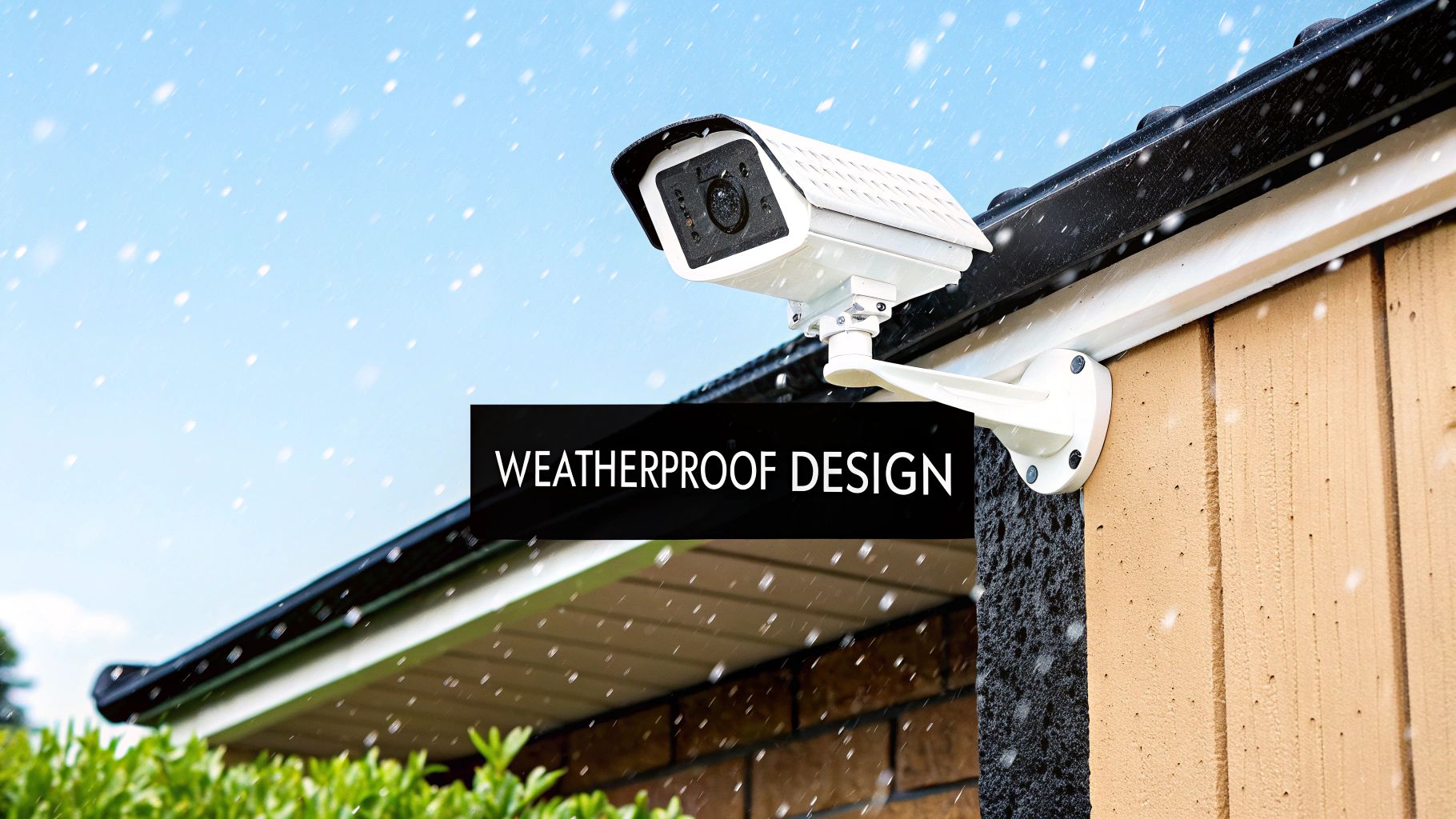
One of the best things about solar-powered security cameras is how easy they are to set up. Since you’re not tied down by electrical wiring, you can put them almost anywhere. But "anywhere" doesn't automatically mean "the best spot." A little bit of planning during installation and a simple maintenance routine are all you need to keep your camera running like a champ for years to come.
Think of the installation process as setting your camera up for success. The absolute most important factor? Sunlight. Just like a sunflower needs to face the sun, your solar panel has to be positioned to catch as many direct rays as possible throughout the day. This is what keeps the battery topped off and ready for anything.
Mastering Your Camera Placement
To get the most juice out of your panel, the golden rule is to mount it where it gets clear, direct sunlight. The perfect orientation changes based on where you live, but a few universal tips apply to just about everyone.
Go South-Facing: If you're in the Northern Hemisphere, pointing your panel south is the best way to maximize its exposure as the sun moves across the sky.
Dodge the Shadows: Before you start drilling, take a look at the spot you’ve picked at different times of the day. Watch how shadows from trees, other buildings, or even your own roof move across it. A spot that looks perfect in the morning might be completely shaded by the afternoon.
Get the Angle Right: Most solar panel mounts are adjustable for a reason. Aim for an angle between 30 and 45 degrees. This is a great starting point that helps the panel catch optimal light while also letting rain wash away dust and dirt.
As for the camera itself, mounting it 8 to 10 feet off the ground usually hits the sweet spot. It’s high enough to give you a great field of view and discourage anyone from tampering with it, but still low enough that you can reach it for maintenance without calling in a special crew.
The goal isn't just to install a camera; it's to create a self-sustaining security system. Proper panel placement is the foundation of that system, ensuring a steady stream of power that keeps your property protected day and night.
A Simple Maintenance Routine
The good news is that solar cameras are built to be incredibly low-maintenance. You don't need a complicated checklist to keep your system in top shape. Just a few quick checks every few months will ensure you get the best performance and a long lifespan out of your investment.
Here's a practical checklist to guide you through the year. Keeping up with these simple tasks will prevent most common issues before they start.
Seasonal Solar Camera Maintenance Checklist
Season | Maintenance Task | Reason |
|---|---|---|
Spring | Wipe the Panel Clean | Removes winter grime and spring pollen, maximizing light absorption. |
Summer | Check for Obstructions | Fast-growing leaves and branches can block the panel or camera view. |
Autumn | Clear Fallen Leaves/Debris | Piles of leaves can cover the panel and reduce its charging capability. |
Winter | Gently Brush Off Snow | Heavy snow blocks all sunlight; a quick, gentle clearing restores power. |
All Year | Update Camera Firmware | Check the app quarterly for security patches and new performance features. |
This simple, season-by-season approach makes maintenance a breeze. A quick clean-up for your panel, like the one detailed in this guide on how to clean solar panels for maximum efficiency, is often all it takes to see a big improvement.
Ultimately, these straightforward habits are all you need. They ensure your solar-powered security system runs reliably, giving you consistent peace of mind without any hassle.
Got Questions? We've Got Answers
When you're digging into solar security cameras, a few practical questions always pop up. It's only natural. Let's walk through the most common ones so you can feel confident you're making the right call for your property.
"How Much Sun Do These Things Actually Need?"
This is probably the number one question I get. You'd be surprised how little they require. Most modern solar cameras are incredibly efficient and only need about 2 to 4 hours of direct sunlight a day to keep the battery topped off.
Their built-in batteries are also pretty beefy, designed to hold enough juice to run for several days without any sun at all. This gives you a solid buffer for those inevitable cloudy stretches or a string of rainy days.
"Can They Record Around the Clock?"
The short answer is usually no, and that's by design. To make that solar power last, the vast majority of these cameras are motion-activated. They hang out in a low-power standby mode until something—a person, a vehicle—triggers the sensor. Then, they wake up and start recording.
While you might find a model with a 24/7 recording option, it's a massive battery drain. Honestly, it's not a practical choice unless you're guaranteed perfect, uninterrupted sunlight every single day.
Think of motion-activated recording as a feature, not a bug. It focuses on what matters, saving both battery life and your time. You end up with clips of actual events instead of hours of empty footage to scrub through.
"What’s the Difference Between Wi-Fi and 4G Models?"
This choice comes down to one simple thing: location.
A Wi-Fi solar camera is perfect for most homes and businesses. It just hops onto your existing wireless network to send its footage. It's simple, effective, and doesn't add any monthly costs.
A 4G LTE solar camera, on the other hand, is built for the back of beyond. It uses a SIM card and a cellular data plan to get online, just like your phone. This makes it the go-to solution for places with no Wi-Fi signal—think sprawling construction sites, remote farm gates, or off-grid storage yards.
Comments