


Remote Access Security Cameras Setup Guide
- Бонус за регистрацию онлайн казино
- Sep 9, 2025
- 11 min read
With a remote access security camera, you can keep an eye on your property from literally anywhere with an internet connection—your phone, a tablet, even a laptop at a coffee shop. This isn't just about recording what happens; it's about seeing it live. It transforms your camera from a simple recording device into a proactive security system, letting you intervene before a problem escalates.
Why Remote Access Is a Security Game Changer
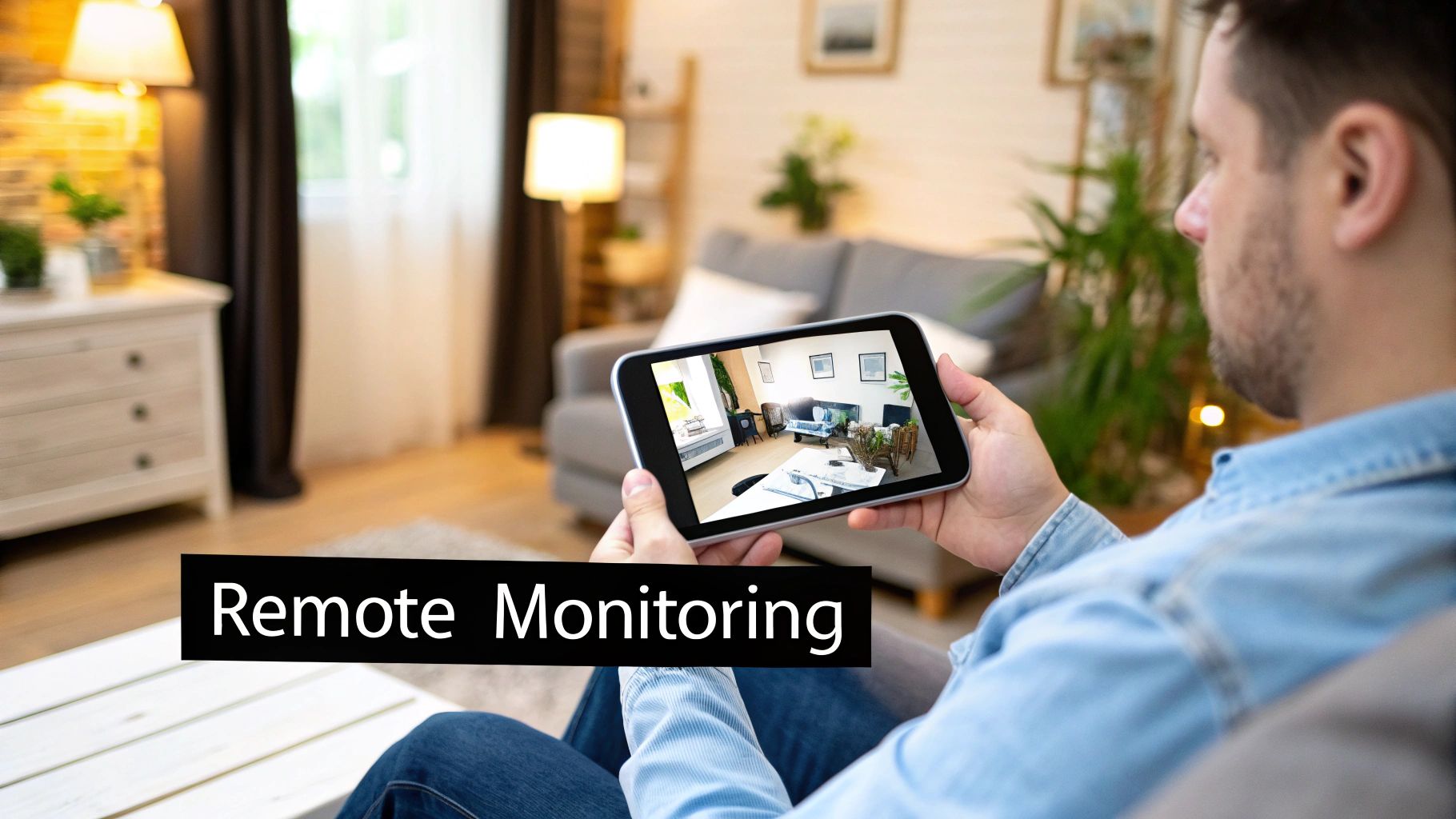
Being able to pull up a live feed of your property is a fundamental shift in how we think about security. The old way meant sifting through footage after an incident. Now, you get an instant notification on your phone the second a delivery driver drops off a package or a car pulls into your driveway late at night.
That immediate awareness is powerful. It means you can confirm that important package arrived safely, see that the kids got home from school, or even use the two-way talk feature to scare off a would-be intruder, all while you're miles away. It puts you in control.
The Technology Behind Your Peace of Mind
What makes this all work is a smart combination of your home Wi-Fi, the camera's software, and secure cloud servers. To keep that connection private and secure, understanding the role of a VPN is a big piece of the puzzle. A VPN helps ensure that your video feed is for your eyes only.
Today's cameras are more than just a lens. They're packed with AI analytics that can tell the difference between a person, a car, and the neighbor's cat. This cuts down on those annoying false alarms, so when you get an alert, you know it's something worth checking.
The demand for this kind of peace of mind has sent the surveillance market soaring. Global revenue jumped from USD 23.6 billion in 2019 to USD 35 billion in 2022. Experts predict it will reach a staggering USD 62.4 billion by 2027. That kind of growth tells you just how valuable remote monitoring has become for everyday security.
Choosing the Right Camera for Your Space
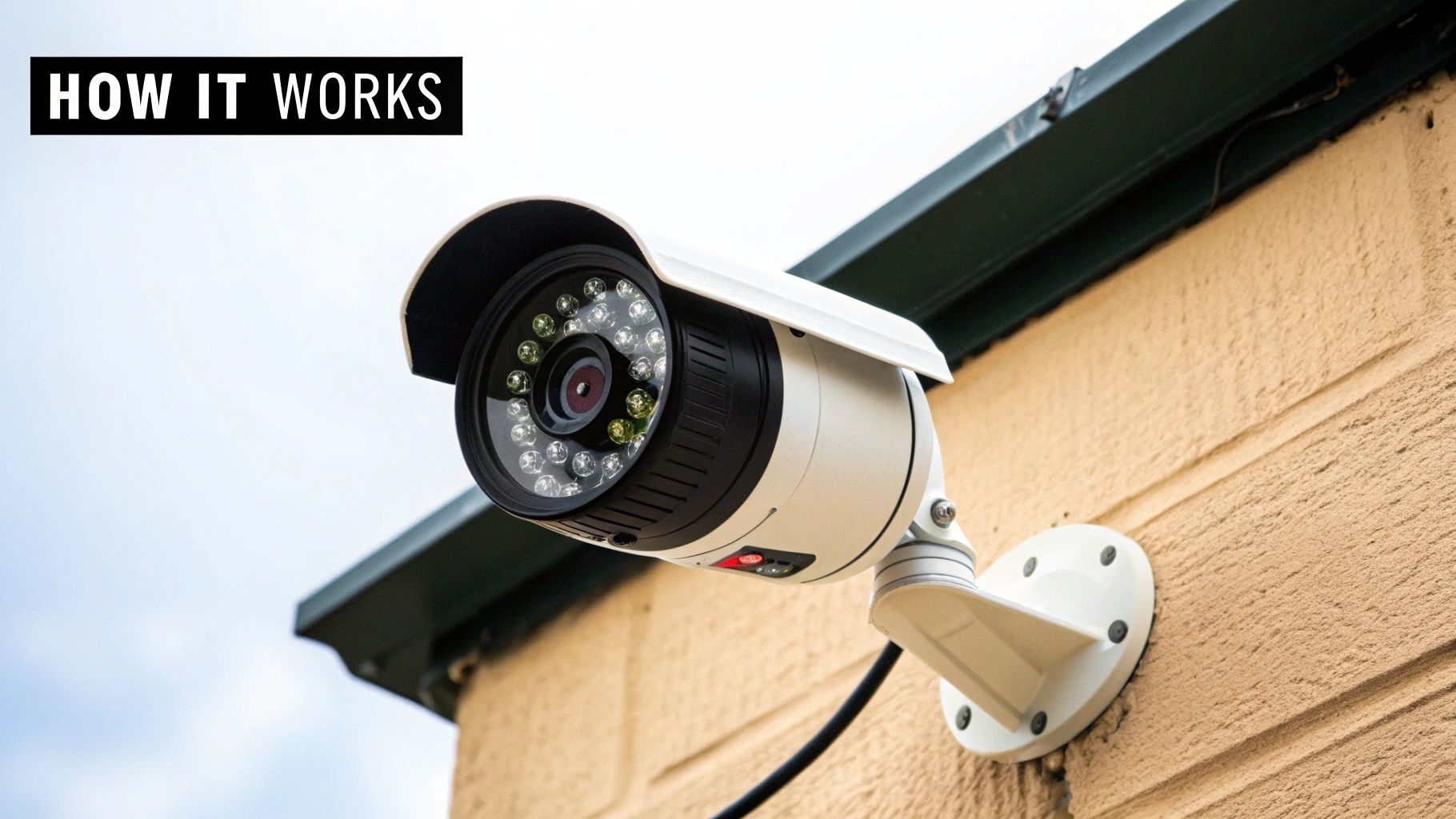
Before you can set anything up, you have to pick the right hardware. This is where it all starts, and the camera you choose will define the quality of your video, the stability of your remote connection, and ultimately, your peace of mind. It’s not about finding the most expensive camera; it’s about finding the right tool for the job.
Your needs will dictate your choice. A homeowner looking to watch their front porch has completely different requirements than a business owner monitoring a warehouse after hours. The first big fork in the road is usually wired versus wireless. Wireless cameras are a breeze to install, but a hardwired camera will always give you a more reliable connection that isn't susceptible to Wi-Fi dead spots or interference.
Decoding Key Camera Features
When you start looking at specs, it's easy to get lost in the numbers. Let’s talk about resolution. A 4K camera sounds incredible, but it's a data hog, eating up your internet bandwidth and filling up your storage in no time. For most people, 1080p HD is the sweet spot—it provides a fantastic balance of sharp, clear video without bringing your network to its knees.
If you’re mounting a camera outside, you need to pay close attention to its IP (Ingress Protection) rating. This simple two-digit number tells you exactly how weatherproof the camera is.
IP65: This means it's dust-tight and can handle water jets. It's a solid choice for a camera that's somewhat sheltered, like under an eave.
IP66/IP67: These ratings offer serious protection against powerful storms and even brief submersion in water. If your camera is going to be completely exposed to the elements, this is what you need.
To help you sort through the options, I've put together a quick comparison of what features matter for different scenarios.
Comparing Key Camera Features for Different Needs
Feature | Good for Basic Monitoring (e.g., Indoor Pet Cam) | Best for Comprehensive Security (e.g., Outdoor Property) |
|---|---|---|
Resolution | 720p or 1080p is plenty. | 1080p minimum, 2K or 4K for covering large areas. |
Connectivity | Wireless (Wi-Fi) for easy setup. | Wired (PoE) for maximum reliability. |
Field of View | 90-110 degrees is usually sufficient. | 130 degrees or more to minimize blind spots. |
Night Vision | Standard IR (15-30 ft range). | Advanced IR (60+ ft range) or color night vision. |
Weatherproofing | Not required for indoor use. | IP66/IP67 rating is a must-have. |
Storage | Cloud storage or local microSD card. | Local NVR/DVR for continuous recording and security. |
This table should give you a good starting point. Think about where the camera is going and what you absolutely need to capture, and let that guide your decision.
Picking a remote access camera means you're part of a huge movement. The smart home security market was valued at nearly USD 9.98 billion in 2024 and is expected to explode to USD 30.10 billion by 2030. With 72% of U.S. households already owning at least one smart security device, it's clear this technology is here to stay. You can dig into more of the data in a recent market analysis from Grand View Research.
One last thing: don't forget about night vision. A camera that’s blind in the dark isn't much use. Check the specs for powerful infrared (IR) LEDs that can light up a decent area, ensuring your property is covered around the clock.
Your Hands-On Camera Installation Plan
Alright, let's get to the practical part—actually getting your cameras up and running. A great security camera is only as good as its installation. This is less about being a tech genius and more about thinking strategically to make sure your cameras catch what they're supposed to.
The main goal here is to kill blind spots without creating new ones. Put on your "burglar hat" for a second. Where would you try to hide? That's where you want your cameras pointing. Pay special attention to the obvious spots like doors and first-floor windows.
Mounting a camera higher up usually gives you a broader, clearer view and keeps it out of easy reach for tampering. Just be careful not to go too high, or you'll lose the ability to see faces clearly. It's a bit of a balancing act.
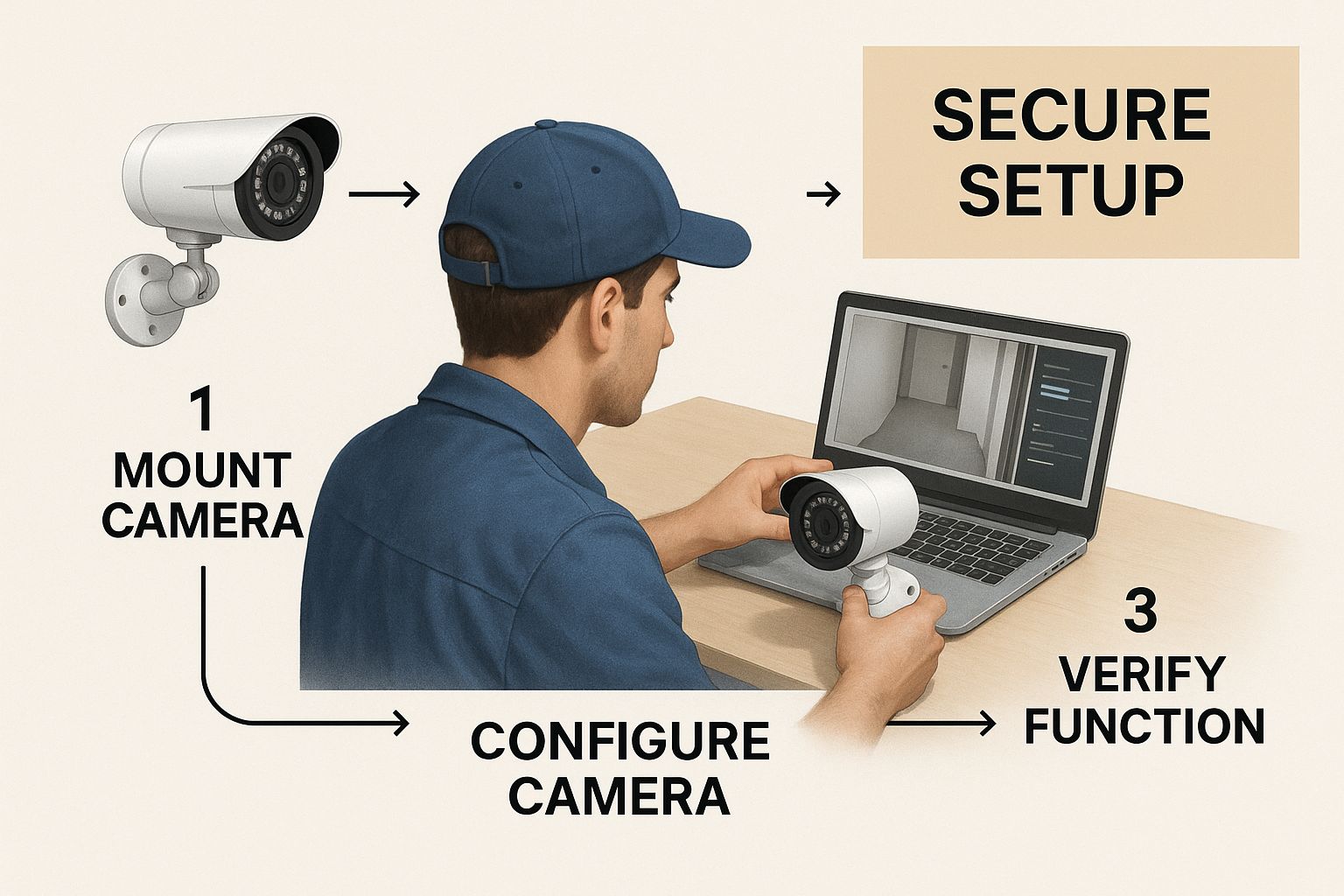
Think of this as your roadmap for a clean and effective installation, from planning where everything goes to double-checking the final setup.
Fine-Tuning Your Placement
Before you even think about drilling, take a look around. Little things can completely ruin your footage. For example, direct sunlight or a bright porch light aimed at the lens will create a massive glare, washing out the entire picture. Try angling the camera down a bit to dodge this and to get a better perspective on anyone approaching.
If you’re going wireless, your Wi-Fi signal is everything. A weak signal means a spotty, unreliable video feed—which is a major security gap. Grab your phone, download a Wi-Fi analyzer app, and walk around to test the signal strength exactly where you plan to mount each camera.
Here’s a pro tip I can't stress enough: always check the live view on your phone before you permanently screw the camera into the wall. What looks perfect from the top of a ladder might show a huge blind spot on screen. Hold it in place temporarily with tape or have someone help, and adjust it until the view is just right.
For those of you using a wired system, planning the cable run is just as crucial. You'll want to route wires through the attic, crawl spaces, or neatly along siding. This protects them from the weather and makes them much harder for someone to cut. A tidy installation isn't just about looks—it's a security feature on its own.
Getting Your Camera Online for Remote Viewing
With your camera physically mounted, it's time to bring it to life. This is where the magic happens—connecting the hardware to your network so you can get that live view on your phone, no matter where you are. Thankfully, most modern cameras have made this part incredibly easy.
You'll typically start by downloading the manufacturer's app and creating an account. From there, it's often as simple as scanning a QR code on the camera itself. This one-scan action securely pairs the device to your account and walks it through connecting to your home Wi-Fi. This user-friendly approach is a big reason the wireless home security camera market, valued at USD 11.1 billion in 2025, is expected to surge to USD 39.8 billion by 2035. You can see the full breakdown in this wireless camera market analysis.
Working Through Common Network Glitches
While the QR code setup usually works without a hitch, Wi-Fi can sometimes be finicky. I've found the most common culprit is connecting to the wrong Wi-Fi band.
A lot of security cameras, especially for remote access, will only work on the 2.4 GHz band. Why? Because its signal has better range and is much better at getting through walls compared to the speedier 5 GHz band. If your phone is currently on your 5 GHz network, the setup might fail. The quick fix is to temporarily switch your phone over to the 2.4 GHz network just for the setup process.
Remember, for a security camera, a stable connection is far more important than raw speed. A choppy or lagging video feed completely defeats the purpose of live monitoring. Your camera needs a steady upload stream to send you that video.
Getting your network settings right can make a world of difference in performance. To make sure the live view you're counting on is clear and reliable, it's worth taking a few minutes to optimize your internet connection for seamless streaming. This can help you avoid frustrating buffering or dropped feeds right when you need to see what's happening.
Getting the Most Out of Your Camera's App
Your phone is now the command center for your home security, but digging into the app's settings is where the real power lies. Most cameras come with generic, out-of-the-box settings that just don't cut it for real-world use. Let’s get it dialed in.
Drawing the Line with Motion Detection Zones
The single most important tweak you can make is setting up motion detection zones. This is a game-changer. Think of it as telling your camera exactly what to care about by drawing virtual tripwires over the video feed.
For example, you can draw a box around your front porch and walkway while completely ignoring the sidewalk and busy street just a few feet away. This one adjustment can take your notifications from 100+ per day down to a handful of meaningful alerts. You’ll go from being annoyed by your camera to actually appreciating what it does.
Taming Your Notifications and Deciding on Storage
With your zones locked in, it’s time to fine-tune what kind of motion actually triggers an alert. Most modern apps are smart enough to distinguish between a person, a vehicle, or a stray cat. Setting this up means your phone will buzz for a package delivery, not every time a car drives by.
The whole point is to achieve "alert hygiene." You want to be informed, not overwhelmed. If your phone pings constantly for irrelevant things, you'll eventually start ignoring everything—including the one alert that actually matters.
Next up is a big decision: where will your video clips live? This choice boils down to cost, how you want to access your footage, and your personal privacy comfort level.
Here’s a quick breakdown of your two main options for remote access security cameras.
Comparing Video Storage Options
Feature | Local Storage (microSD Card) | Cloud Storage (Subscription) |
|---|---|---|
Cost | One-time purchase of an SD card. | An ongoing monthly or annual fee. |
Convenience | You have to physically pull the card to review footage. | Access your video history from anywhere, on any device. |
Security | If a burglar steals the camera, they steal the footage too. | Your video is encrypted and stored safely off-site. |
Honestly, a lot of people find a hybrid approach works best. The camera can record everything to the local microSD card as a complete backup, while a cloud plan gives you that instant, on-the-go access to the important motion-triggered clips. It really is the best of both worlds.
Protecting Your Privacy with Smart Security
A security camera is supposed to give you peace of mind, not open a backdoor for strangers to look into your home. It’s a sobering thought, but recent studies found over 40,000 security cameras were wide open for anyone online to access. This makes locking down your device an absolute necessity.
Your first and most critical move is to create a rock-solid, unique password. I can't tell you how many times I've seen people leave the default credentials like "admin" in place. That's practically an invitation for trouble. A strong password is your best defense—mix it up with uppercase and lowercase letters, numbers, and symbols. The more complex you make it, the harder it is for someone to crack.
Layering Your Defenses
Once you have a great password, the next step is to add another layer of security. If your camera's app offers two-factor authentication (2FA), turn it on right now. Seriously, don't wait. This simple feature sends a one-time code to your phone before allowing anyone to log in. Even if a hacker somehow gets your password, 2FA will stop them cold.
Think of it this way: a strong password is the high wall around your digital castle, but two-factor authentication is the guarded gate. You really need both to be secure.
Finally, you can't just set it and forget it. You have to keep your camera's firmware updated. Manufacturers are constantly finding and fixing security holes, and they push those fixes out as firmware updates. These are your camera’s defense against the newest threats. Most apps will pop up a notification when an update is ready—don't ignore it.
So, to keep your camera secure, these are the non-negotiables:
Set a strong password: Make it long, complex, and something you don't use anywhere else.
Turn on 2FA: It’s the single best thing you can do to prevent unauthorized access.
Got Questions? We've Got Answers
Even the slickest security camera setup can leave you with a few questions. It’s completely normal. I've heard just about all of them over the years, so let's tackle some of the most common ones that come up.
Is My Internet Good Enough?
This is probably the #1 question I get. For the most part, whatever internet plan you have right now is likely fine. The number that really matters isn't your download speed, which is what most providers advertise, but your upload speed.
Think of it this way: your camera is uploading a video stream to the internet so you can view it. A good starting point is having at least 2 Mbps of upload speed for each camera. If you're running, say, four HD cameras at once, you'll want to make sure you have enough upload muscle to handle it without the feed getting choppy or pixelated.
Can I Check My Cameras on My Phone and My Computer?
Absolutely. That’s one of the best parts of modern systems. You can (and should) install the manufacturer’s app on all your devices—your phone, your partner's phone, your tablet, etc. Just log in with the same account, and you're all set.
Most brands also provide a web-based portal. This is incredibly handy for checking in from your work computer or a laptop without needing to install any software. You just open a browser, log in, and you've got eyes on your property.
A great question I often hear is, "What happens if my internet goes out?" While you obviously can't watch the live stream remotely, any camera with an SD card inside will keep right on recording when it detects motion. Once the internet comes back online, the camera reconnects on its own, and you can go back and see everything you missed.
This combo of local recording and access from any device is what gives you a truly reliable security setup. It ensures you’re covered, no matter what.
For professional-grade security solutions tailored to your property, PCI Audio-Video Security Solutions offers advanced camera systems and expert installation. Secure your space by visiting our website.
Comments