


Temporary Security Cameras Guide
- Бонус за регистрацию онлайн казино
- Jul 16, 2025
- 14 min read
Imagine you need a top-notch security guard for a temporary job. You want someone who can start immediately, work 24/7 without a break, and then simply leave the moment the project is finished. That's essentially what you get with temporary security cameras—a smart, flexible surveillance solution designed for short-term needs, but without the cost and hassle of a permanent setup.
Why Choose Temporary Security Cameras
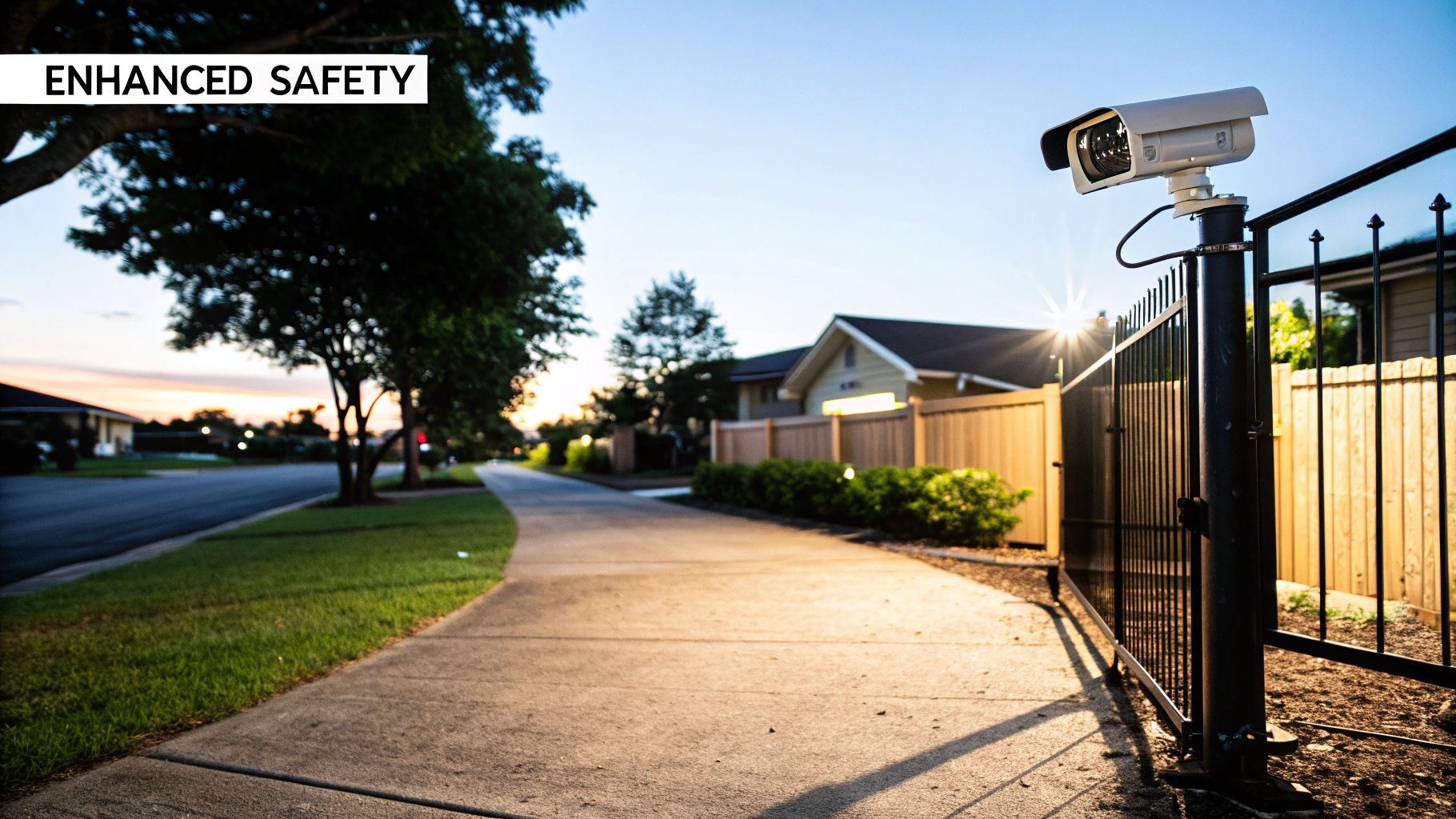
Think of it as "security on-demand." These systems aren't a downgrade from traditional security; they're a strategic tool for situations that are constantly changing. Whether you're managing a busy construction site, a pop-up retail store, or a weekend music festival, temporary solutions give you powerful eyes on the ground right where you need them. This solves a huge headache for project managers and event organizers who deal with short-term but very real security risks.
Instead of spending weeks planning, digging trenches for cables, and navigating a complicated installation process, a temporary system can be up and running in just a few hours. That kind of speed is a game-changer for projects with tight timelines or layouts that are always in flux.
Built for Flexibility and Power
The real magic of these systems is how self-sufficient and feature-rich they are. We're not talking about your basic store-bought cameras. These are rugged, professional-grade units built to handle tough environments. Most high-quality systems come equipped with:
Independent Power Sources: They typically run on solar panels that charge high-capacity batteries. This brilliant setup ensures they keep recording day and night, even when it's cloudy, without ever needing to be plugged into a power grid.
Cellular Connectivity: Forget about Wi-Fi dead zones. These cameras use their own built-in 4G or 5G connections to stream HD video and send instant alerts from practically anywhere you can get a cell signal.
Advanced Camera Technology: You get more than just a live feed. Expect crystal-clear high-resolution video, powerful night vision, and often AI-driven analytics that can tell the difference between a person, an animal, or a car.
The core benefit is agility. A temporary solution allows you to place high-tech eyes exactly where you need them, for precisely as long as you need them, and then move them or remove them with ease.
This blend of quick deployment, self-reliance, and modern tech makes temporary surveillance an incredibly practical and dependable choice. It proves that "temporary" doesn't mean weak—it means smart, adaptable, and perfectly built for the fast-paced security challenges we face today.
Where Temporary Surveillance Excels
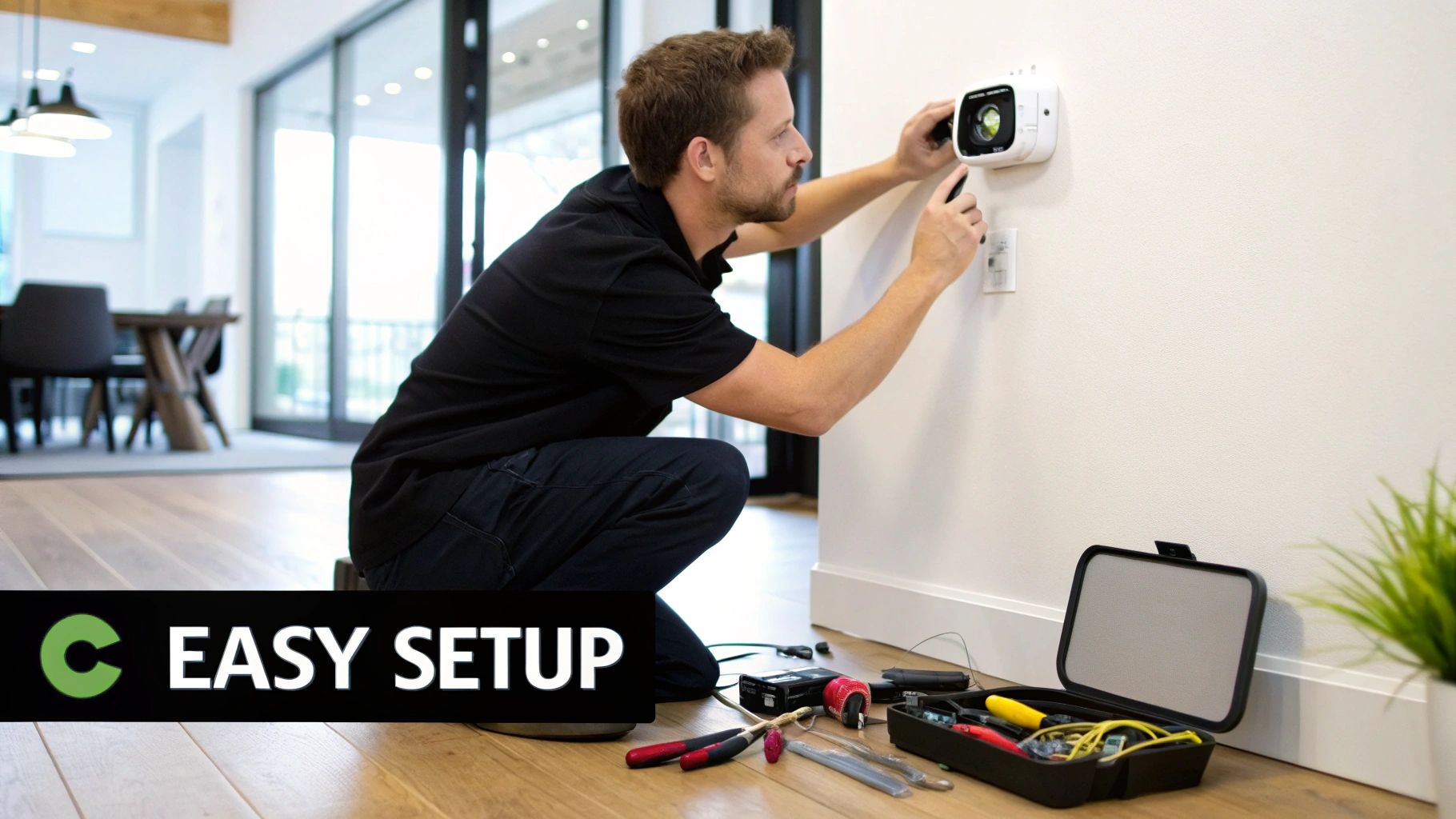
This is where the real value of temporary security cameras clicks into place. It’s one thing to talk about them, but seeing them in action reveals just how well they solve real-world problems. They're designed for situations where a permanent camera setup just isn't feasible—whether it's too expensive, impractical, or simply impossible.
Think about a construction site. The project manager has a constant headache worrying about expensive materials like copper wiring and heavy equipment sitting out in the open. It’s a huge target for theft, which can bring a project to a screeching halt. A solar-powered camera tower can be rolled in and set up in a single afternoon, giving a bird's-eye view to deter anyone thinking of helping themselves after hours.
Protecting Assets and People
Now, picture a massive outdoor music festival. The event coordinator is juggling a thousand things, but nothing is more important than crowd safety. Mobile camera units can be placed at key chokepoints—entrances, stages, parking lots—giving security a live look at the entire venue. They can spot problems before they escalate.
It's a similar story for a realtor with a high-end vacant property. Leaving a valuable home unsecured between showings is a huge risk. Instead of a costly, permanent install that might damage the walls, a small, battery-powered camera can be discreetly placed inside. It offers total peace of mind, sending an instant alert if anyone enters without permission.
The big idea here is simple: you get robust security exactly when and where you need it, without the long-term strings attached. This adaptability is what makes these systems so powerful for today's security needs.
Diverse and Critical Use Cases
The flexibility of these systems means they can be used in all sorts of scenarios, filling security gaps that traditional systems just can't cover.
Construction Sites: This is the most common use. Temporary security cameras not only deter theft and vandalism—a problem that costs the industry over $1 billion a year—but also help managers keep an eye on project progress.
Outdoor Events: Perfect for everything from concerts to street fairs. These cameras help with crowd control, watch for safety hazards, and provide clear evidence if an incident occurs.
Vacant Property Security: They are an ideal solution for securing empty homes, commercial buildings, or properties under renovation, keeping them safe from squatters and break-ins.
Critical Infrastructure Protection: When a remote power substation or pipeline needs extra eyes during maintenance or a security threat, temporary units can be deployed in a flash.
For more advanced needs, especially in defense, drone technology offers another layer of temporary surveillance. You can learn more about how it’s being used by Revolutionizing Defense and Security with Drones. It all comes down to finding a practical, targeted solution for a specific problem.
Temporary Versus Permanent Security Systems
Deciding between a temporary and a permanent security system is a lot like choosing whether to rent an apartment or buy a house. One gives you flexibility and a clear monthly cost, while the other is a long-term investment. Honestly, there's no single "right" answer—it all comes down to your project's specific needs, timeline, and budget.
Permanent systems are a traditional capital expense. You buy the hardware outright and pay for a professional to install it, which can mean running wires through walls and permanently mounting cameras. The initial hit to your budget can be significant, even if the monthly monitoring fees seem lower over the long haul.
Temporary security cameras work on a completely different model. Instead of a huge upfront purchase, you're looking at a predictable rental fee. This is an operational expense that bundles the camera, data plan, ongoing maintenance, and tech support into one package. It’s a full-service solution built for a specific, limited timeframe.
Speed and Agility in Deployment
The biggest and most immediate difference you'll notice is how fast you can get up and running. Getting a permanent system installed can take days, sometimes even weeks. It's a planned-out process that involves coordinating with electricians and installers.
In stark contrast, a temporary unit, like a solar-powered camera trailer, can be dropped off, set up, and activated in just a few hours. That kind of speed is a game-changer for job sites or events where security needs can pop up with little to no warning.
This visual breakdown really highlights the core differences in cost, installation, and portability.
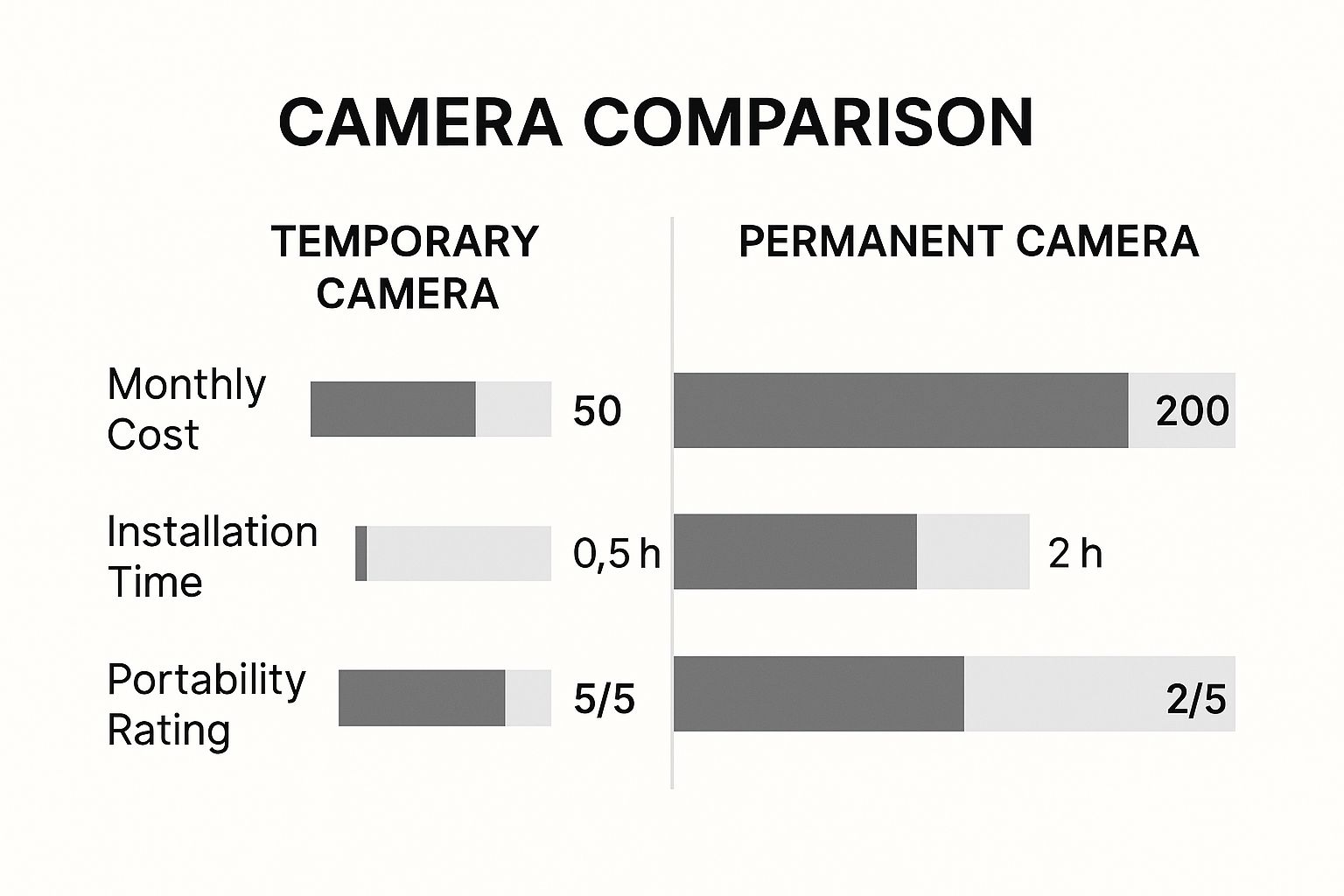
As you can see, temporary solutions offer a massive advantage when you need to be nimble. For any short-term project where flexibility is non-negotiable, they are often the smarter choice.
A Head-to-Head Comparison
To make the choice clearer, let's put these two options side-by-side. This table breaks down the key differences to help you figure out which solution is the best fit for your project.
Feature | Temporary Security Cameras | Permanent Security Systems |
|---|---|---|
Cost Structure | Operational Expense (OpEx): Predictable rental fees. | Capital Expense (CapEx): High upfront purchase & install cost. |
Deployment Speed | Fast: Often deployed and active within hours. | Slow: Installation can take days or weeks. |
Flexibility | High: Easily moved, relocated, or removed as needed. | Low: Fixed in place; moving is difficult and costly. |
Technology | Current: Rental fleets are regularly updated with new tech. | Static: Can become outdated; upgrades require new purchases. |
Maintenance | Included: Typically part of the rental agreement. | Owner's Responsibility: You pay for all repairs and upkeep. |
Best For | Short-term projects, events, remote sites, evolving needs. | Long-term property ownership, stable environments. |
Ultimately, the best choice isn't about which system is "better" overall, but which one aligns perfectly with your specific operational and financial realities.
Technology and Total Cost of Ownership
Here’s something people often overlook: permanent systems can start feeling old fast. Once it's installed, the technology is locked in. Upgrading usually means buying all new hardware. With temporary solutions, you're renting, so providers are constantly refreshing their equipment. This gives you access to the latest and greatest features, like:
Advanced AI Analytics: Smart detection that can tell the difference between a person, a car, and a stray animal, which dramatically cuts down on false alarms.
4G/5G Connectivity: Crystal-clear video streaming that works anywhere, no Wi-Fi required.
Solar Power: Total self-sufficiency, which is perfect for remote sites where running power lines would cost a fortune.
The decision isn't just about the initial price tag; it's about the total value and suitability for the job. A temporary system's rental fee often includes maintenance and tech support, eliminating unexpected repair costs.
A key part of this decision comes down to the financial model. Understanding the benefits of renting versus owning the equipment itself can really help you see which approach fits your budget and project goals.
The industry's rapid growth tells the rest of the story. The global market for outdoor security cameras, where temporary units are a major player, is expected to grow at a compound annual rate of 19.20% between 2023 and 2030. This boom shows a clear shift toward more flexible, tech-forward security options. In the end, the best system is simply the one that makes the most sense for your project's duration, location, and security needs.
Essential Features Your Temporary Camera Needs
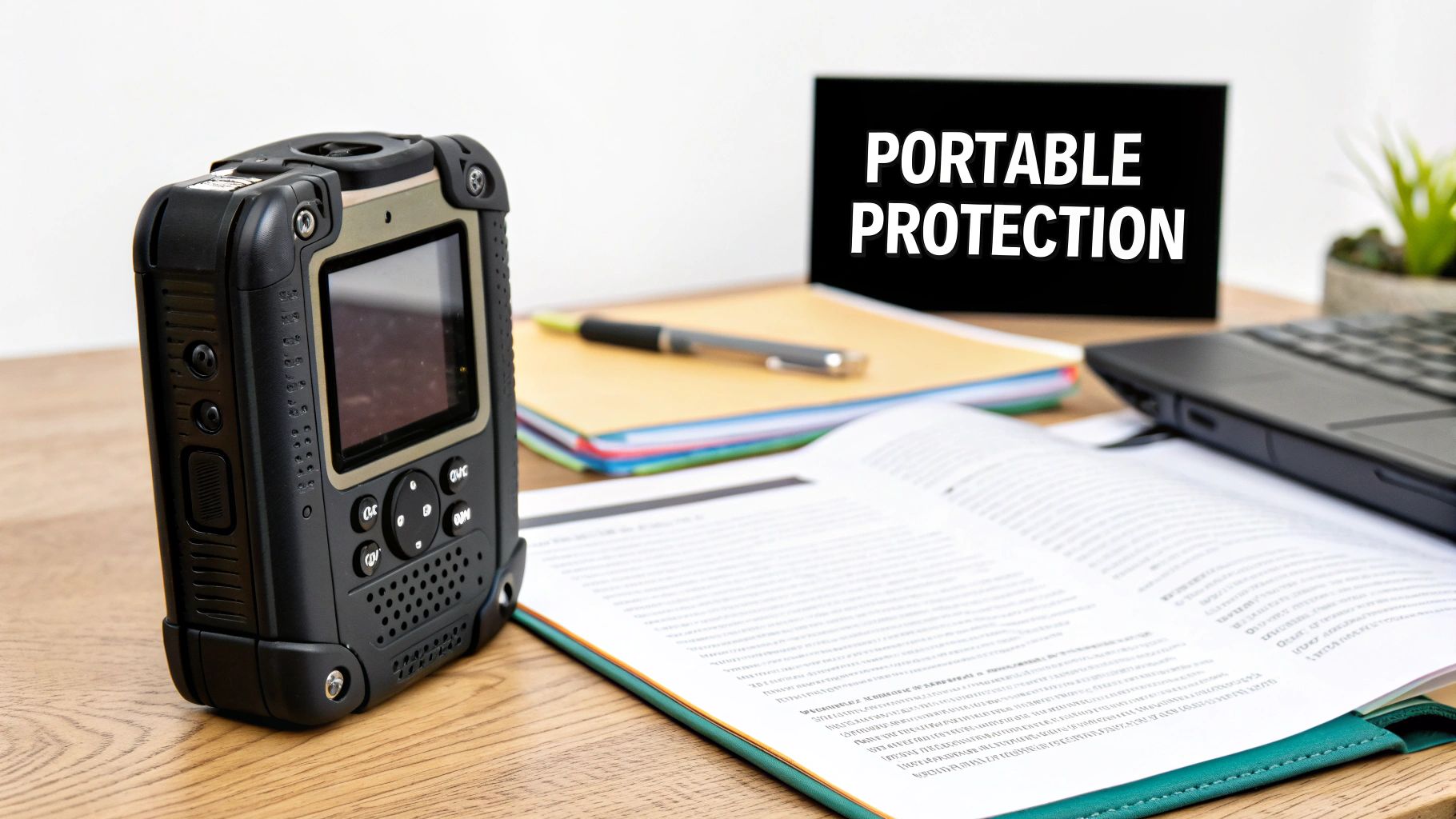
When you're in the market for a temporary security camera, you're not just buying a piece of hardware. You're investing in a complete surveillance system that needs to perform under pressure in constantly changing environments. To get the job done right, you have to look beyond the lens and focus on the features that make a system genuinely reliable.
Think of it like hiring a security guard. The camera itself provides the eyes, but without power, a way to communicate, and the intelligence to spot real threats, you’re left with some serious blind spots.
Power and Connectivity: The Non-Negotiables
Let's start with the absolute fundamentals: power and connectivity. A camera without a consistent power source is nothing more than a decoration. That's why you should look for systems offering a combination of solar panels and a high-capacity battery backup. This one-two punch ensures your surveillance stays active through cloudy days and all through the night.
Just as critical is how your camera sends its footage back to you. Since temporary sites almost never have pre-existing Wi-Fi, systems with built-in 4G or 5G cellular connectivity are the gold standard. This gives you smooth, real-time video and instant alerts sent straight to your device, no matter how remote your location.
The market is clearly shifting this way. Cloud-based Video Surveillance as a Service (VSaaS) is growing by about 14.4% each year, which makes managing cameras across different temporary sites much simpler. With 5G becoming more common, we're seeing even better real-time HD video with almost no lag—a must-have for mobile security.
Advanced Capabilities for Smarter Security
Once you've got the basics covered, it's time to look at the features that transform a passive camera into an active security tool. These are the modern capabilities that actually help you stop threats before they happen.
AI-Powered Motion Detection: This is a true game-changer. Forget getting an alert every time a leaf blows by. Smart AI can tell the difference between people, vehicles, and animals, which cuts down on frustrating false alarms.
Powerful Night Vision: A camera’s work isn’t done when the sun sets. High-quality infrared (IR) or even thermal night vision is essential for capturing crisp, usable footage in total darkness. Your site needs 24/7 protection.
Two-Way Audio: This feature lets you talk directly to someone on your site through a speaker built into the camera. It’s an incredibly effective deterrent that can often scare off a potential intruder before they even think about causing trouble.
The best temporary security cameras don't just record events—they actively help you prevent them. Smart features like AI alerts and two-way talk give you the power to intervene from anywhere, at any time.
Of course, with all this footage, you need a solid plan for managing it. Knowing the ropes of secure video sharing is key, especially when you need to grant access to your team or law enforcement. By focusing on both these essential and advanced features, you'll be well-equipped to find a system that delivers real, dependable security for any project you have.
Getting a Handle on Costs and Rental Models
So, what does it actually cost to bring in temporary security cameras? This is where things get interesting, because it’s a totally different ballgame than buying a permanent system.
Instead of a huge upfront investment that hits your capital budget, you're usually looking at a rental model. This turns a major purchase into a predictable operating expense, which is often a much easier pill to swallow financially. It's a smart way to get top-tier security without draining your cash reserves.
Think of it less like buying a product and more like subscribing to a service. Most rental packages are all-inclusive. You get the cameras, the cellular data plan for connectivity, cloud storage for all your footage, and technical support bundled into one recurring fee, whether it's weekly or monthly. This means no surprise bills if a camera needs a fix or a software update. You know exactly what you're paying for.
The demand for this kind of flexible security is booming. The entire surveillance camera market, which includes these temporary units, was valued at a whopping USD 32.76 billion in 2024 and is forecast to hit over USD 70 billion by 2033. If you're interested in the nitty-gritty, you can dig into the numbers in this detailed industry report.
What Drives the Price Up or Down?
The price tag on a temporary camera rental isn't a fixed number. It's a sliding scale that depends entirely on what you need for your specific site. This is actually a good thing—it means you don't pay for features you won't use.
It's a bit like building a custom toolkit. You only select the tools you need for the job at hand, ensuring you get the best possible value.
A few key things will move the needle on your final quote:
How many cameras you need: This one’s pretty straightforward. A sprawling construction site that needs four camera towers will cost more to cover than a small pop-up event that only needs one.
How long you need them: Time is money, but in this case, more time can actually save you money on a per-week basis. A six-month rental for a long-term project will almost always have a lower weekly rate than a one-week rental for a music festival.
The "bells and whistles": A standard, high-definition camera gets the job done for a great price. But if you need specialized tech, the cost will go up. Features like thermal imaging to see in complete darkness, license plate recognition (LPR) to track vehicles, or sophisticated AI that can detect specific threats are all premium (but powerful) add-ons.
Knowing these cost drivers puts you in the driver's seat. You can have a much more productive conversation with providers, compare quotes with confidence, and make sure you're getting the right level of protection without breaking the bank.
Your Step-By-Step Deployment Guide
So, you've got your temporary security cameras. Now what? Getting them from the box to actually protecting your site isn't complicated, but it does pay to be methodical. Think of this as your game plan for a smooth rollout, broken down into four clear stages.
Stage 1: Walk the Site
First things first: you need to walk your property with a security mindset. Forget how you usually see it and start thinking like a thief. Where are the easy targets? Pinpoint your most vulnerable areas—equipment storage, material stockpiles, and every single way in or out. Your goal is to find the blind spots and the best vantage points.
Don't forget to look up and around. Trees, signs, or other buildings can easily block a camera’s line of sight. Also, track the sun's path across the sky. You don't want your camera staring directly into the sunrise or sunset, getting blinded by glare right when you need it most. A thorough site assessment is the bedrock of a good security plan.
Stage 2: Choose Your Provider
With a clear picture of what you need to protect, it’s time to find the right partner for the job. Not all security providers are created equal, and their service levels can vary wildly. Before you commit, it's crucial to ask some direct questions to make sure they're the right fit.
A few key things you should ask any potential provider:
What exactly is covered in the rental fee? Does it include data, maintenance, and support?
How do you handle cellular connectivity in areas with spotty service?
What’s the protocol if a camera gets damaged or suddenly goes offline?
A solid provider will have ready, transparent answers. Think of them as your security partner for the entire project, so this step is one you really want to get right.
Stage 3: Install and Position Your Cameras
This is where your plan becomes reality. When it comes to security cameras, placement is everything. For the best coverage, mount your temporary security cameras high enough to get a wide, unobstructed view and keep them out of easy reach. Placing a camera on a corner is a classic move for a reason—it often lets you cover two sides of a building with just one device.
Pro Tip: Whenever you can, position your cameras so the sun is behind them. This simple trick dramatically reduces glare and backlighting, giving you much clearer and more useful footage all day long.
If you're using a mobile camera trailer, park it far enough back to see the big picture but close enough to capture important details. Always make sure the trailer is on level ground and its outriggers are secure for stable, shake-free video.
Stage 4: Monitor and Respond
Once your cameras are installed and powered up, the final stage is all about monitoring. Get comfortable with the mobile app or web dashboard your provider gives you. You'll want to know how to pull up a live feed, review past events, and tweak settings on the fly.
The most important part? Customizing your alerts. Don't just leave them on the default settings. Set up specific detection zones and schedules to cut down on false alarms from passing cars or wildlife. A well-tuned system lets you react to actual threats in real-time, turning your cameras from a passive recorder into a genuinely powerful security tool.
Got Questions? Here Are Some Straight Answers
Even when you know you need temporary security, a few practical questions always pop up. It's one thing to understand the concept, but another to see how it works on the ground. Let's tackle some of the most common queries we hear from clients.
How Do They Get Power in the Middle of Nowhere?
This is a great question. You can’t just run an extension cord across an empty lot. That’s why professional temporary security systems are built to be self-reliant. They typically run on a smart combination of high-capacity rechargeable batteries and rugged, industrial-grade solar panels.
A properly designed solar setup can power a camera indefinitely in most conditions. It soaks up sunlight all day to run the equipment and charges the batteries at the same time. This stored power ensures the camera keeps watch all night long and even through those gray, overcast days. Of course, if you do have a power source nearby, simple plug-in models are always an option.
Do I Need to Have Wi-Fi on Site?
Nope! And honestly, that’s one of their biggest advantages. The vast majority of temporary surveillance units don't need your Wi-Fi network. They come with their own built-in 4G or 5G cellular modems.
Think of it like a cell phone. Each camera system has its own SIM card and data plan, letting it stream high-definition video and push alerts from just about any location with a decent cell signal. This is what makes them perfect for new construction sites, vacant properties, or huge outdoor festivals where internet is either a non-starter or just plain unreliable.
Key Takeaway: It's the cellular connection that gives these cameras their incredible flexibility. They aren't tied down by cables, offering true "go-anywhere" security in places where it used to be impossible.
Can I Actually Watch the Live Feed on My Phone?
You absolutely can. Modern temporary camera systems are designed specifically for easy remote access. Everything connects back to a secure cloud platform or a dedicated mobile app.
This means you can pull up a live stream, watch recorded clips, tweak settings, and get motion alerts sent straight to your smartphone, tablet, or computer. This feature is a game-changer, giving you the power to check in on your property from anywhere in the world, whenever you want.
Ready to put a reliable, flexible set of eyes on your project? The experts at PCI Audio-Video Security Solutions can design a temporary security camera system that fits your exact needs. Contact us today and let's get started.
Comments