


Top 7 DIY Home Security Systems with Cameras for 2025
- Бонус за регистрацию онлайн казино
- Jul 21, 2025
- 15 min read
In 2025, securing your property no longer requires a costly professional installation or a long-term contract. The market for DIY home security systems with cameras has expanded dramatically, offering powerful, flexible, and affordable solutions that you can set up in an afternoon. This shift empowers everyone from small business owners needing remote monitoring to construction managers securing a job site with mobile security trailers. The rise of DIY home security mirrors a wider trend, as many homeowners discover the appeal of a 'do-it-yourself' approach to various home improvements and technologies.
This guide is designed to cut through the noise and help you find the best system for your specific needs. Whether you require temporary surveillance for an event, a robust setup with 4K security cameras and LPR (License Plate Recognition) capabilities, or a simple remote camera for your home, the right option is here. We will provide in-depth, practical reviews of the top systems available, including SimpliSafe, Ring, Abode, and more. Each review offers a clear breakdown of features, pros and cons, and real-world implementation details to help you make an informed decision. We'll show you exactly how to choose, set up, and manage your own surveillance system with confidence.
1. SimpliSafe
SimpliSafe has carved out a significant niche in the market by offering one of the most user-friendly and approachable DIY home security systems with cameras available. Its website, SimpliSafe.com, is designed for simplicity, guiding users through a straightforward process to build a custom security package or choose from pre-configured kits tailored to different home sizes, from small apartments to large houses. This focus on easy self-installation and contract-free professional monitoring makes it an ideal starting point for anyone new to home security.
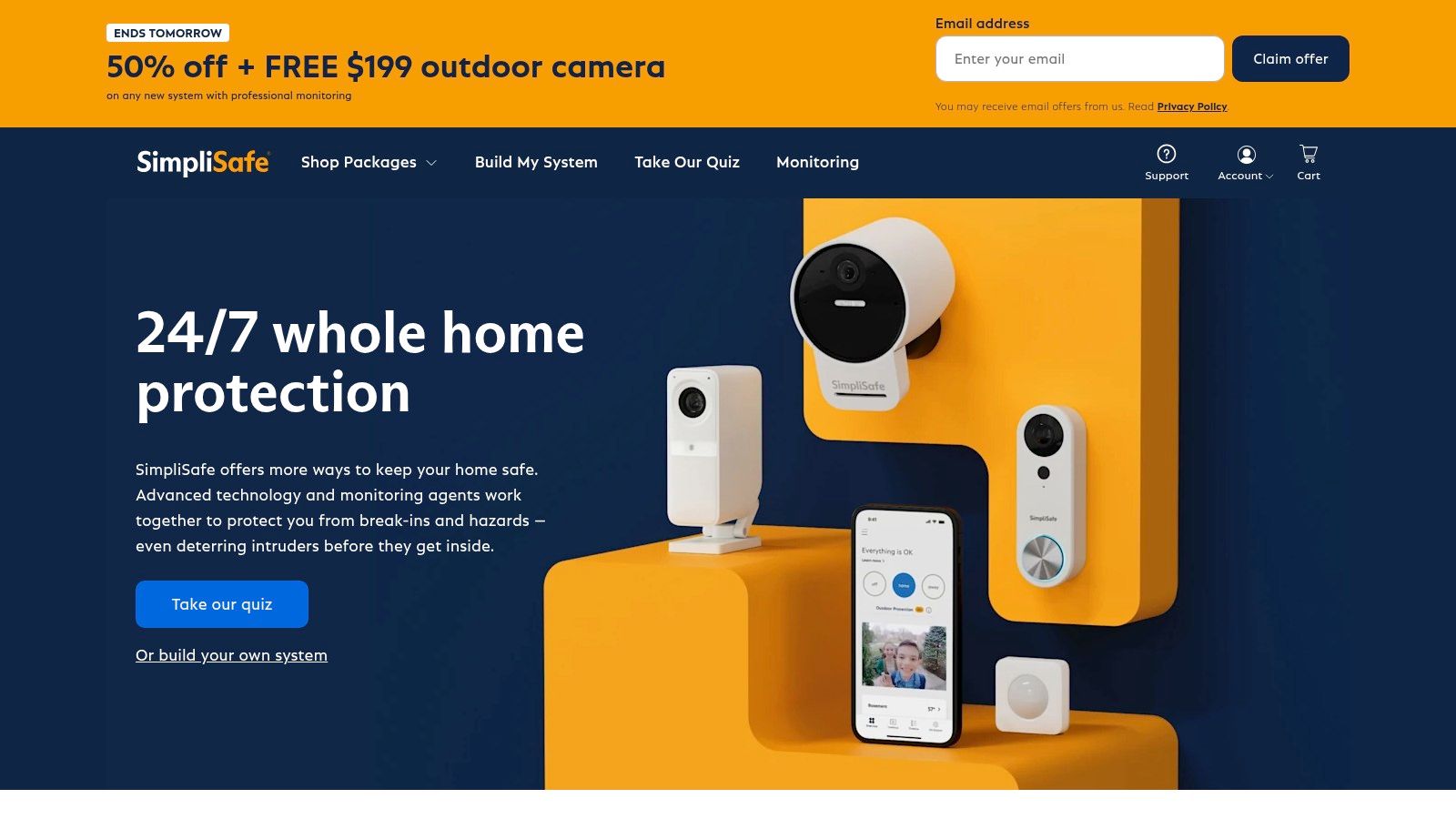
The platform stands out by empowering users with choice. You can purchase equipment upfront without being locked into a long-term contract, a major advantage over traditional security companies. SimpliSafe offers a robust 60-day money-back guarantee, allowing ample time to test the system in your own environment. This flexibility extends to monitoring, where you can opt for professional monitoring or self-monitor your system through the mobile app for free.
Key Features and User Experience
The website's interface is clean and intuitive. A standout feature is the interactive "Build My System" tool. It asks a few simple questions about your property-like the number of doors, windows, and floors-and then recommends a tailored package of sensors, keypads, and cameras. This removes the guesswork often associated with building a security system from scratch.
Customization: Easily add or remove components like entry sensors, motion detectors, glass break sensors, and the SimpliCam indoor or outdoor cameras.
Transparent Pricing: Equipment and monitoring plan costs are clearly displayed. There are no hidden fees, and shipping is often free on system purchases.
Smart Home Integration: While not the most extensive on the market, it offers key integrations with Amazon Alexa and Google Assistant for voice-controlled arming and disarming.
Practical Tip: Before finalizing your purchase, use SimpliSafe’s system builder tool even if you plan on buying a pre-made package. It helps you visualize coverage and ensures you don't overlook a critical entry point, like a basement window or back door.
Pros and Cons
Pros | Cons |
|---|---|
No-Contract Flexibility: Choose professional or self-monitoring without long-term commitments. | Limited Smart Home Ecosystem: Integrations are limited to major voice assistants. |
Easy DIY Installation: Systems are designed for setup in under an hour with no special tools. | Subscription for Full Features: Accessing camera recordings and some smart alerts requires a monitoring plan. |
High-Quality Equipment: Comes with a three-year warranty and a 60-day money-back guarantee. | Basic Camera Specs: Cameras offer essential features but lack advanced options like 4K resolution. |
2. Ring
Ring, an Amazon-owned company, has become a household name, largely by popularizing the video doorbell. Its website, Ring.com, serves as a comprehensive hub for building one of the most versatile and interconnected DIY home security systems with cameras available. The platform excels at offering an extensive ecosystem of devices that work together seamlessly, all managed through a single, user-friendly app. This makes it a top choice for homeowners already invested in the Amazon Alexa ecosystem or those seeking a system that can easily expand from a single doorbell to full-property surveillance.
The platform’s major strength is its sheer breadth of affordable, easy-to-install hardware. From its iconic Video Doorbells to a wide array of indoor, outdoor, stick-up, and floodlight cameras, Ring allows users to create a highly customized security network. Equipment can be purchased individually or as part of a Ring Alarm security kit, with no long-term contracts required for hardware ownership. This flexibility allows you to start small and add new devices over time as your security needs evolve.
Key Features and User Experience
The Ring website makes it simple to explore its vast product lineup. Clear categories and comparison tools help users differentiate between various camera and doorbell models. A standout feature is the "Help Me Choose" quiz, which guides you through a series of questions about your property and security goals to recommend the ideal products, simplifying the decision-making process for newcomers.
Expansive Device Ecosystem: Offers a wide range of devices beyond cameras, including the Ring Alarm system, smart lighting, and car cams, all integrated into one app.
Seamless Alexa Integration: As an Amazon company, Ring provides deep integration with Alexa, allowing for voice commands to show camera feeds on Echo Show devices or announce when motion is detected.
Affordable Subscription: The Ring Protect plan is competitively priced and unlocks crucial features like video recording, person alerts, and rich notifications for all devices at one address.
Practical Tip: When browsing Ring.com, pay close attention to the power source for each camera (battery, wired, or solar). Planning your power strategy beforehand will save you installation headaches and ensure your cameras are placed in the most effective locations without being limited by outlet proximity.
Pros and Cons
Pros | Cons |
|---|---|
Affordable Equipment with Frequent Discounts: Hardware is budget-friendly, and Amazon often runs sales. | Subscription Required for Key Features: Storing video recordings and accessing many smart alerts requires a Ring Protect plan. |
Easy DIY Installation: Most devices are designed for quick, tool-friendly setup by the average homeowner. | Privacy Concerns: As an Amazon company, it has faced scrutiny over its data handling and partnerships with law enforcement. |
Excellent Smart Home Compatibility: Unmatched integration with Amazon Alexa and the broader smart home ecosystem. | Base Station Required for Alarm: While cameras work standalone, sensors for intrusion detection require a Ring Alarm Base Station. |
3. Abode
Abode carves out its space in the market by appealing to the tech-savvy homeowner who wants more than just basic security. It offers one of the most powerful and customizable DIY home security systems with cameras for users who prioritize deep smart home integration. The website, goabode.com, presents a modern, clean interface that showcases its flexibility, allowing customers to choose between all-in-one gateways or build-your-own systems, all without being locked into long-term contracts.
Abode’s primary differentiator is its unparalleled compatibility. It acts as a central hub not just for security but for your entire smart home, supporting Apple HomeKit, Amazon Alexa, Google Assistant, and even communication protocols like Z-Wave and Zigbee. This means you can connect and automate a vast array of third-party devices, from smart locks to light bulbs, directly through the Abode system. This focus on interoperability makes it a top choice for users who want to create a truly connected and automated home environment.
Key Features and User Experience
The website effectively guides users toward the right solution, whether it's the compact Iota gateway with a built-in camera or the more traditional Security Hub. The product pages clearly detail technical specifications and compatibility, which is crucial for their target audience. Pricing for equipment and optional monitoring plans is transparent, letting you see the total cost upfront.
Extensive Smart Home Compatibility: Native support for Z-Wave and Zigbee opens up a world of third-party device integration far beyond most competitors.
Flexible System Design: Choose from pre-built kits or piece together a custom system with sensors, keypads, and a variety of indoor and outdoor cameras.
Advanced Automation: The platform’s CUE automation engine allows users to create complex "if this, then that" rules involving security and smart home devices.
Contract-Free Monitoring: Offers optional, on-demand professional monitoring that you can activate for a week or a month, perfect for when you're on vacation.
Practical Tip: Before committing, map out your existing or planned smart home devices. Check Abode’s extensive compatibility list on their website to ensure your favorite smart locks, thermostats, and lights will integrate seamlessly. This proactive step leverages Abode’s main strength.
Pros and Cons
Pros | Cons |
|---|---|
Superior Smart Home Integration: Unmatched support for HomeKit, Z-Wave, and Zigbee. | Subscription for Advanced Features: Key functions like CUE automations and camera recording require a paid plan. |
Highly Customizable and Scalable: Easily build and expand a system tailored to your exact needs. | Limited First-Party Equipment: The selection of Abode-branded cameras and sensors is smaller than some rivals. |
Flexible Monitoring Options: No-contract professional monitoring is available on-demand. | Can Be Complex for Novices: The sheer number of options and settings can be overwhelming for beginners. |
4. Cove
Cove has emerged as a strong contender in the DIY home security systems with cameras space by focusing on affordability, simplicity, and exceptional customer support. Its website, CoveSmart.com, offers a refreshingly direct approach to home security, emphasizing easy-to-install, pre-configured systems that arrive ready to use right out of the box. This commitment to a hassle-free user experience, combined with flexible, no-contract professional monitoring, makes Cove a compelling choice for those who value both security and service.
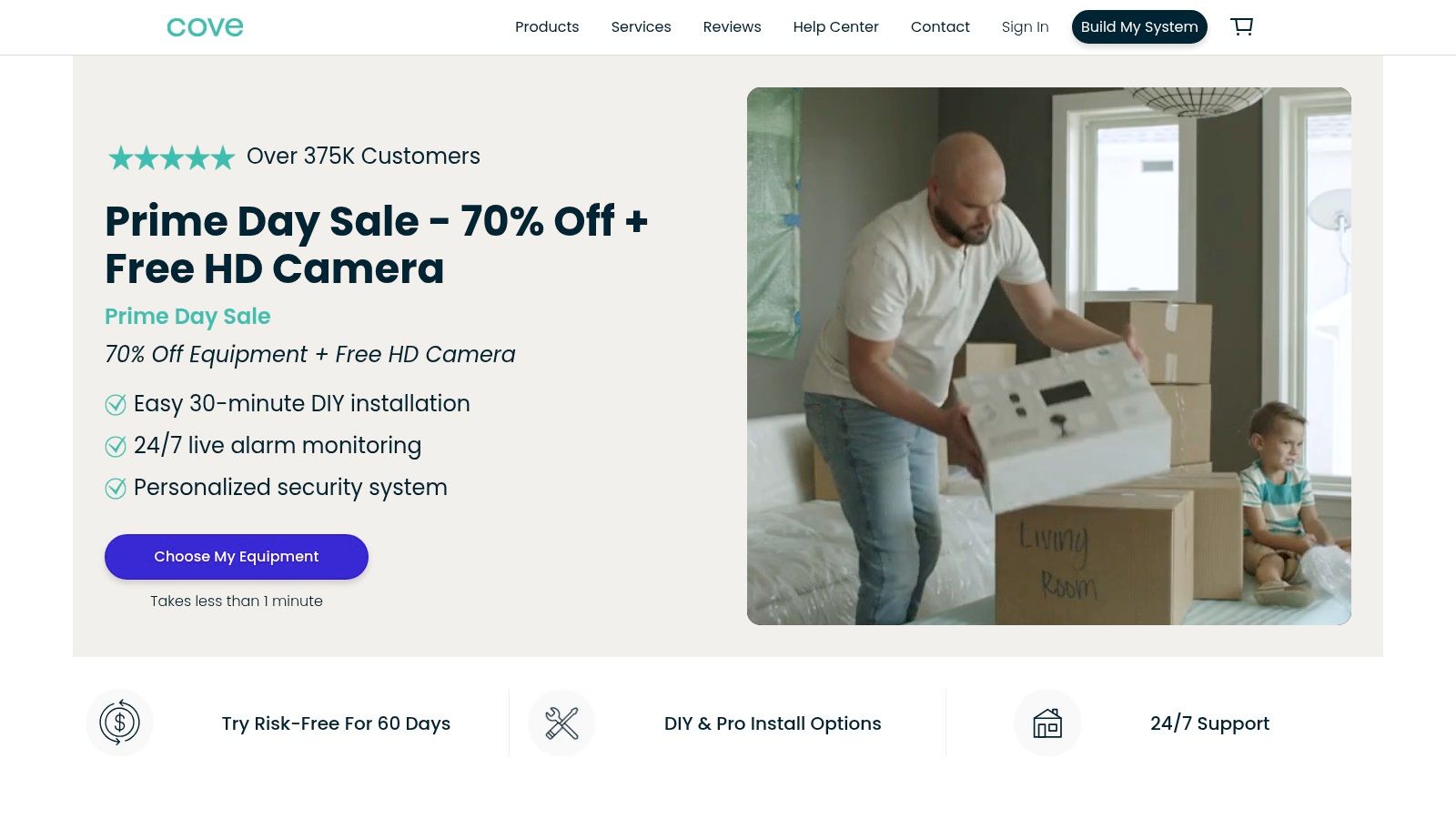
The platform differentiates itself with a customer-centric model. Unlike many competitors, Cove provides a lifetime equipment warranty for as long as you maintain a monitoring subscription, offering significant peace of mind. The company also boasts rapid response times through its professional monitoring centers, ensuring that alerts are handled quickly and efficiently. While it requires a monitoring plan to operate, the pricing is highly competitive, making comprehensive security accessible to a wider audience.
Key Features and User Experience
The Cove website is designed for speed and clarity. A prominent quiz on the homepage helps visitors quickly identify their needs and receive a customized system recommendation in minutes. The entire process is transparent, with equipment and monitoring costs clearly laid out before checkout, eliminating surprises.
Effortless Setup: All sensors and devices are pre-paired to your control panel before shipping, making the DIY installation process one of the fastest on the market.
Affordable Monitoring: Cove offers two straightforward professional monitoring plans, both competitively priced, which include cellular backup and smash-proof protection for the control panel.
Customer-First Policies: The 60-day money-back guarantee and lifetime warranty (with a monitoring plan) demonstrate a strong commitment to customer satisfaction and product reliability.
Practical Tip: When building your system on Cove's website, pay close attention to the Cove Plus plan. For a few extra dollars per month, it includes the lifetime warranty and a $5-per-month credit toward new equipment, allowing you to expand your system over time at no extra cost.
Pros and Cons
Pros | Cons |
|---|---|
Affordable Equipment & Monitoring: Low upfront costs and competitive monthly fees make it budget-friendly. | Limited Smart Home Integration: Primarily works with Alexa and Google Assistant, lacking broader ecosystem support. |
Excellent Customer Support: Known for responsive service and a strong focus on user satisfaction. | No Self-Monitoring Option: The system requires a professional monitoring subscription to function. |
Lifetime Equipment Warranty: Active subscribers receive a lifetime warranty on all their hardware. | Basic Camera Features: Cameras cover the essentials but lack advanced options like 4K or local SD card storage. |
5. Frontpoint
Frontpoint positions itself as a premium choice among DIY home security systems with cameras, combining user-friendly installation with robust, professionally monitored protection. Its website, Frontpoint.com, emphasizes a hassle-free experience, offering pre-built packages and a system builder that demystifies the process of securing your home. The platform is built around the principle that powerful security shouldn't require professional installation, providing all the tools and support needed for a quick and successful setup.
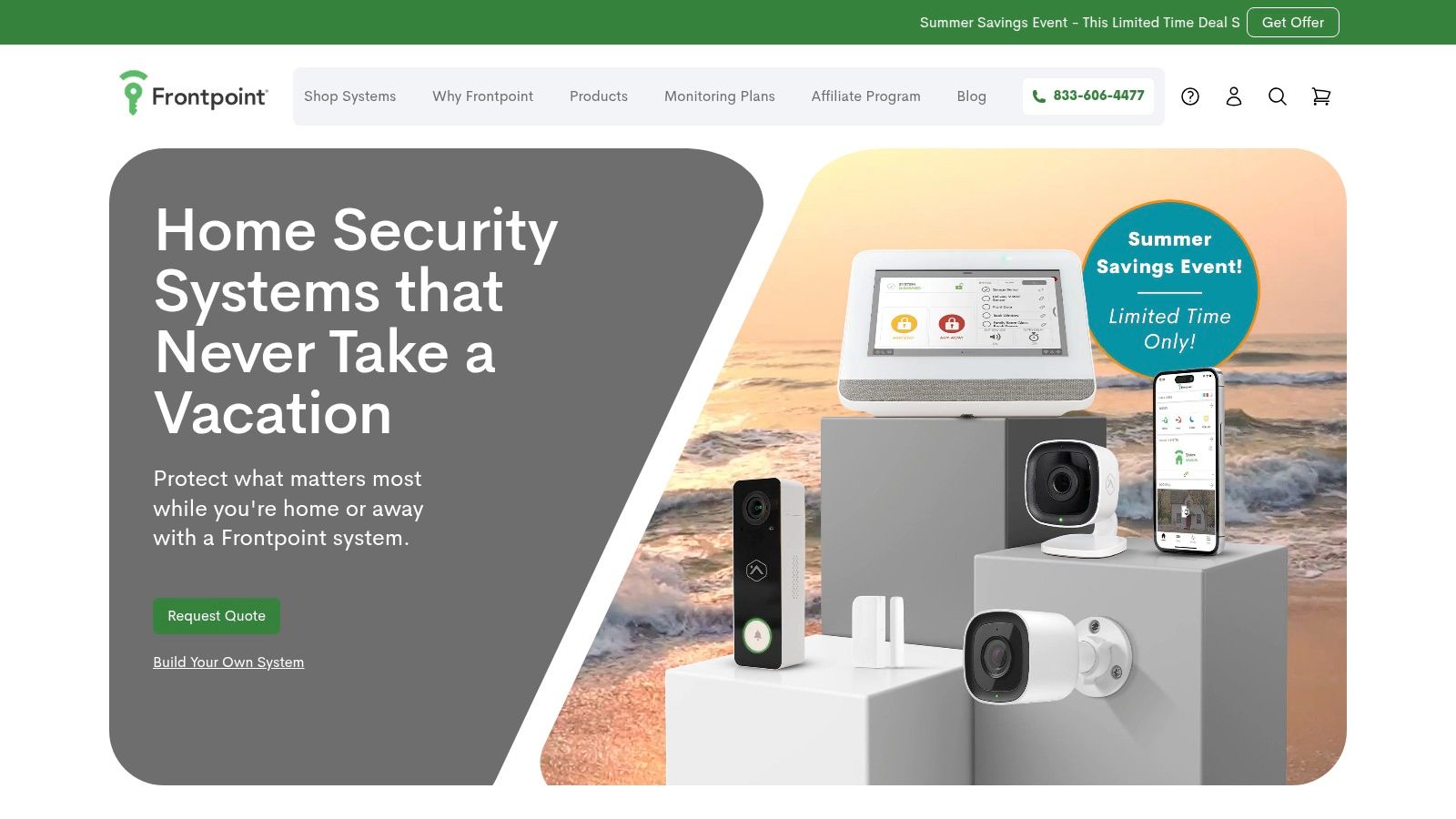
What sets Frontpoint apart is its commitment to 100% cellular and wireless technology for all its systems. This eliminates vulnerabilities from landline cutting or Wi-Fi outages, ensuring a constant connection to the monitoring center. While professional monitoring is required, Frontpoint offers flexible contract options, moving away from the rigid, long-term commitments that once defined the industry. Their 30-day risk-free trial allows you to test the entire system, ensuring it meets your specific security needs.
Key Features and User Experience
The Frontpoint website is clean and guides users effectively toward finding the right solution. You can either answer a short quiz to get a personalized recommendation or build a system from the ground up, component by component. This guided process is especially helpful for those new to home security, ensuring all potential weak points in a home are considered.
Guided Setup: All equipment arrives pre-configured and ready to install. The mobile app provides step-by-step instructions, making the setup process foolproof.
Transparent System Building: The website clearly lists the price for each sensor, camera, and smart home device, allowing you to build a system that fits your budget without surprises.
Crash & Smash Protection: This feature, included with their monitoring plan, ensures the system alerts the monitoring center even if the main control panel is destroyed by an intruder.
Practical Tip: When using the system builder on Frontpoint's site, start by adding environmental sensors like smoke/heat and carbon monoxide detectors. Integrating these into your security system provides a more comprehensive safety net that goes beyond just intrusion detection.
Pros and Cons
Pros | Cons |
|---|---|
High-Quality, Pre-Configured Equipment: Simplifies the DIY installation process significantly. | Higher Monitoring Fees: Professional monitoring costs are generally more than some competitors. |
Excellent Customer Support: Widely praised for its responsive and helpful service team. | Limited Smart Home Integration: Focuses on core security and Z-Wave devices but lacks broad ecosystem support. |
100% Cellular Monitoring: Provides a more reliable and secure connection than Wi-Fi-only systems. | Monitoring Is Required: Unlike some rivals, there is no self-monitoring option available. |
6. Wyze
Wyze has disrupted the home security market by making DIY home security systems with cameras astonishingly affordable and accessible to everyone. The company’s website, Wyze.com, reflects its core philosophy of value and simplicity. It presents a straightforward catalog of low-cost yet effective cameras, sensors, and smart home devices that empower users to build a capable security network without a significant financial investment. This budget-first approach, combined with contract-free monitoring options, makes Wyze a compelling choice for renters, students, or anyone prioritizing cost-effectiveness.
The platform’s major differentiator is its aggressive pricing. Wyze proves that robust security doesn't have to be expensive, offering cameras and sensors for a fraction of the cost of its competitors. Users can purchase equipment à la carte directly from the website, allowing for gradual system expansion as needs and budgets change. Wyze also offers an optional professional monitoring service, Cam Protect, which is competitively priced and ties directly into its camera ecosystem, providing an affordable path to 24/7 protection.
Key Features and User Experience
The Wyze website is clean, product-focused, and easy to navigate. It clearly showcases its wide range of products, from the iconic Wyze Cam to motion sensors, entry sensors, and even smart locks. Product pages are rich with specifications and user-generated reviews, helping potential buyers make informed decisions.
À La Carte System Building: Unlike competitors who push pre-made kits, Wyze encourages users to pick and choose individual components, offering ultimate flexibility.
Transparent and Low Pricing: Equipment costs are exceptionally low, and subscription plans like Cam Plus (for cloud recording) and Cam Protect (for monitoring) are clearly outlined and affordable.
Smart Home Integration: Wyze offers foundational integrations with Amazon Alexa and Google Assistant, allowing for voice commands to view camera streams and control devices. The ecosystem also includes smart plugs, bulbs, and more.
Practical Tip: Start with a single Wyze Cam V3 to test the ecosystem. Its low entry cost, impressive low-light performance, and both indoor/outdoor capabilities make it a perfect, low-risk introduction to the brand's value proposition before you invest in a full sensor-based system.
Pros and Cons
Pros | Cons |
|---|---|
Extremely Affordable Equipment: Cameras and sensors are among the cheapest on the market. | No Cellular Backup: Systems rely solely on your home's Wi-Fi, which is a vulnerability during internet or power outages. |
User-Friendly Setup and Operation: The Wyze app and hardware are designed for quick, hassle-free DIY installation. | Limited Smart Home Integration: While it works with major assistants, it lacks deeper integrations with platforms like Z-Wave or Zigbee. |
No Long-Term Contracts: Both self-monitoring and professional monitoring plans are offered on a flexible monthly basis. | Subscription Needed for Key Features: Features like unlimited cloud recording and smart person/package detection require a Cam Plus subscription per camera. |
7. Best Buy
While not a direct manufacturer, Best Buy has cemented its role as a critical hub for anyone exploring DIY home security systems with cameras. Its website, BestBuy.com, functions as an extensive marketplace where you can compare, purchase, and even get installation support for leading brands like Ring, Arlo, Google Nest, and SimpliSafe side-by-side. This multi-brand approach empowers consumers to make informed decisions by evaluating different ecosystems in a single, trusted retail environment.
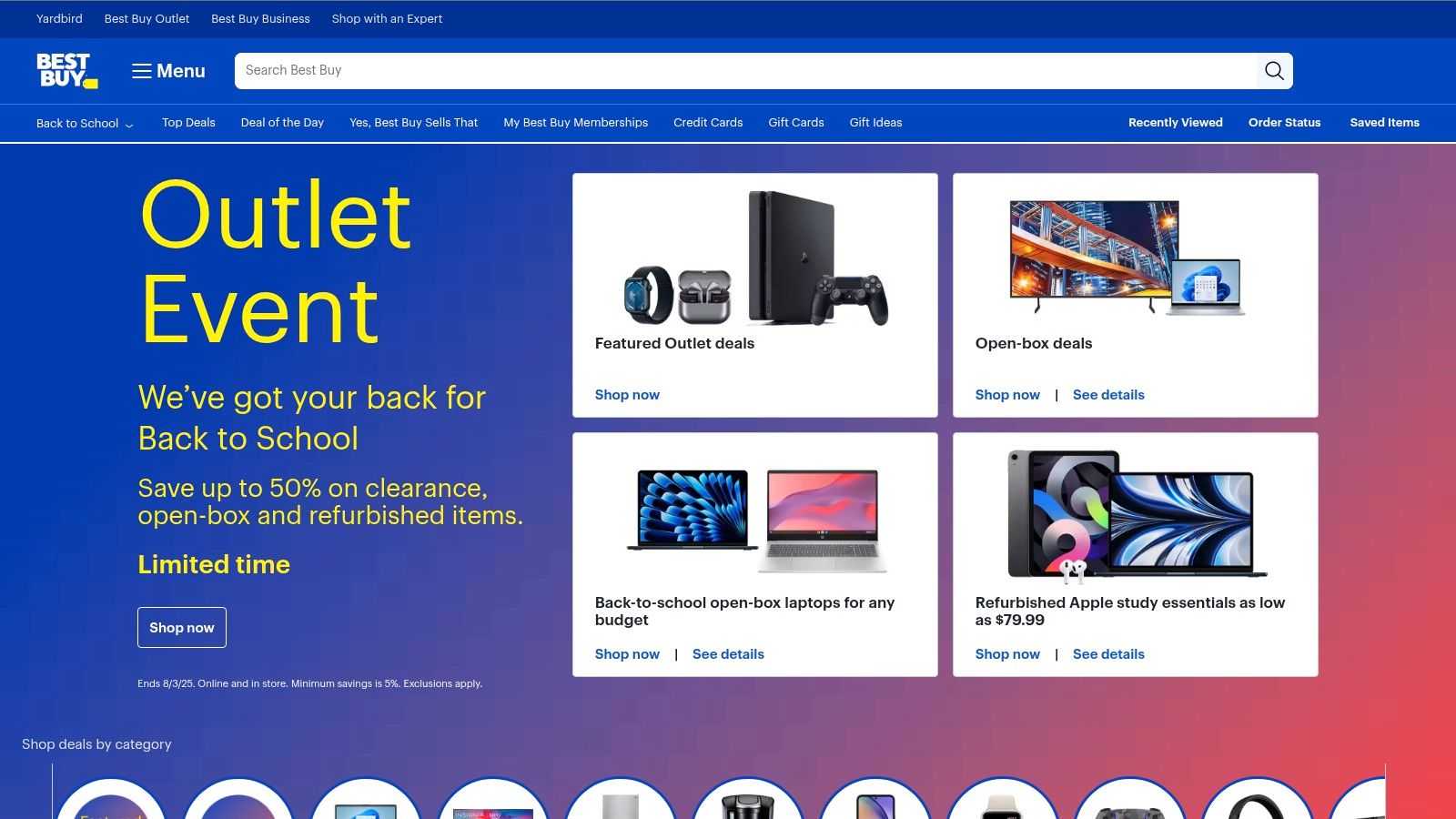
The platform’s major advantage is choice and convenience. Instead of navigating multiple brand websites, you can see a broad spectrum of the market, from standalone cameras to complete security packages. Best Buy bridges the gap between online research and hands-on experience, allowing you to see products in-store before buying online for home delivery or convenient in-store pickup.
Key Features and User Experience
Best Buy’s website is designed for efficient product discovery. The filtering tools are particularly powerful, letting you narrow down the vast selection of security cameras and systems by brand, price, customer rating, and specific features like night vision, 4K resolution, or smart home compatibility. This makes it easy to find a system that precisely fits your needs and budget.
Brand Comparison: Easily compare the features, pricing, and user reviews of competing systems like Arlo Pro versus Ring Spotlight Cam on the same platform.
Professional Installation: For those who prefer a DIY system without the "do-it-yourself" part of the setup, Best Buy's Geek Squad offers professional installation services for a fee.
Bundles and Deals: The site frequently features exclusive bundles, open-box discounts, and seasonal promotions, offering potential savings over purchasing directly from the manufacturer.
Practical Tip: Use Best Buy's "Compare" feature to select up to four different security cameras or systems. This creates a side-by-side table that clearly outlines key specifications, making it much easier to spot the subtle but important differences between models.
Pros and Cons
Pros | Cons |
|---|---|
One-Stop-Shop Convenience: Compare and purchase top brands in one place, online or in-store. | Potentially Higher Prices: Sale prices are competitive, but standard pricing can sometimes be higher than buying direct. |
In-Person Experience: Ability to see and handle products in a physical store before purchasing. | Limited Customization: Pre-configured kits offer less customization than building a system on a brand's own website. |
Installation and Support Options: Access to Geek Squad for setup help and in-store returns or support. | Overwhelming Choice: The sheer number of options can be daunting for beginners without clear direction. |
7-Brand DIY Home Security Camera Comparison
Product | Implementation Complexity 🔄 | Resource Requirements ⚡ | Expected Outcomes 📊 | Ideal Use Cases 💡 | Key Advantages ⭐ |
|---|---|---|---|---|---|
SimpliSafe | Low - Easy self-installation | Moderate - DIY equipment & optional monitoring | Reliable home security with flexible monitoring | Users seeking easy setup without contracts | Affordable, customizable, Alexa/Google integration |
Ring | Low - Simple DIY installation | Moderate - Wide device range + mobile app | Smart home security with video doorbells | Budget-conscious buyers wanting Alexa compatibility | Affordable, frequent discounts, seamless Alexa support |
Abode | Medium - Requires setup with smart hub | Moderate - Extensive third-party device support | Highly customizable with strong smart home integration | Users wanting advanced smart home setups | Broad smart home integration, flexible monitoring |
Cove | Low - Pre-configured easy setup | Moderate - Equipment + professional monitoring | Affordable security with rapid response | Users seeking strong support and professional monitoring | Lifetime warranty, great customer support |
Frontpoint | Medium - Guided DIY installation | Moderate-High - Quality equipment & pro monitoring | Professional-grade security with flexible options | Those wanting robust features and support | High-quality equipment, strong support |
Wyze | Low - Simple setup and operation | Low - Budget equipment + optional monitoring | Budget-friendly security with basic smart features | Cost-conscious users needing basic monitoring | Very affordable, easy setup, no long-term contracts |
Best Buy | Variable - Depends on chosen system | High - Multiple brands, professional installation | Flexible buying with professional install option | Users wanting product comparison & in-store support | Wide brand selection, financing, expert demos |
Conclusion: Making Your Final Decision on a DIY Security System
Choosing the right DIY home security system with cameras is a significant step towards safeguarding your property, assets, and peace of mind. Throughout this guide, we've explored a range of powerful, user-friendly options, from the comprehensive ecosystems of SimpliSafe and Ring to the highly customizable Abode and the budget-friendly innovation of Wyze. Each system presents a unique blend of features, costs, and capabilities, demonstrating that effective surveillance is no longer exclusively for large corporations with massive budgets.
The journey doesn't end with a purchase; it begins with strategic implementation. The true value of any system lies not just in its specifications, but in how well it is tailored to your unique environment. Whether you are a small business owner needing to monitor inventory, a construction manager securing a remote site, or an event organizer requiring temporary surveillance, the core principles remain the same: assess your vulnerabilities, plan your camera placements, and leverage the system's features to their fullest potential.
Key Takeaways for Your Selection Process
As you move forward, keep these critical factors at the forefront of your decision-making process. Your final choice should be a direct reflection of your specific needs, not just a response to a popular brand name.
Ecosystem vs. Standalone: Do you prefer an all-in-one, integrated system like those from Frontpoint or Cove, where sensors and cameras work seamlessly together? Or does the flexibility of mixing and matching components, as offered by Wyze or Abode, better suit your evolving requirements?
Monitoring and Subscription Costs: The initial hardware cost is only one part of the equation. Carefully evaluate the monthly or annual fees for cloud storage, professional monitoring, and advanced features like AI-powered person detection. These recurring costs are crucial for long-term budget planning, especially for business applications.
Scalability and Specialization: Consider your future needs. A system that works for a small retail space today might need to expand to cover a warehouse tomorrow. Look for systems that can grow with you. Furthermore, for specialized needs like license plate recognition (LPR) or wide-area coverage with 360-degree cameras, ensure the system you choose either offers these tools or can integrate with third-party solutions.
Installation and Power: For temporary deployments, such as on construction sites or at events, factors like power sources and ease of installation are paramount. Systems with long-lasting battery-powered cameras or compatibility with portable solar camera trailers offer significant advantages in these mobile scenarios.
Ultimately, the best DIY home security systems with cameras are the ones that you can install confidently and manage effectively. By aligning your operational needs with the right technology, you create a powerful deterrent and an invaluable record-keeping tool. Take the time to map your property, identify your primary security goals, and select the system that empowers you to achieve them with clarity and control.
For those whose security needs demand professional-grade solutions, custom installations, or advanced commercial features beyond typical DIY kits, expert guidance can be invaluable. PCI Audio-Video Security Solutions specializes in designing and deploying tailored surveillance systems for complex commercial, industrial, and event environments. Explore their advanced security offerings at PCI Audio-Video Security Solutions to see how a professional partnership can elevate your security strategy.
Comments