


Your Guide to a Commercial Audio System
- Бонус за регистрацию онлайн казино
- Sep 8, 2025
- 17 min read
A commercial audio system is a whole different beast than your home stereo. It's a professional-grade sound solution built specifically for business environments, where things like reliability, broad coverage, and very specific functions are the name of the game. This isn't just about playing some background music; it's a fully integrated infrastructure designed for creating ambiance, enabling clear communication, and even ensuring safety.
What Exactly Is a Commercial Audio System?
Think of it like this: a home stereo is like a single, powerful lamp you use to light your living room. A commercial audio system, on the other hand, is like the complex, coordinated lighting grid in a massive sports stadium. One is designed for a cozy, controlled space, while the other is engineered to perform flawlessly and consistently across a huge, demanding, and public environment.
These systems are built from the ground up for endurance and clarity. They have to run for long hours, day in and day out, delivering crisp, understandable sound across large, often architecturally complex areas. It’s the subtle background music in a café that makes you want to relax and order another coffee, and it’s also the crystal-clear, can’t-miss-it announcement in a busy airport. In every case, the system is serving a very specific business purpose.
How Is It Different From My Home Speakers?
So, what really sets a commercial audio system apart from the speakers you have at home? The entire design philosophy is different. It’s all about meeting operational needs, not just providing casual entertainment.
Let's break down some of the biggest differences.
Commercial Audio vs Home Stereo At a Glance
To see the contrast clearly, here's a quick comparison highlighting the fundamental differences between systems designed for business and those built for your living room.
Feature | Commercial Audio System | Home Stereo System |
|---|---|---|
Primary Goal | Reliability, coverage, safety, and ambiance for public spaces. | High-fidelity sound for personal enjoyment in a small area. |
Operating Hours | Built for continuous operation, often 24/7. | Designed for intermittent, casual use. |
Scalability | Easily expandable from a few speakers to hundreds. | Limited scalability; designed for a single room. |
Control | Centralized control over multiple "zones" (e.g., bar, patio). | Typically single-zone control for one listening area. |
Safety Features | Integrates with fire alarms and emergency broadcast systems. | No built-in life-safety integration. |
Durability | Rugged components designed for public and commercial wear. | Consumer-grade materials for a protected home environment. |
As you can see, the requirements are worlds apart. Commercial systems are built to be robust, workhorse solutions that a business can depend on day after day.
Here’s a deeper dive into those key distinctions:
Durability and Reliability: The internal components are built to withstand constant use, often running 24/7, in environments that might have fluctuating temperatures or heavy foot traffic.
Scalability: These systems are modular. You can start with a small setup for a boutique and easily expand it to cover a multi-floor office building with hundreds of speakers, all running seamlessly together.
Multi-Zone Control: This is a huge one. A restaurant manager can play quiet, instrumental music in the main dining room, more upbeat tunes at the bar, and a completely different playlist on the outdoor patio—all from one central controller.
Safety Integration: This is absolutely critical. Professional systems are designed to tie into life-safety protocols. If a fire alarm goes off, the system can automatically mute all music and broadcast clear evacuation instructions. This is a capability that consumer-grade gear simply doesn't have.
A commercial audio system is a strategic asset. It's not just about what customers hear; it's about shaping their experience, improving communication, and ensuring their safety within your space.
It’s no surprise that the market for these solutions is growing fast. The global commercial audio system market was valued at around USD 10.2 billion in 2024 and is expected to climb to USD 15.8 billion by 2033. That growth shows just how much businesses in retail, hospitality, and corporate settings are recognizing the power of great audio.
To get a full picture of all the audio solutions out there, it helps to look at different setups, including things like the best karaoke systems, which fill a very specific niche in commercial entertainment. All this proves why a specialized audio setup isn't just a luxury—it's a vital investment for any serious business.
Breaking Down the Core Audio Components
Think of a great commercial audio system like a high-performing team. Each piece of equipment has a specific job to do, and the final result—the sound your customers and staff hear—depends entirely on how well they all work together. Let’s pull back the curtain and look at the key players on this team.
Once you understand these fundamental building blocks, you’re well on your way to designing a sound environment that truly enhances your business.
The Brains of the Operation: Amplifiers and Mixers
Behind every great sound system, there's a central command center managing the flow of audio. These components are the decision-makers, telling everything else what to do and when to do it.
First up is the amplifier. You can think of it as the powerhouse of your system. Its one job is to take a weak audio signal from a source (like a microphone or music player) and boost its power, making it strong enough to actually drive the speakers. Without a good amp, the sound would be weak and lifeless, if you could hear it at all. It's critical to match the amplifier's power to the number and type of speakers in your setup.
Working alongside the amplifier is the mixer. If the amp provides the muscle, the mixer is the traffic cop for all your sound. It takes audio from multiple sources—say, background music, a paging microphone, and the TV—and lets you control the volume and tone of each one. A mixer is what allows a restaurant manager to seamlessly lower the music to make an important announcement.
The Voices of the System: Speakers
Speakers are easily the most visible (and audible) part of an audio system. They do the final, crucial job of turning electrical signals back into the sound that fills your space. But here's the thing: not all speakers are the same. The right choice comes down to your building's architecture, your design aesthetic, and your acoustic needs.
Here are a few common types you'll see:
Ceiling Speakers: These are the discreet, circular speakers you often see installed flush into ceiling tiles. They're perfect for providing even, widespread background music and announcements in offices, retail stores, and hallways without clashing with the decor.
Pendant Speakers: Hanging from high ceilings like modern light fixtures, these speakers are both stylish and incredibly functional. They are a fantastic solution for spaces with tall, open ceilings—think atriums, warehouses, or trendy lofts—where installing ceiling speakers just isn't an option.
Wall-Mounted Speakers: These are the more traditional box-style speakers mounted directly onto a wall. You'll often find them in places that need more powerful, directional sound, like a conference room for a presentation, a gym blasting high-energy music, or a bar with a live band.
This isn't just about picking one good component; it's about finding the right balance between audio quality, coverage, and control.
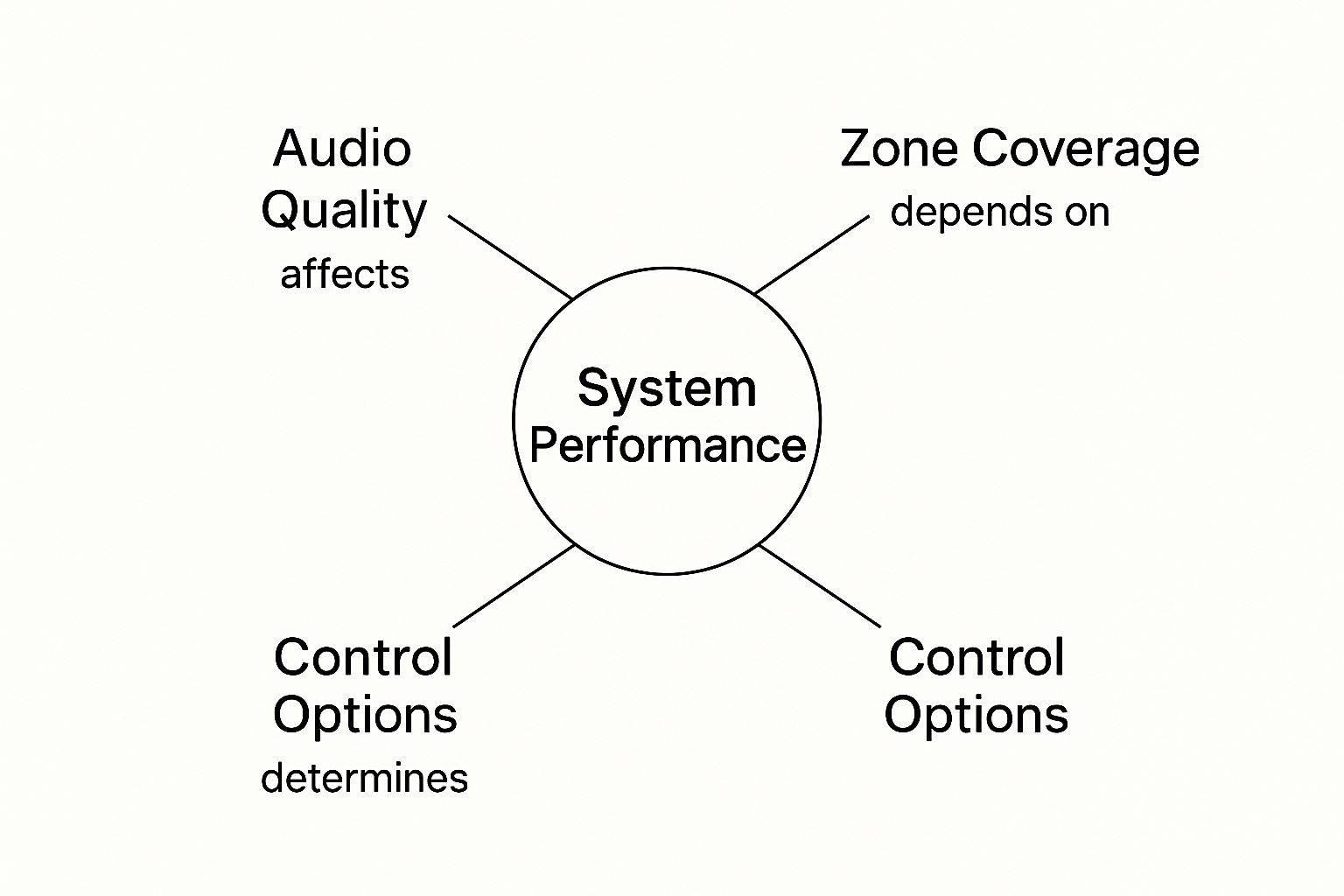
As you can see, hitting that sweet spot requires a thoughtful approach where every element works in harmony.
The Audio Sources: Where the Sound Begins
Finally, you need the sound itself. The audio sources are the "what"—the actual content you want to play through your system. The options here are virtually limitless and can be customized to match exactly what your business needs to do.
The source defines the entire purpose and atmosphere of your audio system. It determines whether your space is built for entertainment, information, or productivity.
Common sources in a commercial setup include:
Media Players: These are the workhorses for background music. They can play anything from curated, business-licensed streaming services to custom playlists you've created yourself.
Microphones: An absolute must for any public address (PA) system. Microphones are used for everything from live announcements and paging staff across a warehouse to leading presentations in a boardroom.
Digital and Analog Inputs: These handy ports allow you to connect a whole range of other devices. You could hook up a TV to play the game audio in your sports bar, a laptop for a presentation, or even a DJ’s turntable for a special event.
Digging into the specifics of the gear itself can provide even more clarity. Exploring resources that break down essential audio equipment for business applications is a great next step. By understanding how these three groups—the brains, the voices, and the sources—work together, you’ll be much more prepared to talk to a professional about what you need.
How Professional Audio Lifts Your Business
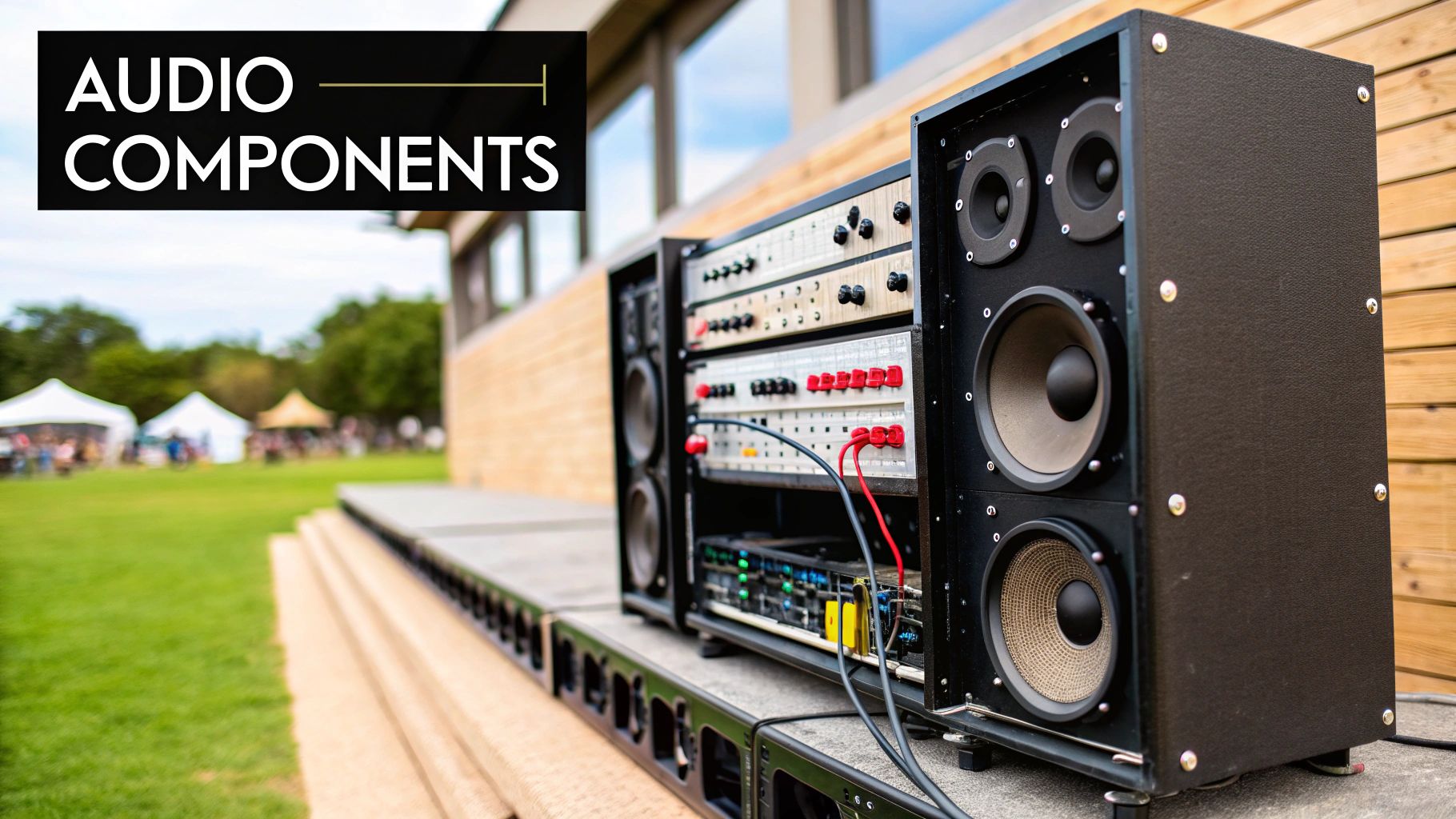
Thinking of a sound system as just another piece of hardware is a common mistake. It's not an expense; it’s a strategic investment that pays off in very real ways. The true power of a professional audio system isn't in the speakers and wires themselves, but in how it transforms your business environment, shapes customer experiences, and streamlines your operations.
This is about more than just playing background music. It’s about creating an intentional soundscape that makes every interaction inside your space better. From the subtle music that greets a customer to a critical safety announcement, sound is one of the most powerful, and often overlooked, tools you have.
Enhance Customer Experience and Perception
Walk into a retail store. The right background music can make you feel a certain way, subtly encouraging you to slow down and browse. A relaxed, pleasant soundtrack might make you linger longer, while something more upbeat could create a sense of energy and excitement. This isn't just a vibe—it’s a proven method for shaping brand perception and influencing buying habits.
The same goes for restaurants and hotels. The sound a guest hears the moment they walk in—be it calming ambient music or the distracting buzz of a cheap speaker—sets the tone for their entire visit. First impressions matter, and audio is a huge part of that.
Boost Productivity and Communication
In the office, clear sound is the bedrock of productivity. Think about a conference room where everyone, whether in the room or dialing in remotely, can hear and be heard perfectly. No more "Can you say that again?" or straining to understand. Meetings become more focused and efficient.
In bigger spaces like a warehouse or a school, a reliable public address (PA) system is absolutely essential. It’s the nerve center for instant communication, allowing you to coordinate staff and manage daily tasks across a large area with no fuss.
A commercial audio system actively contributes to a better customer experience, improved employee performance, and a safer environment. It’s an investment in operational excellence.
This growing appreciation for quality sound is clear in the market trends. The professional audio market was valued at around USD 7.17 billion in 2021, and it's projected to keep growing. This boom is fueled by demand from corporate offices, live events, and entertainment venues where anything less than perfect sound just isn't an option.
Ensure Safety and Operational Efficiency
Beyond setting a mood or boosting productivity, a commercial audio system is a critical safety tool. When tied into your emergency systems, it can automatically deliver clear, pre-recorded evacuation instructions during a fire alarm or another crisis. In a moment of panic, a calm, intelligible voice is infinitely more effective than a blaring, confusing siren.
This integration provides peace of mind and helps you meet safety regulations. A system that can flip from playing background music to broadcasting emergency alerts in an instant is a fundamental part of any modern building's safety plan. To see these systems in action, it's worth looking into professional audio visual hire services for exhibitions to understand their impact.
When you see all the angles, it becomes clear: a commercial audio system isn't just an add-on. It's a powerful tool working to make your business better, safer, and more successful.
Designing Your Perfect Sound Environment
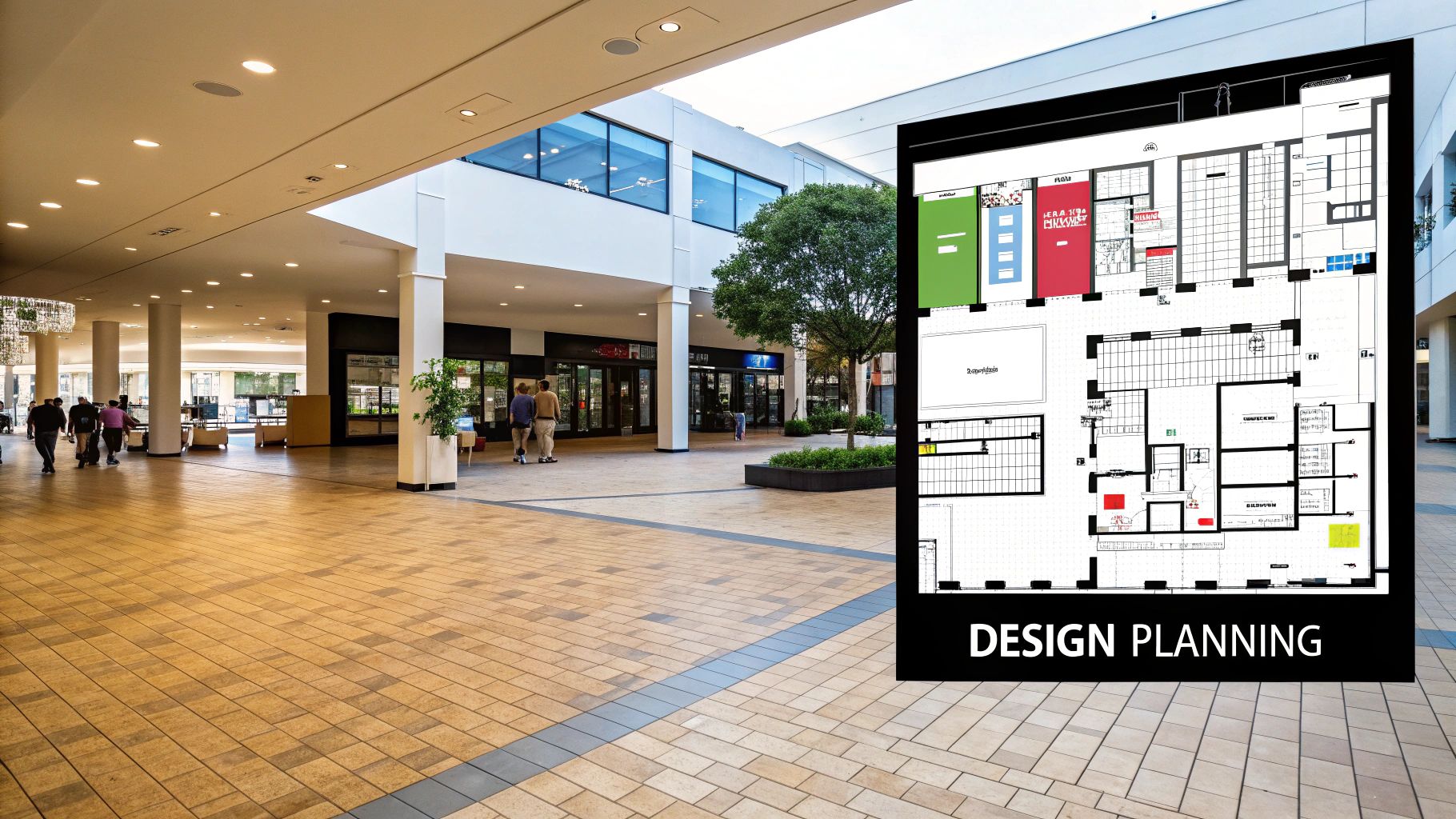
This is where the magic happens—where your vision for a perfect soundscape starts to take shape. Planning a commercial audio system isn't about picking speakers off a shelf. It's a thoughtful design process, almost like being an architect for an experience, where every choice directly shapes the final atmosphere.
Before you even think about calling an installer, taking the time to map out what you really need is the most crucial step. It ensures the system you end up with actually helps you hit your business goals, delivering audio that's clear, consistent, and effective.
Assessing Your Acoustic Environment
Every room has its own acoustic personality, and your first job is to understand it. The physical layout and materials of your space will completely change how sound travels. A big open room with high ceilings and lots of glass? Sound is going to bounce everywhere, creating echoes that can turn clear announcements into a garbled mess.
On the other hand, a space packed with soft carpets, plush furniture, and acoustic panels will soak up sound like a sponge. That's great for reducing noise, but it can also make background music feel dull and lifeless if the system isn't designed to compensate.
Think about these factors from the get-go:
Size and Volume: Are you covering a cozy little boutique or a massive warehouse? The sheer volume of the space dictates the power and number of speakers you'll need.
Ceiling Height: Soaring, open-rafter ceilings often call for pendant speakers that hang down, bringing the sound closer to ear level. Standard drop ceilings, however, are perfect for discreet in-ceiling speakers that blend right in.
Surface Materials: Do a quick inventory. Hardwood floors, concrete walls, and big windows will act like mirrors for sound waves. Carpeting, curtains, and fabric-covered cubicles will absorb them.
Getting a handle on these elements is the first step in figuring out what kind of speakers you need and, just as importantly, where they need to go.
Achieving Consistent Sound Coverage
One of the surest signs of a poorly planned audio system is uneven sound. You walk into one corner and the music is booming, but take ten steps to the left and you can barely hear it. The whole point of a professional design is to eliminate those jarring "hot spots" and "dead zones."
The goal is to create a seamless, even blanket of sound that feels natural no matter where someone is standing. It's not about being loud; it's about being present.
The ultimate goal is for the sound to feel like it’s simply there—present and clear, but never distracting or intrusive. It should seamlessly blend into the background of the customer experience.
Think of a long hotel hallway. Instead of blasting a single powerful speaker from one end, a good design uses a series of smaller, low-volume ceiling speakers spaced evenly down the corridor. This way, the volume stays perfectly consistent as you walk from your room to the lobby.
The Power of Audio Zoning
If there's one feature that truly defines a modern commercial audio system, it's zoning. This is simply the ability to divide your business into different audio "zones" and play different things in each one—or have different volumes—all from one central control.
Let's take a restaurant with a bar as a perfect example. With zoning, you can fine-tune the vibe in every single area:
Main Dining Room: Keep it classy with soft, ambient music at a low volume that encourages conversation.
Bar Area: Crank it up a notch with a more energetic, upbeat playlist that matches the social, high-energy mood.
Outdoor Patio: Play a completely different genre, maybe something more modern and casual, to fit the open-air setting.
Restrooms: A simple, neutral background track provides a subtle but professional touch, ensuring the audio experience is consistent throughout the entire property.
This level of granular control is a game-changer. It turns your audio system from a simple utility into a powerful tool for crafting the exact customer experience you want, inch by inch.
To pull all these ideas together, walking through a simple checklist can help you and your installer create the perfect blueprint.
Audio System Design Planning Checklist
This checklist is designed to help you think through the critical environmental and functional needs of your space before the first wire is ever run.
Planning Area | Key Questions to Consider | Real-World Example |
|---|---|---|
Acoustic Profile | What are the main surface materials (glass, concrete, carpet)? What is the ceiling height? Are there any major sources of ambient noise? | A coffee shop with concrete floors, large windows, and an espresso machine running constantly will need more speakers at lower volumes to overcome the ambient noise and echo. |
Coverage Goals | Are you looking for background music, foreground music, or paging/announcements? Where are the hot spots and dead zones you want to eliminate? | In a retail store, the goal is even background music coverage everywhere, with no "loud" spots near speakers that might annoy shoppers. |
Zoning Strategy | Which areas need separate volume or audio source control? Do you need to combine zones for all-hands announcements? | A gym needs separate zones for the main workout floor (upbeat music), the yoga studio (calm music), and the locker rooms (neutral background). |
Functional Needs | Will you need microphones for announcements? Do you need to connect TVs, DJ equipment, or live music inputs to the system? | An office needs a system that can play background music but also allows for clear, prioritized paging for emergency announcements. |
Control & Usability | Who will be controlling the system day-to-day? Do they need a simple wall panel, a tablet app, or a more complex control desk? | A restaurant manager needs a simple-to-use tablet app to quickly adjust the volume in the dining room without needing technical training. |
By thinking through your environment, coverage needs, and zoning strategy ahead of time, you're not just buying equipment; you're designing an experience.
Exploring Modern Audio Technologies
The world of commercial audio is in the middle of a major shakeup. Gone are the days of clunky, rigid analog setups. Today's technology is making professional sound systems more flexible, scalable, and genuinely easier to manage. Keeping up with these changes is the key to choosing a system that works for you now and won't be obsolete in a few years.
The single biggest shift is the move to networked audio, which you'll often hear called Audio over IP (AoIP). Forget running dozens of thick, dedicated audio cables from every single speaker back to a massive amplifier rack. Networked systems do it all over standard computer cables—yes, the very same ones that connect your office PCs.
Think of it this way: old audio systems were like an old-fashioned telephone switchboard, where every single call needed a physical wire plugged in by an operator. A networked system is like the internet—it breaks the sound down into digital data and sends it anywhere it needs to go. This makes expanding or changing your commercial audio system incredibly simple and a whole lot cheaper.
The Rise of Wireless and Smart Control
Another game-changer has been the explosion of wireless technology. It’s made installations cleaner and faster by cutting down on the need to drill holes and run cables, which is a lifesaver in historic buildings or spaces with tricky architecture. This means you can get up and running faster, with more freedom to place speakers exactly where you want them.
But the real magic of wireless is the control. You're no longer chained to a control panel in a closet. Modern systems let you manage everything from a smartphone or tablet. Imagine a restaurant manager walking the floor, fine-tuning the volume in the bar and dining room right from their phone. That’s the kind of intuitive, powerful control that puts you in the driver's seat.
This trend shouldn't be surprising; it's exactly what's happened in our own homes. The demand for high-quality, flexible sound from consumer gadgets has pushed the commercial world to step up its game. You can see just how much consumer trends are shaping the professional audio market in recent analysis from Consegic Business Intelligence.
Automation and Intelligent Integration
Beyond just giving you remote control, today's audio systems are getting smarter. They can now link up with other building systems to create a truly automated environment. This isn't just a novelty; it opens the door to creating soundscapes that react and adapt on their own.
Smart audio integration allows your sound system to work for you, automating tasks and adapting to the needs of your space without constant manual input. This frees up your staff to focus on what matters most—your customers.
Here’s what that looks like in the real world:
Automated Scheduling: A retail store can set its system to automatically shift the mood. Think calm, slow music in the morning, upbeat pop during the hectic lunch hour, and a chill playlist for the evening wind-down.
Building System Integration: Your audio can talk to your lighting. In a conference room, hitting "presentation mode" could dim the lights, lower the projector screen, and switch the room’s audio to the presenter’s laptop, all at once.
Sensor-Based Adjustments: More advanced systems can use sensors to detect how many people are in a room and adjust the volume accordingly. As a bar gets busier and louder, the music can subtly ramp up to keep the energy right.
By getting a handle on these modern technologies, you can move beyond just "buying speakers" and invest in a commercial audio system that’s truly powerful, flexible, and ready to grow right alongside your business.
Answering Your Top Questions
Even after you've got the basics down, you're bound to have some practical questions. It’s completely normal. Let’s tackle a few of the most common ones that come up when businesses start planning for a new sound system.
How Much Does a Commercial Audio System Cost?
That's the big one, isn't it? The honest answer is: it depends. It’s a bit like asking how much a company vehicle costs. Are you buying a small delivery van or an entire fleet of 18-wheelers? The scope is what really determines the price tag.
Your final cost really boils down to three main things:
Size and Scope: A cozy coffee shop needing four speakers is a completely different project than a multi-story hotel that requires hundreds of speakers zoned across different floors, hallways, and common areas. The bigger and more complex the space, the more gear and labor you'll need.
Quality of Gear: Just like anything else, there’s a wide spectrum of quality. You can opt for standard, reliable components, or you can invest in professional-grade, high-fidelity equipment built to last for decades and deliver incredible sound. The better the components, the higher the initial investment.
System Smarts: A simple system that just plays a background music playlist is one thing. But costs will climb as you add more sophisticated features. Think multi-zone controls, paging microphones for announcements, or integration with your building's emergency alert system.
A basic setup for a small shop might start in the low thousands. For a large corporate campus or a hotel, a comprehensive system can easily get into the tens or even hundreds of thousands of dollars.
Can I Just Install This Myself?
I get the DIY impulse—it can save a lot of money on other projects. But a commercial audio system isn't like plugging in a new TV. This is one of those areas where calling in a professional is almost always the right move.
An expert installer does far more than just run wires. They understand the science of sound, performing acoustic analysis to figure out the perfect placement for every speaker. They also handle the critical electrical calculations to make sure you don't overload circuits, and they ensure every inch of wiring meets local fire and building codes.
A professional integrator isn't just a luxury; they're an insurance policy for your investment. Their expertise is what guarantees your system sounds great, works reliably, and is completely safe.
What's the Deal with 70V vs. 8-Ohm Systems?
This is a classic technical question, but the concept is actually pretty straightforward.
Think of an 8-ohm system like the high-end sound system in a home theater. It’s designed to deliver powerful, high-fidelity audio over a pretty short distance. This is what you’d want for a premium conference room or a small performance space where every nuance of the sound matters.
A 70-volt (70V) system, on the other hand, is the workhorse of the commercial world. Think of it like the electrical grid for your city—it’s built to send power efficiently over very long distances. A 70V system lets you connect a huge number of speakers using a single amplifier and long runs of cable without losing signal strength. It’s the perfect solution for places like retail stores, schools, and airports where you need consistent background music and clear announcements across a massive area.
Bringing Your Sound Strategy to Life
Getting started with professional sound can feel like a big undertaking, but now you have a solid grasp of the fundamentals. We've walked through everything from the core components—like amplifiers and speakers—to the real-world impact a great system can have on your business. It’s clear that a professional audio setup isn't just a nice-to-have; it's a powerful tool for shaping how customers feel, making communication crystal clear, and keeping everyone safe.
But knowledge is just the first step. True success comes from putting it all into practice. Remember, the design phase is everything. Taking the time to properly assess your space's acoustics, plan for consistent sound coverage, and set up smart zones is what separates a mediocre system from a soundscape that genuinely enhances your environment.
Your Next Move for Perfect Audio
Think of a well-planned commercial audio system as an investment in your brand's future. The return goes far beyond simply playing background music. You're creating an atmosphere that can guide customer behavior, make your team more productive, and support your most important operational goals. Never underestimate how much the right sound strategy can contribute to your success.
The best sound systems are the ones you don't notice—they just feel right. They blend into the background while actively making the experience better for every single person in the space. Sound becomes a seamless part of your brand's voice.
Now is the perfect time to move forward. With the insights from this guide, you can have a truly productive conversation with an expert. You understand what's possible and what your business needs, which makes you ready to partner with a professional integrator. They have the expertise to take your vision and turn it into a high-performing audio environment that works exactly as you need it to.
Ready to transform your business environment with a professionally designed audio-video and security solution? The team at PCI Audio-Video Security Solutions can help you create a secure and immersive space that protects your assets and elevates your brand. Contact us today to discuss your project.
Comments